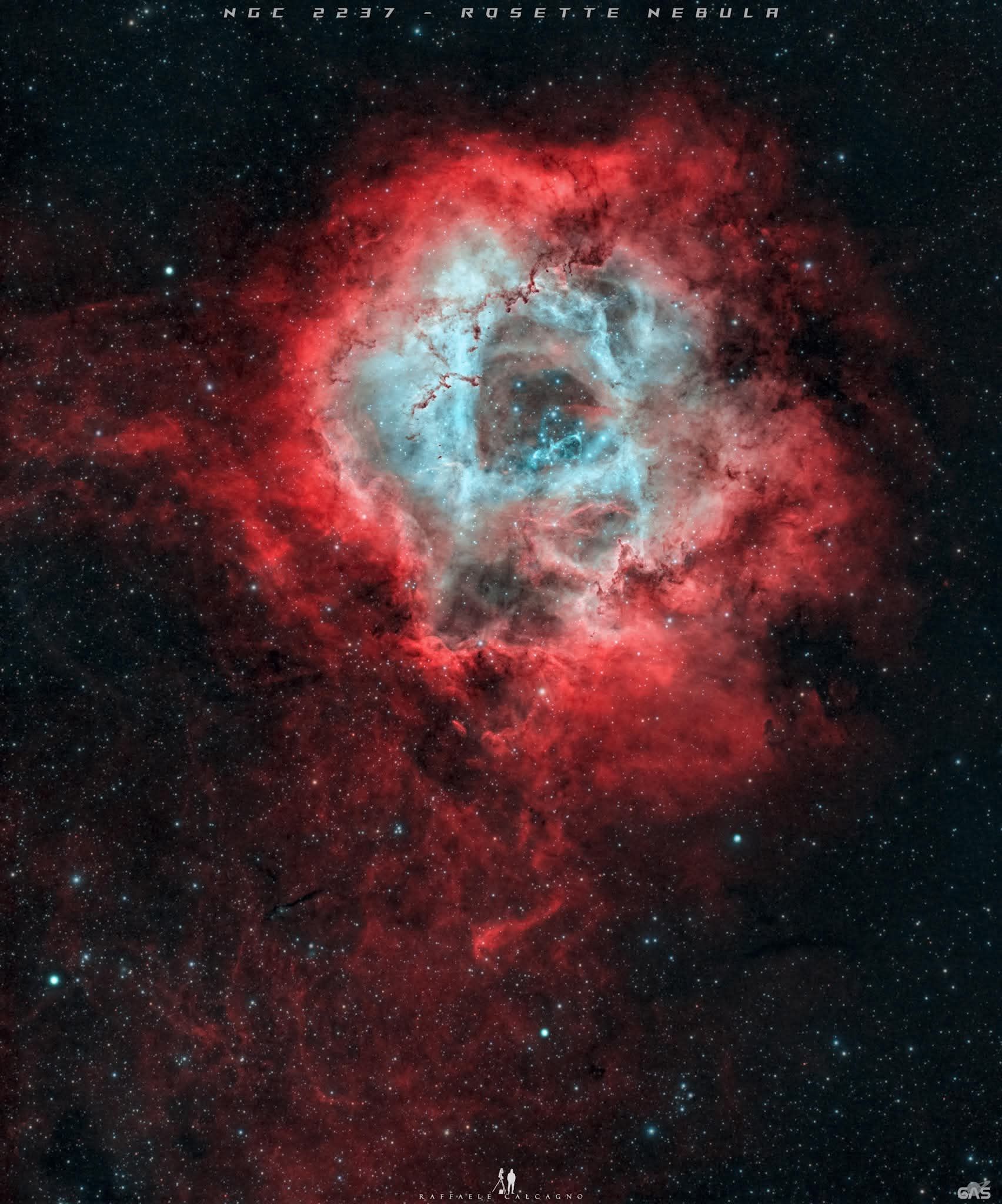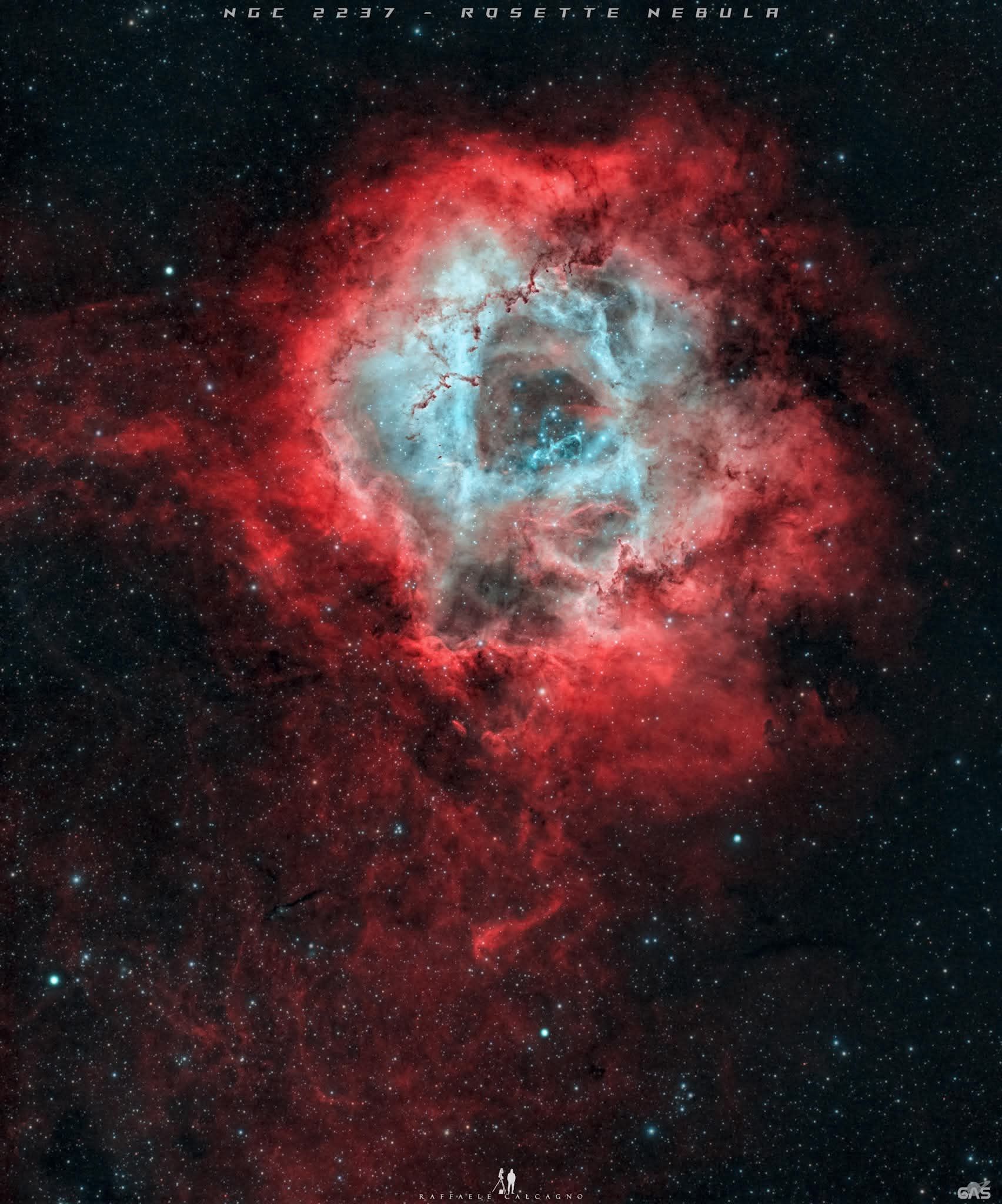
Roses are red, nebulas are too, and this Valentine's gift is a stunning view! Pictured is a loving look at the Rosette Nebula (NGC 2237): a cosmic bloom of bright young stars sitting atop a stem of glowing hot gas. The rose’s blue-white speckles are among the most luminous stars in the galaxy, with some burning millions of times brighter than the Sun. Their stellar winds sculpt the famed rose shape by pushing gas and dust away from the center. Though only a few million years old, these massive stars are already nearing the end of their lives, while dimmer stars embedded in the nebula will burn for billions of years to come. The vibrant red hue comes from hydrogen gas, ionized by the ultraviolet light from the young stars. The rose’s blue-white center is color-mapped to indicate the presence of similarly ionized oxygen. The Rosette Nebula reminds us of the beauty and transformation woven into the fabric of the universe.
Las rosas son rojas, las nebulosas también lo son, y este regalo de San Valentín es una vista asombrosa. Se muestra una mirada cariñosa a la Nebulosa Roseta (NGC 2237): una flor cósmica de estrellas jóvenes brillantes sentadas sobre un tallo de gas caliente que brilla. Los puntos azulados de la rosa son entre las estrellas más luminosas de la galaxia, algunas brillan millones de veces más que el Sol. Sus vientos estelares moldean la forma famosa de la rosa empujando gas y polvo lejos del centro. Aunque tienen solo unos pocos millones de años, estas estrellas masivas ya están acercándose al final de sus vidas, mientras que las estrellas más tenues incrustadas en la nebulosa brillarán durante miles de millones de años. El intenso color rojo proviene del gas de hidrógeno, ionizado por la luz ultravioleta de las estrellas jóvenes. El centro azul blanco de la rosa está mapeado en color para indicar la presencia de oxígeno de manera similar ionizado. La Nebulosa Roseta nos recuerda la belleza y la transformación tejiendo en la trama del universo.