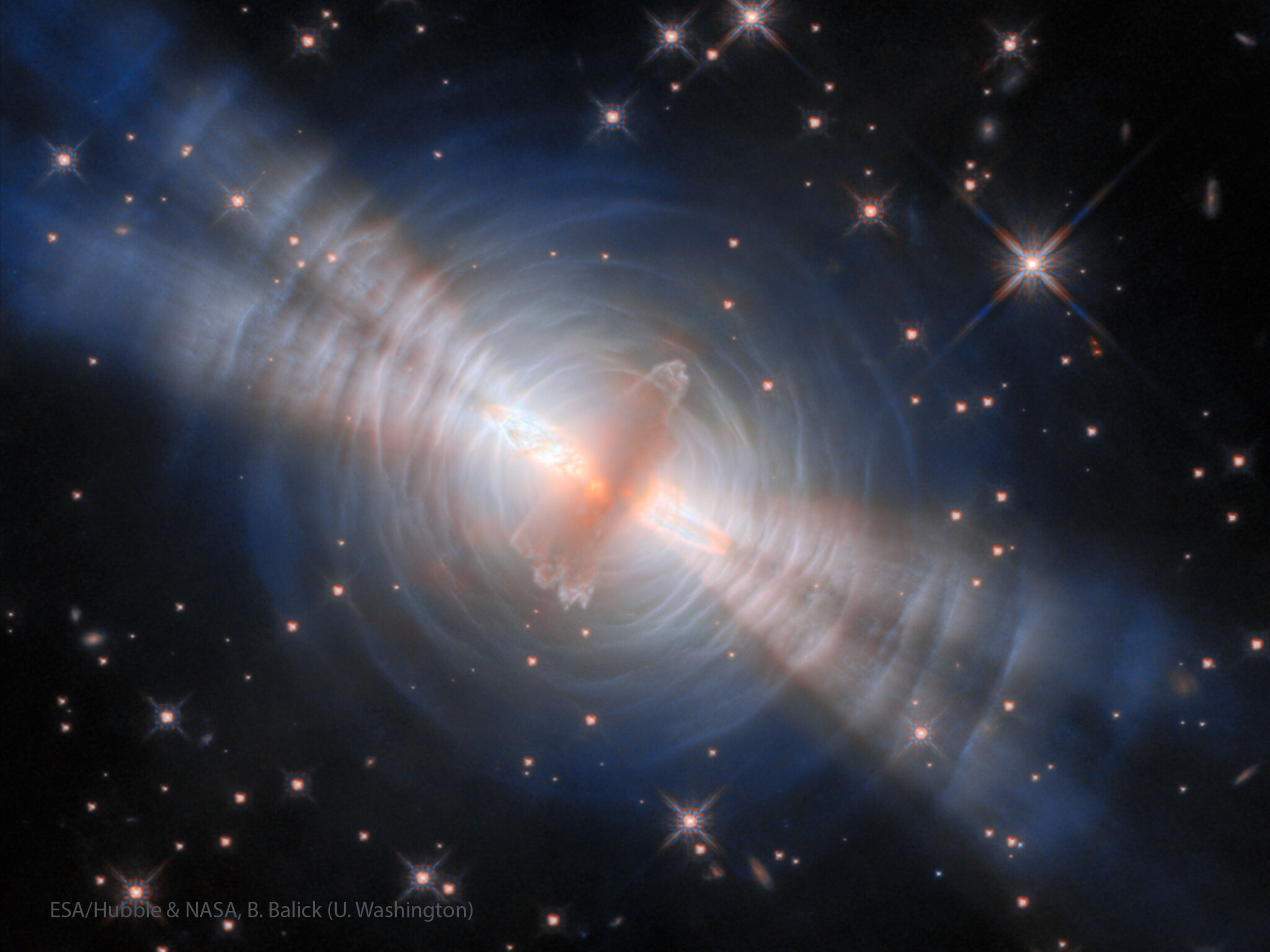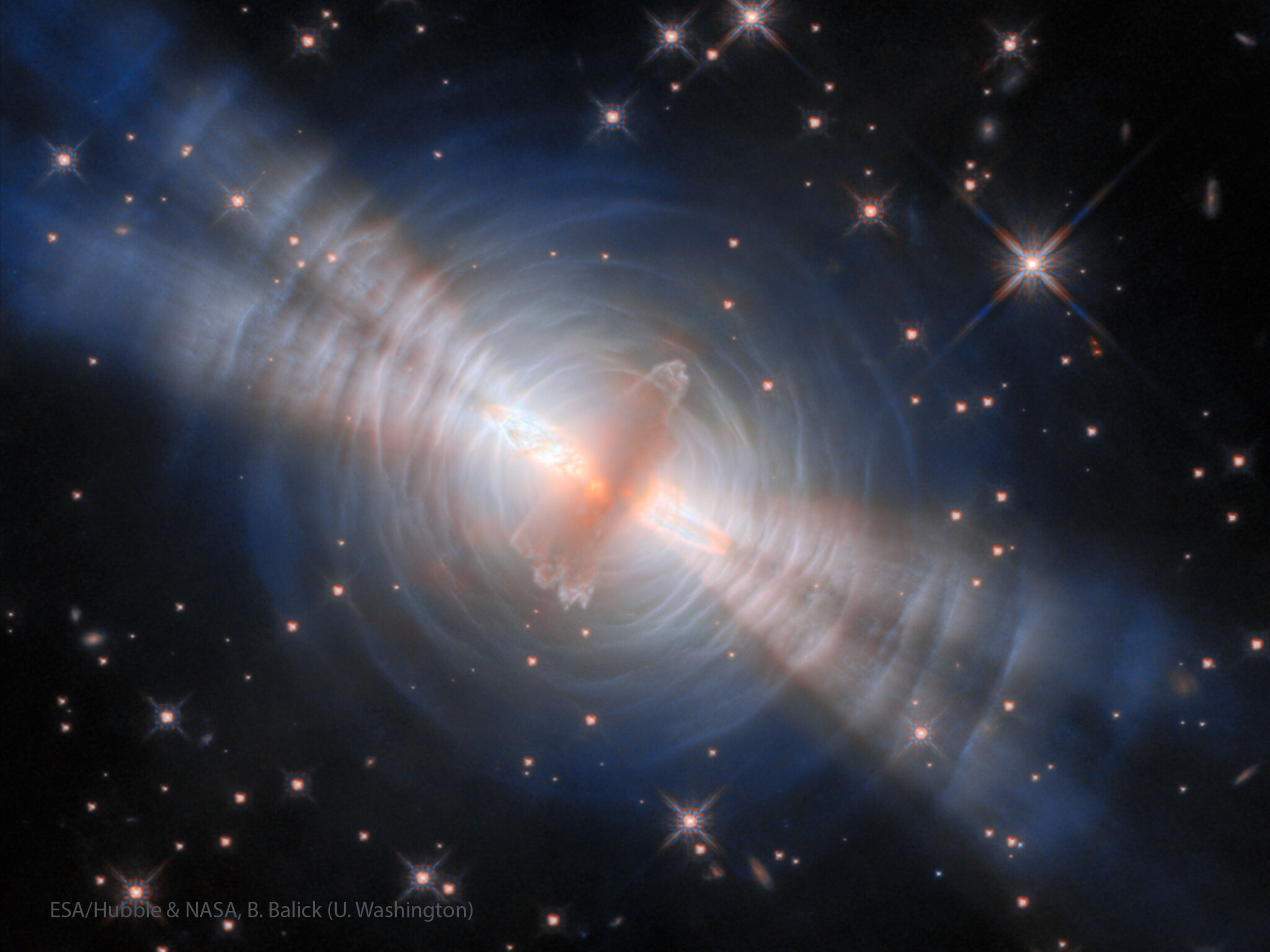
ver wonder what it would look like to crack open the Sun? The Egg Nebula, a dying Sun-like star, can unscramble this question. Pictured is a combination of several visible and infrared images of the nebula (also known as RAFGL 2688 or CRL 2688) taken with the Hubble Space Telescope. The star has shed its outer layers, and a bright, hot core (or "yolk") now illuminates the milky "egg white" shells of gas and dust surrounding the center. The central lobes and rings are structures of gas and dust recently ejected into space, with the dust being dense enough to block our view of the stellar core. Light beams emanate from that blocked core, escaping through holes carved in the older ejected material by newer, faster jets expelled from the star’s poles. Astronomers are still trying to figure out what causes the disks, lobes, and jets during this short (only a few thousand years!) phase of the star’s evolution, making this an egg-cellent image to study! APOD Front Page: apod.nasa.gov
¿Alguna vez te has preguntado qué aspecto tendría romper el Sol? La Nebulosa del Huevo, una estrella moribunda similar al Sol, puede ayudarnos a desentrañar esta pregunta. La imagen muestra una combinación de varias imágenes en luz visible e infrarroja de la nebulosa (también conocida como RAFGL 2688 o CRL 2688), tomadas con el Telescopio Espacial Hubble. La estrella ha perdido sus capas externas, y un núcleo brillante y caliente (o 'yema') ahora ilumina las capas de gas y polvo que rodean el centro, similares a la 'clara' de un huevo. Los lóbulos y anillos centrales son estructuras de gas y polvo recientemente eyectadas al espacio, con una densidad suficiente como para bloquear nuestra visión del núcleo estelar. Los haces de luz emanan de ese núcleo oculto, escapando a través de agujeros tallados en el material eyectado anteriormente por chorros más recientes y veloces expulsados desde los polos de la estrella. Los astrónomos aún tratan de entender qué causa los discos, lóbulos y chorros durante esta breve fase (de solo unos miles de años) de la evolución de la estrella, lo que convierte a esta imagen en un ejemplo excelente para su estudio.