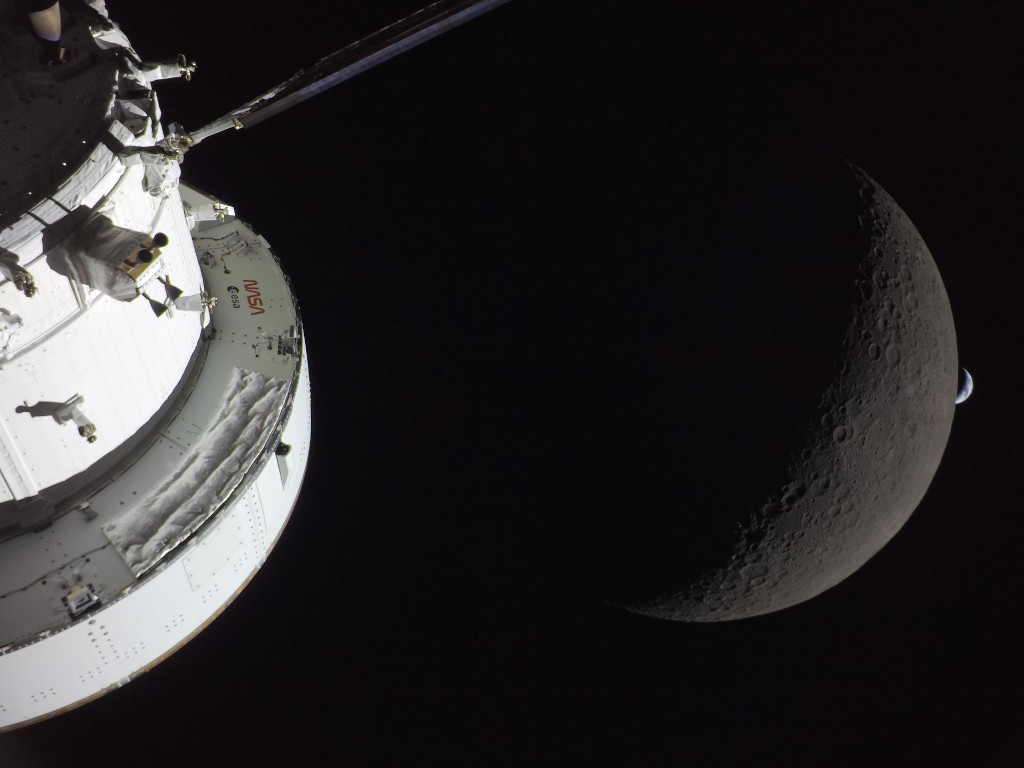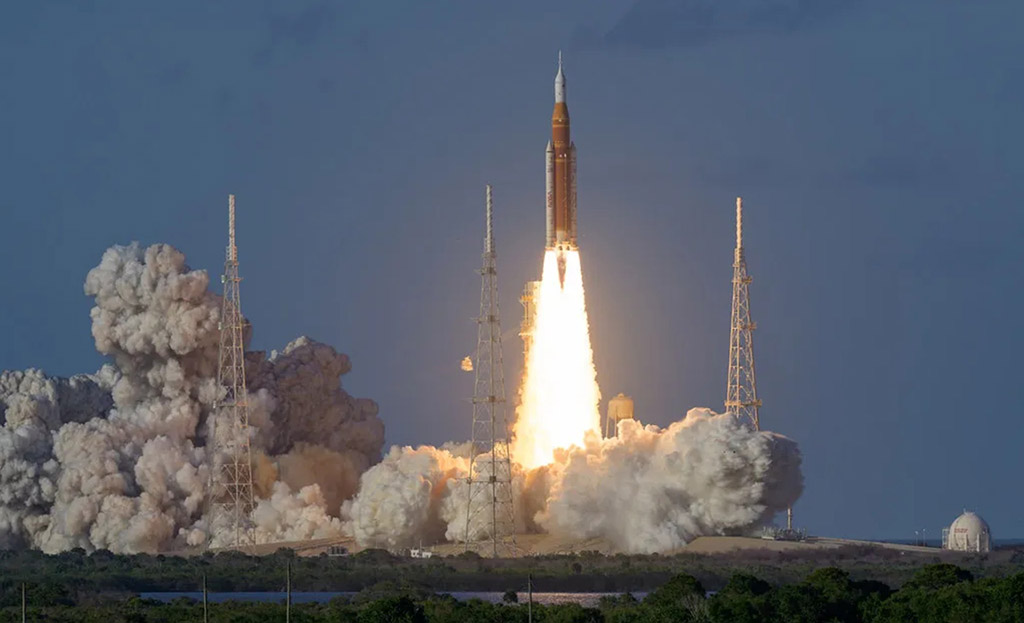
We are one small step closer to returning to the Moon. A new chapter in human exploration began yesterday when NASA's Artemis II launched aboard the Space Launch System (SLS) from Kennedy Space Center. Carrying four astronauts, the Orion spacecraft's planned lunar flyby will be the first in over half a century. This historic test flight, echoing the legacy of Apollo while pushing beyond it, will carry its crew farther from Earth than any humans since 1972, looping around the Moon before returning home. During the approximately ten-day journey, Orion's systems--from life support to navigation--will be tested in deep space, while astronauts observe the lunar surface, including shadowed regions of the far side rarely seen with such perspective. After looping around the Moon, the astronauts will return to Earth, ending their journey with a Pacific Ocean splashdown.
Estamos un pequeño paso más cerca de regresar a la Luna. Un nuevo capítulo en la exploración humana comenzó ayer cuando el Artemis II de la NASA fue lanzado a bordo del Sistema de Lanzamiento Espacial (SLS) desde el Centro Espacial Kennedy. Transportando a cuatro astronautas, el sobrevuelo lunar planificado de la nave espacial Orion será el primero en más de medio siglo. Este histórico vuelo de prueba, que evoca el legado del Apolo al mismo tiempo que lo supera, llevará a su tripulación más lejos de la Tierra que cualquier ser humano desde 1972, orbitando alrededor de la Luna antes de regresar a casa. Durante el viaje de aproximadamente diez días, los sistemas de Orion —desde el soporte vital hasta la navegación— serán puestos a prueba en el espacio profundo, mientras los astronautas observan la superficie lunar, incluidas las regiones en sombra del lado lejano que rara vez se han visto con semejante perspectiva. Tras orbitar alrededor de la Luna, los astronautas regresarán a la Tierra, poniendo fin a su viaje con un amerizaje en el océano Pacífico.