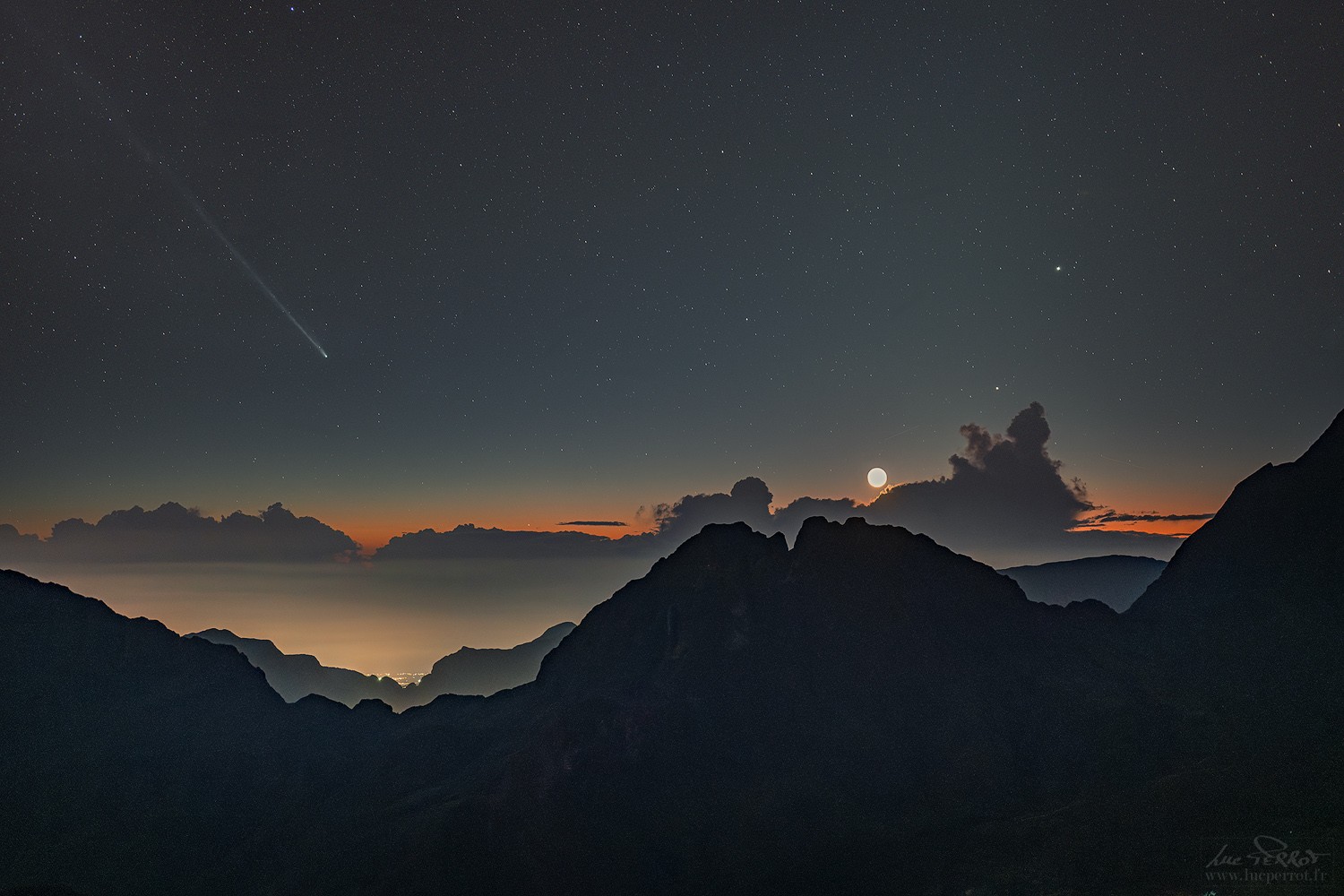
Near the eastern horizon before sunrise, Comet C/2025 R3 PanSTARRS is getting brighter. Readily visible in binoculars and small telescopes, the comet may be just on the verge of naked-eye visibility from dark sky sites. Though it was not quite apparent to the eye, PanSTARRS is still easy to spot in this camera image taken on April 16. In the view from a volcanic peak overlooking France's Reunion Island, planet Earth, the comet shares eastern predawn skies with naked-eye planets Mars and Mercury and fainter Neptune. Saturn is hiding behind the low cloudbank that doesn't quite hide an old crescent Moon. This is a good weekend for northern hemisphere comet watchers to try to catch PanSTARRS an hour or so before sunrise, as the comet grows brighter approaching its perihelion on April 19. On April 26 the comet makes its closest approach to our fair planet but by then will be difficult to see in the solar glare. Good views of this comet PanSTARRS in late April and early May will be from the southern hemisphere.
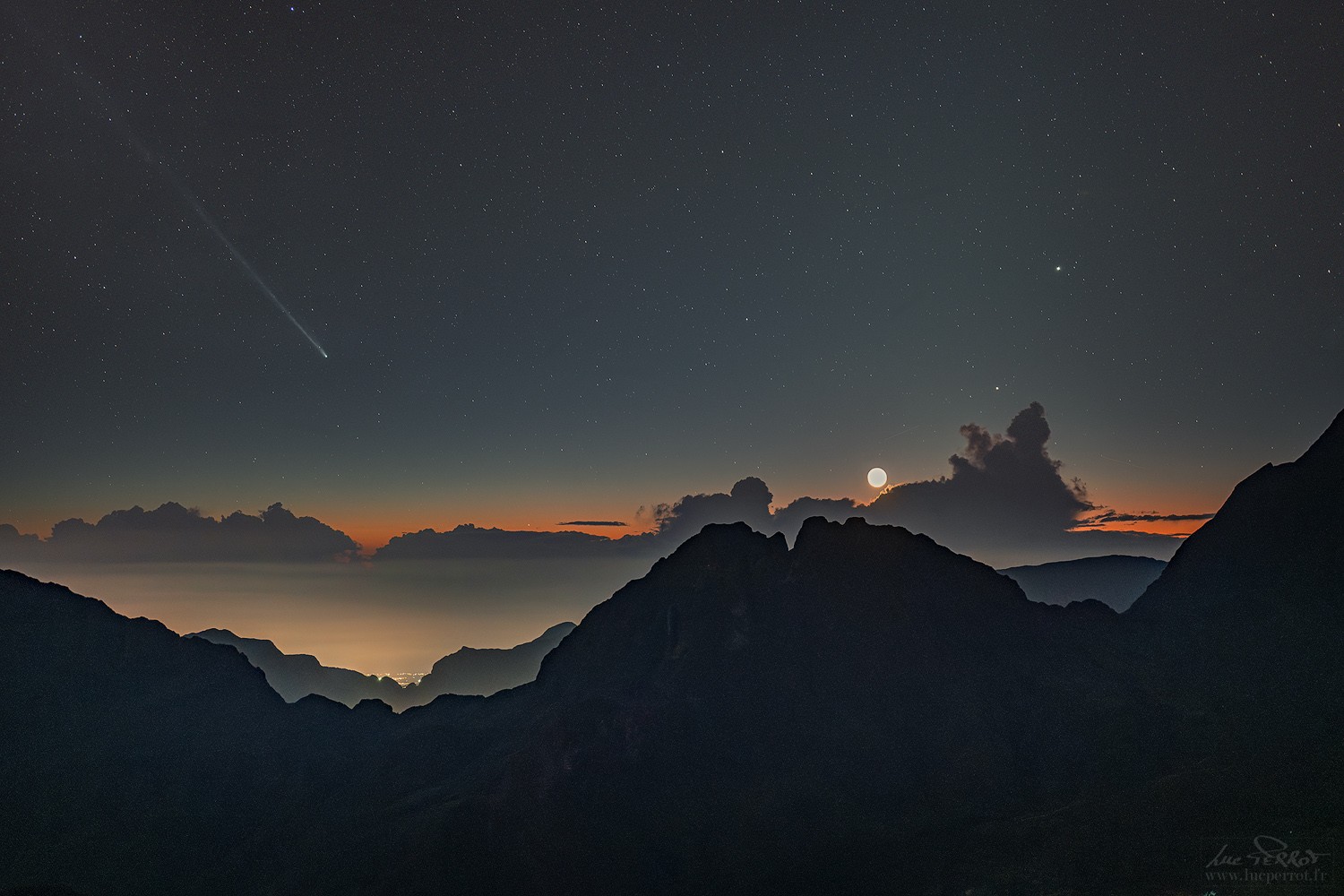
Cerca del horizonte oriental antes del amanecer, el cometa C/2025 R3 PanSTARRS se está volviendo más brillante. Fácilmente visible con binoculares y telescopios pequeños, el cometa puede estar justo en el umbral de la visibilidad a simple vista desde sitios de cielo oscuro. Aunque no era del todo perceptible a simple vista, PanSTARRS resulta aún sencillo de identificar en esta imagen tomada el 16 de abril con una cámara fotográfica. En la vista desde un pico volcánico con vistas a la isla de la Reunión, en Francia, el planeta Tierra, el cometa comparte los cielos orientales del amanecer con los planetas visibles a simple vista Marte y Mercurio, y con el más tenue Neptuno. Saturno se oculta detrás de un banco de nubes bajas que no llega a ocultar del todo una vieja Luna en creciente menguante. Este fin de semana es propicio para que los observadores de cometas del hemisferio norte intenten avistar PanSTARRS una hora aproximadamente antes del amanecer, mientras el cometa se vuelve más brillante conforme se aproxima a su perihelio el 19 de abril. El 26 de abril el cometa alcanzará su máximo acercamiento a nuestro planeta, aunque para entonces será difícil de observar debido al resplandor solar. Las mejores condiciones para observar este cometa PanSTARRS a finales de abril y principios de mayo serán desde el hemisferio sur.