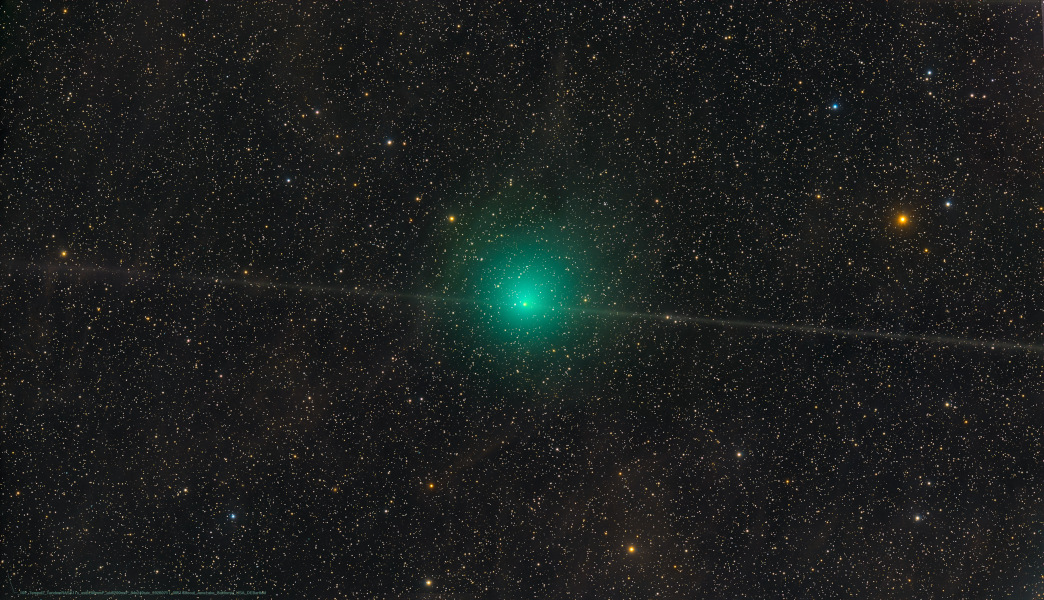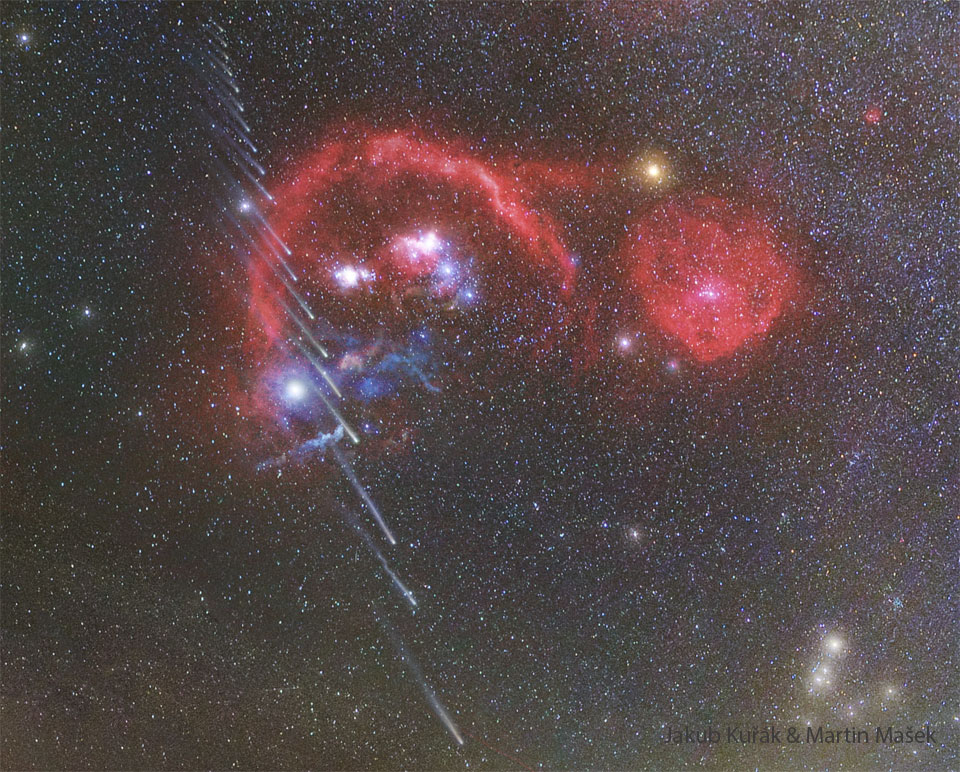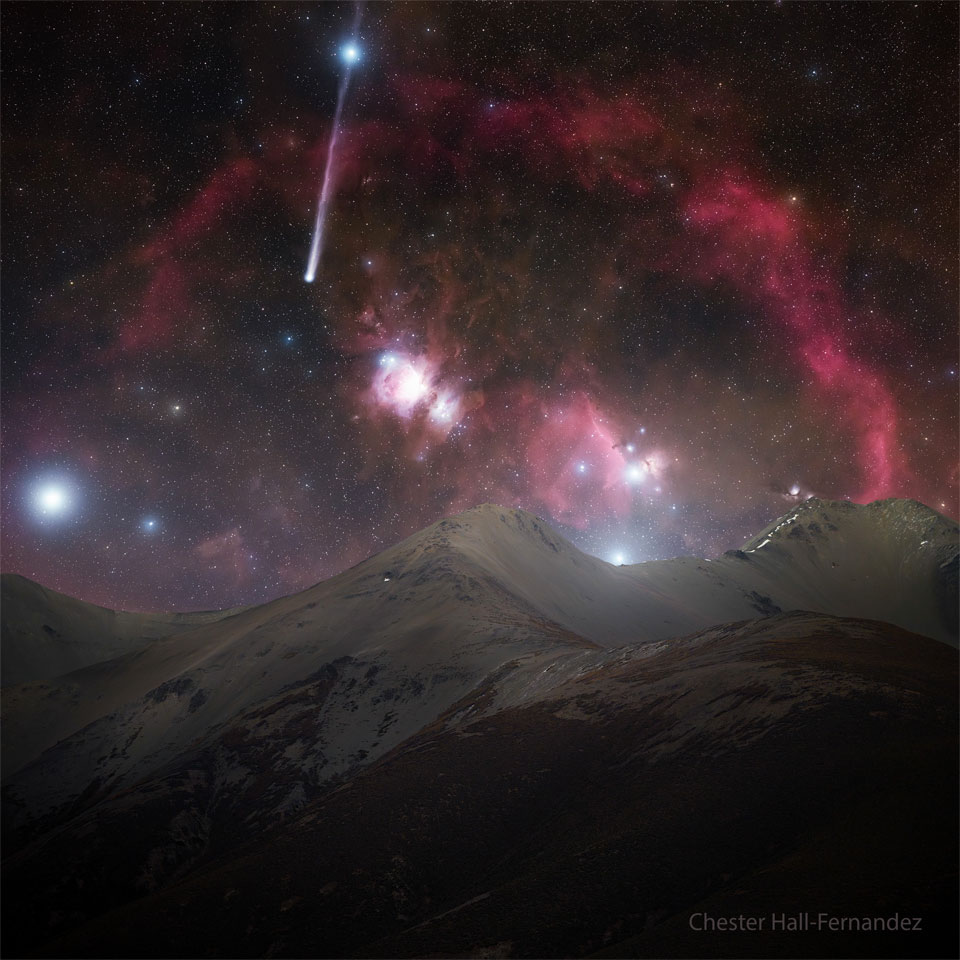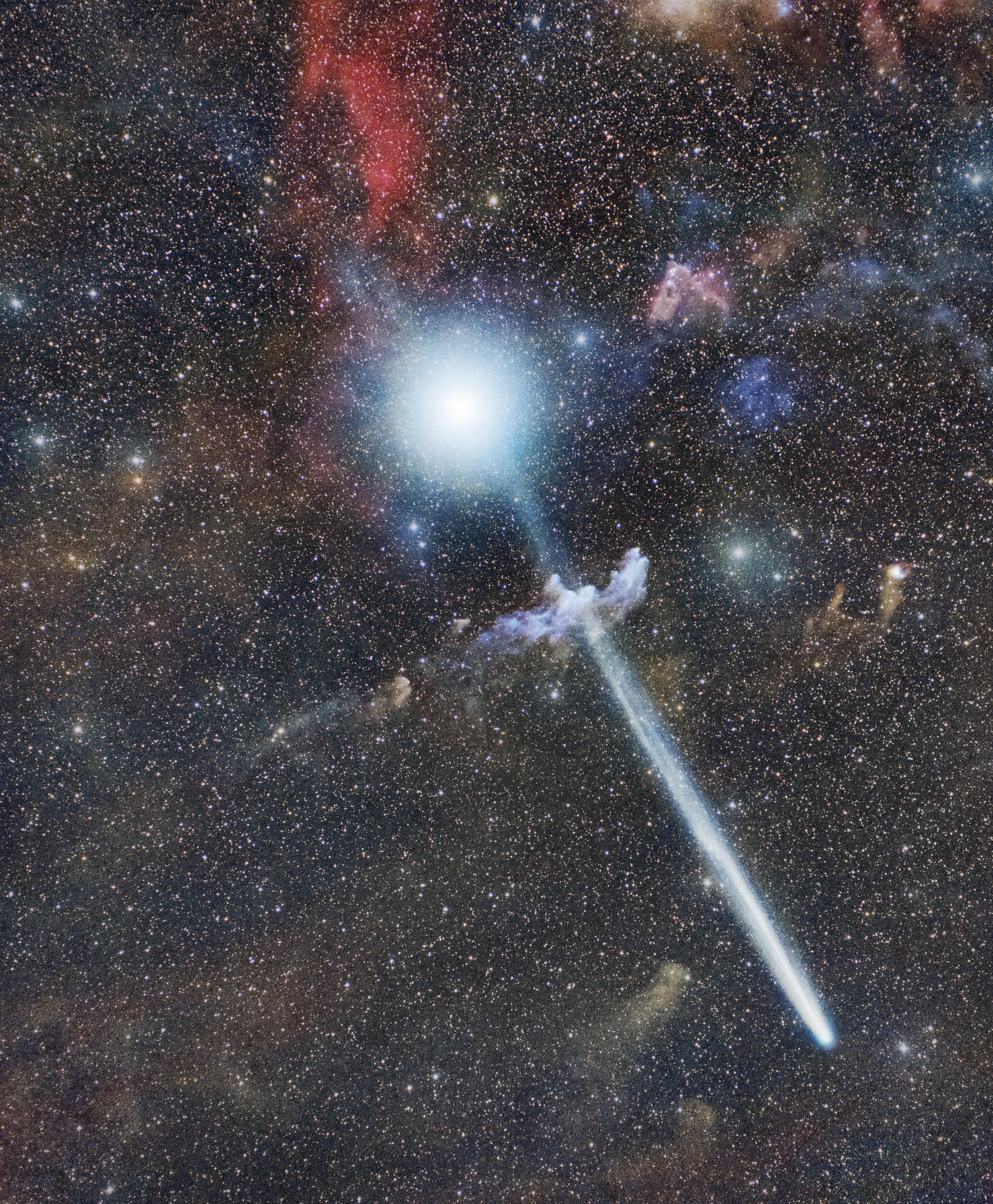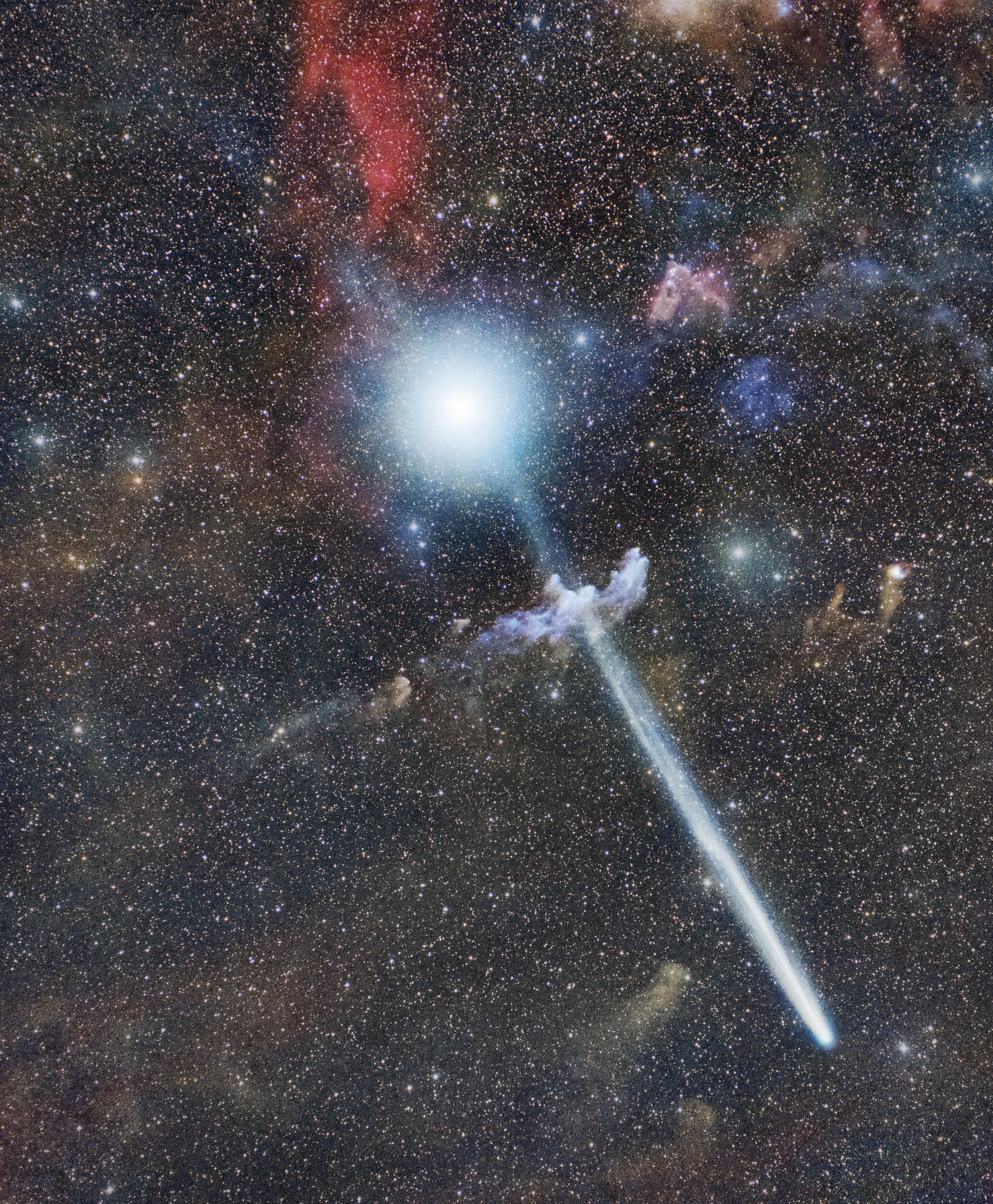
Which way is Comet R3 PanSTARRS going? Not towards the star at the top of the image, because that is Rigel, which, being far in the background, is unrelated to the comet. Not through the nebula in the image middle, because that is the Witch Head Nebula and it, too, is far in the distance -- but not far from Rigel. Not into northern skies because over the past week Comet C/2025 R3 (PanSTARRS) has moved into southern skies and is now best visible in Earth's Southern Hemisphere toward the west after sunset. Angularly, Comet R3 PanSTARRS is slowly moving toward the upper right, night by night, and will soon be in the constellation Orion. Spatially, the comet is now headed out of our Solar System but should remain visible to cameras in southern skies for about a week. The featured image was captured last week near Cerro Paranal in Chile. Growing Gallery: Comet R3 PanSTARRS in 2026
¿En qué dirección se dirige el Cometa R3 PanSTARRS? No hacia la estrella situada en la parte superior de la imagen, pues se trata de Rigel, que al encontrarse muy al fondo no guarda relación alguna con el cometa. Tampoco a través de la nebulosa visible en el centro de la imagen, que corresponde a la Nebulosa Cabeza de Bruja, igualmente distante en el fondo, aunque no muy lejos de Rigel. Tampoco se dirige hacia los cielos del norte, ya que durante la semana pasada el Cometa C/2025 R3 (PanSTARRS) se desplazó hacia los cielos del sur y ahora es mejor visible desde el hemisferio sur de la Tierra, hacia el oeste tras la puesta de sol. En términos angulares, el Cometa R3 PanSTARRS se mueve lentamente hacia la derecha superior, noche tras noche, y pronto se encontrará en la constelación de Orión. En términos espaciales, el cometa se aleja de nuestro Sistema Solar, pero debería permanecer visible para las cámaras en los cielos australes durante aproximadamente una semana. La imagen destacada fue capturada la semana pasada en las cercanías del Cerro Paranal, en Chile.