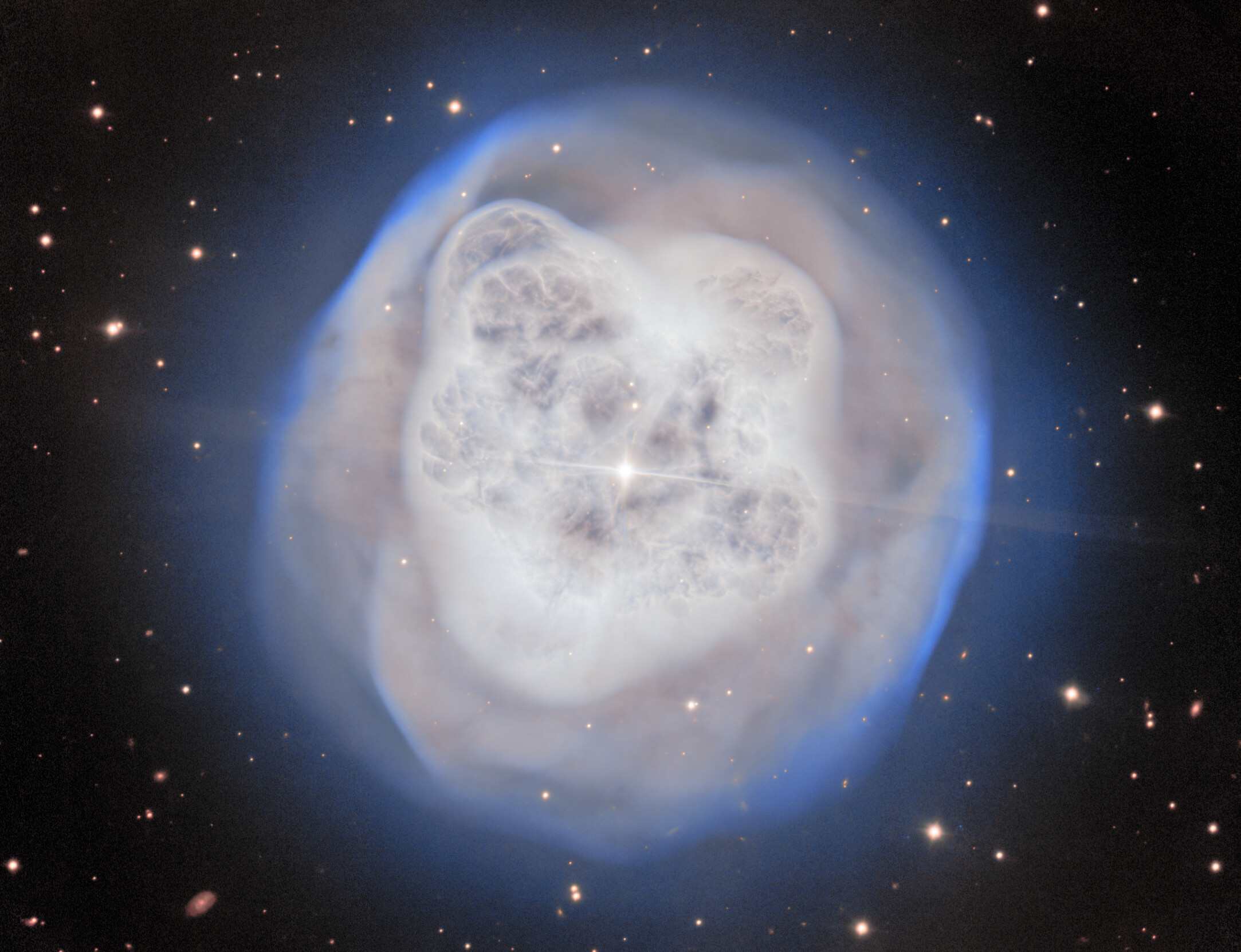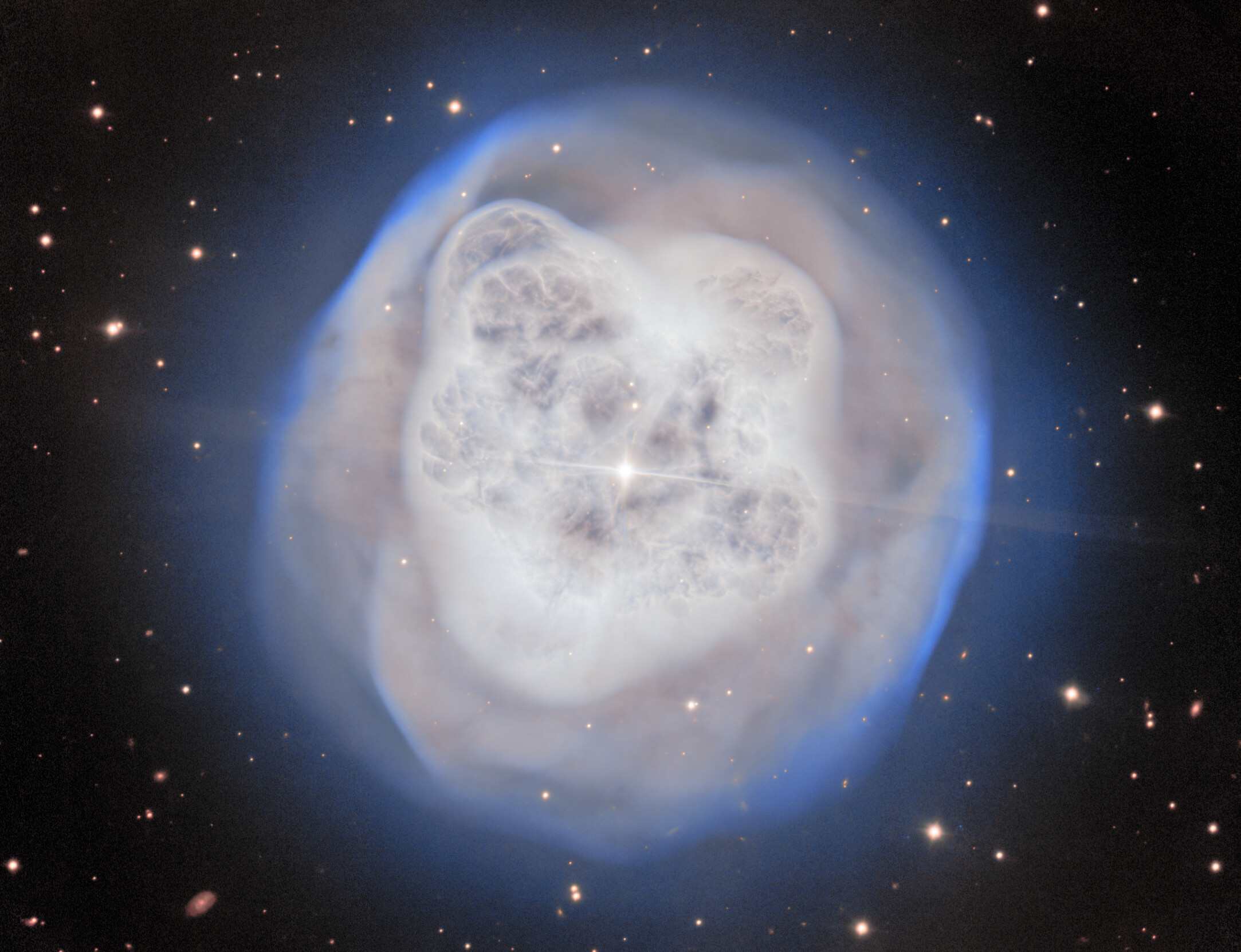
What do you see in this crystal ball? The featured image shows NGC 1514, known as the Crystal Ball Nebula, observed by the Gemini North telescope on Maunakea, in Hawai'i. NGC 1514 is 1,500 light-years away and was discovered by William Herschel in 1790. This planetary nebula is formed when a star becomes a red giant and ejects its outer gas layers. The ejected shell of gas is heated up by the core of the star to temperatures hotter than the surface of our Sun: that makes the gas shine, creating beautiful images like this one. The slightly asymmetrical shape of the Crystal Ball Nebula reveals a secret: the bright star in the center has a companion. As the two stars orbit each other with a period of about nine years, they shape the gas around them. In about 10,000 - 25,000 years the nebula will be dissipated by their stellar winds.
¿Qué se puede ver en esta bola de cristal? La imagen presentada muestra NGC 1514, conocida como la Nebulosa Bola de Cristal, observada con el telescopio Gemini Norte en Maunakea, Hawái. NGC 1514 se encuentra a 1.500 años-luz de distancia y fue descubierta por William Herschel en 1790. Esta nebulosa planetaria se forma cuando una estrella se convierte en una gigante roja y expulsa sus capas externas de gas. La envoltura de gas expulsada es calentada por el núcleo estelar hasta temperaturas superiores a las de la superficie de nuestro Sol, lo que hace brillar el gas y genera imágenes tan espectaculares como esta. La forma ligeramente asimétrica de la Nebulosa Bola de Cristal revela un secreto: la estrella brillante en el centro tiene una compañera. Al orbitar mutuamente con un período de aproximadamente nueve años, ambas estrellas moldean el gas que las rodea. En unos 10.000 a 25.000 años, la nebulosa será disipada por los vientos estelares de estas dos estrellas.