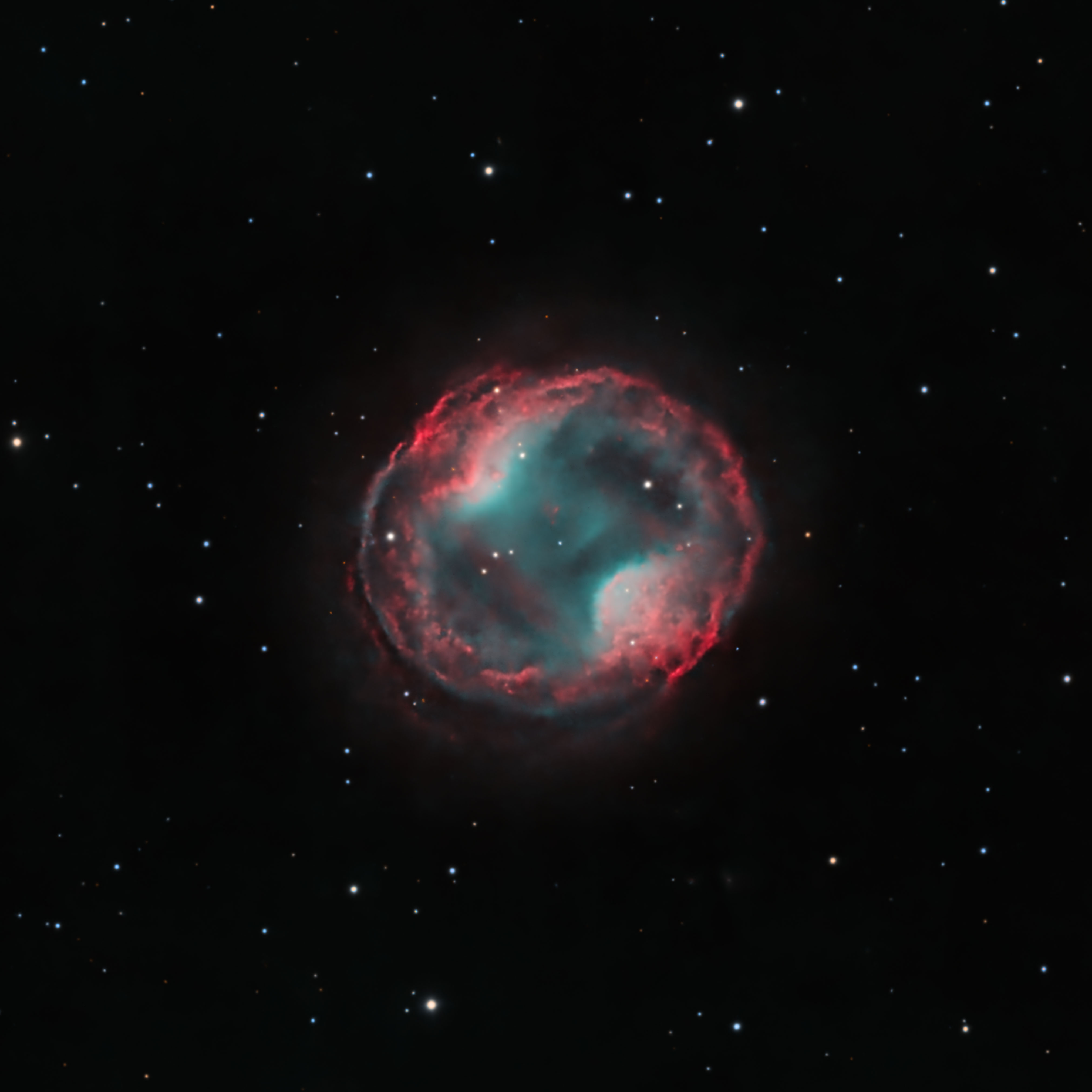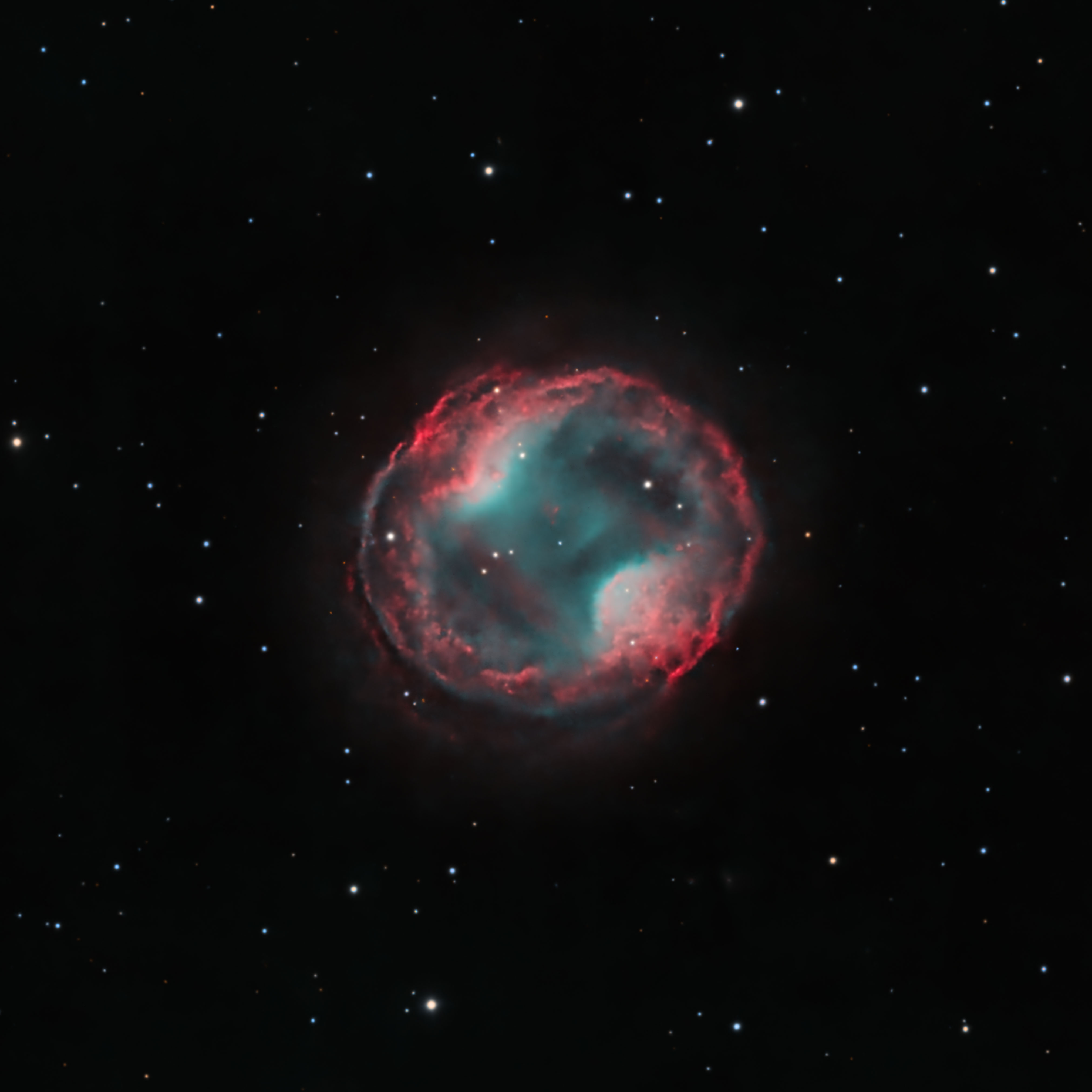
What is a pair of headphones doing in the sky? Today’s image features the Headphone Nebula, also known as PK 164 +31.1 or Jones-Emberson 1. This planetary nebula, the remnant of a dying Sun-like star, faintly occupies an angular region of the Lynx constellation about 1/5th the diameter of the full moon. The red and blue-ish green colors trace hydrogen and oxygen atoms, respectively, that have been excited and ionized by the nebula's central white dwarf. The headphone shape, where two lobes of hydrogen puncture the inner region of oxygen, adds this object to a long list of oddly shaped nebulae. The morphology of such strange nebulae hint at the presence of a stellar or planetary companion, which can stir the material flowing out from the dying star. You can listen to Hubble and JWST sonifications of planetary nebulae through your very own headphones!
¿Qué hace un par de auriculares en el cielo? La imagen de hoy presenta la Nebulosa de los Auriculares, también conocida como PK 164 +31.1 o Jones-Emberson 1. Esta nebulosa planetaria, el remanente de una estrella semejante al Sol en proceso de extinción, ocupa tenuemente una región angular de la constelación del Lince de aproximadamente 1/5 del diámetro de la luna llena. Los colores rojo y verde azulado rastrean átomos de hidrógeno y oxígeno, respectivamente, que han sido excitados e ionizados por la enana blanca central de la nebulosa. La forma de auriculares, donde dos lóbulos de hidrógeno atraviesan la región interior de oxígeno, añade este objeto a una larga lista de nebulosas de formas inusuales. La morfología de estas nebulosas tan peculiares sugiere la presencia de un compañero estelar o planetario, que puede agitar el material expulsado por la estrella moribunda.