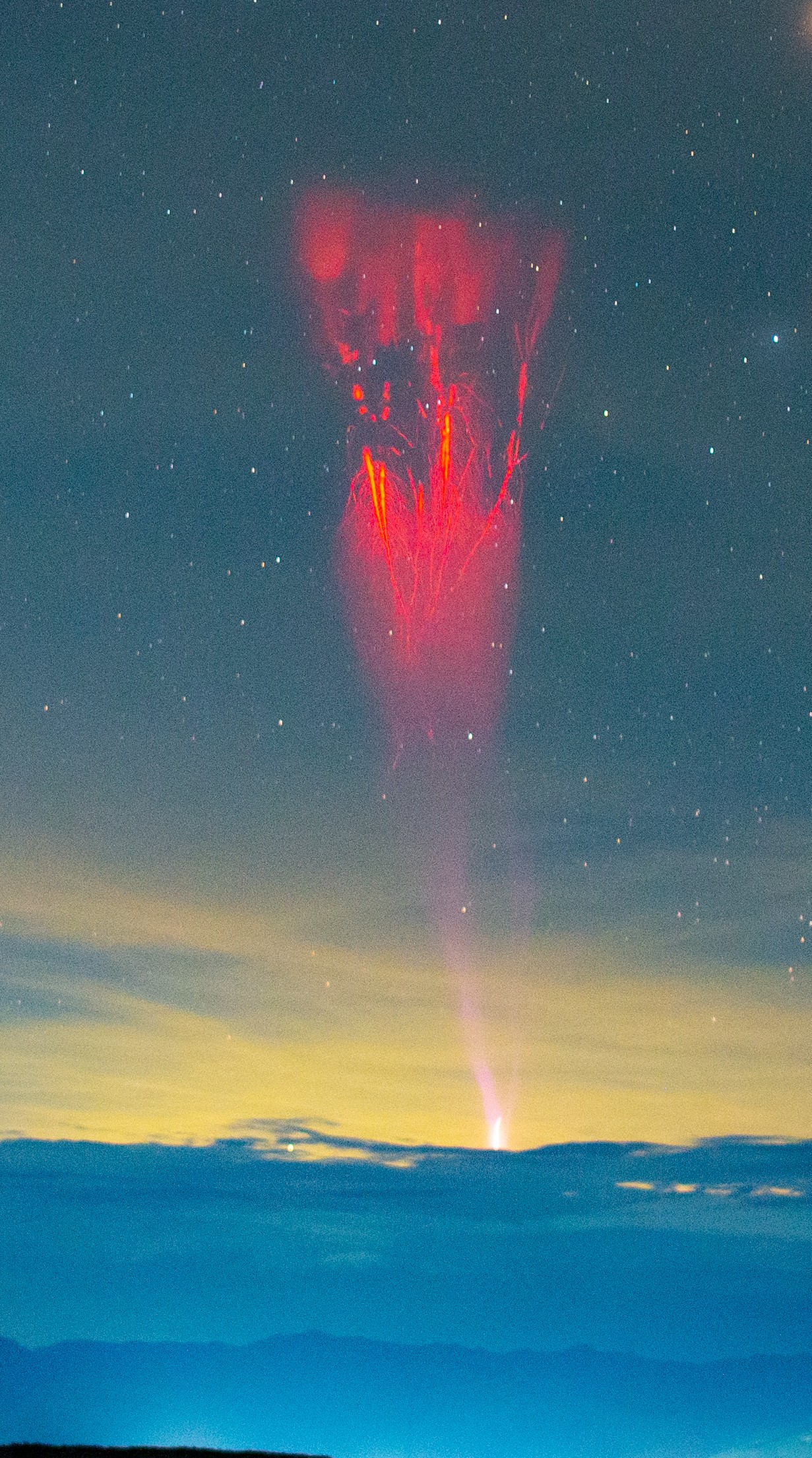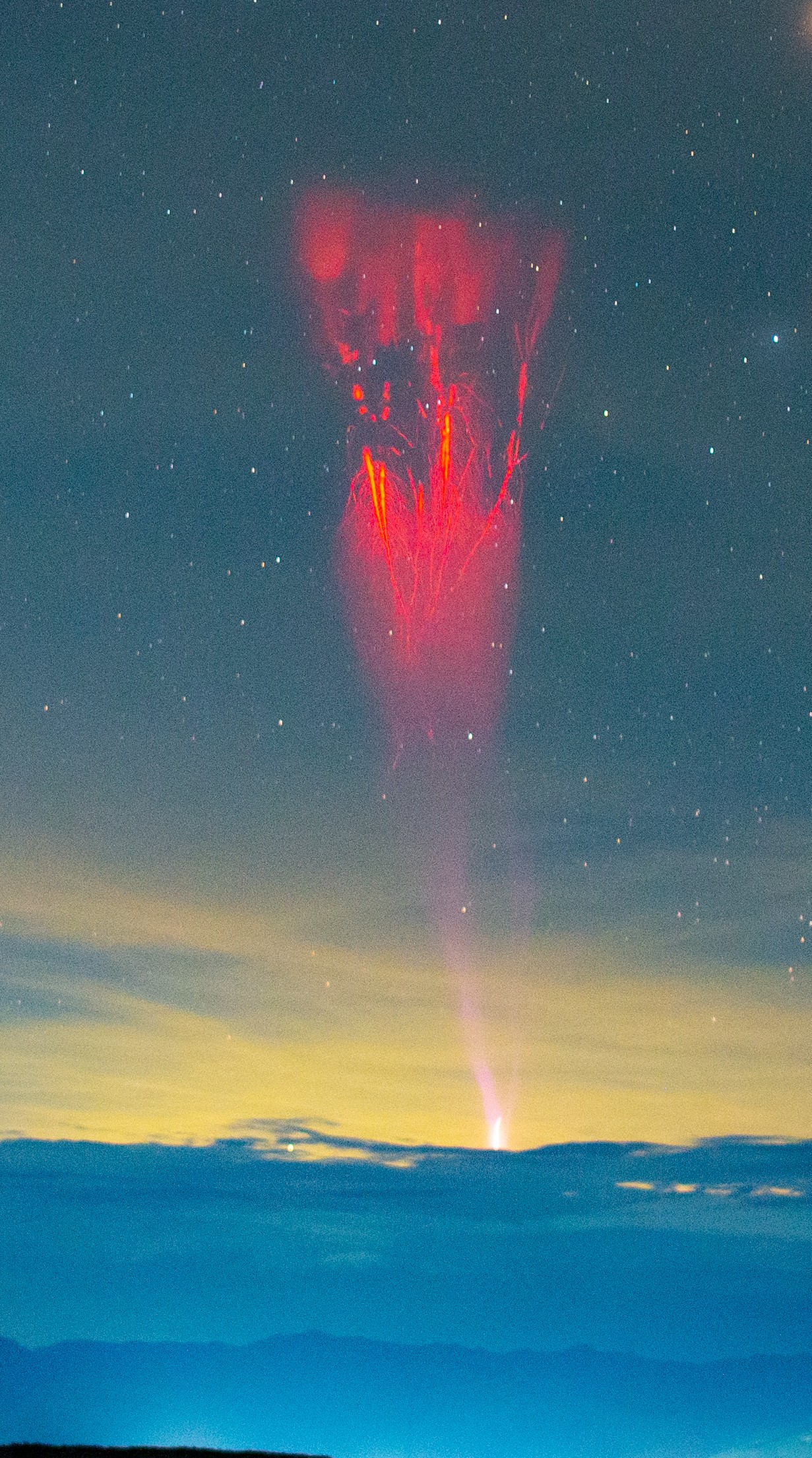
Is there an angry Sith using force lightning in the Tatacoa Desert? This is not science fiction, but a red sprite with multiple streamers! Ordinary lightning occurs when thundercloud particles collide, lose their electrons, and build up negative charge at the cloud bottom. The cloud’s negative charge repels negative charge deeper into the Earth, leaving Earth’s surface positively charged. The opposite charges attract, reaching towards each other and superheating the air into a white strike of plasma. Red sprites are millisecond events triggered by positive cloud-to-ground lightning. They extend up into the mesosphere where the air is too thin for thunder. Their red glow comes from heated molecular nitrogen. There are several potential causes for red sprites, including that the preceding positive lightning exposes the negatively charged cloud core to the positively charged upper atmosphere, allowing those charges to connect. NASA’s Juno has observed sprites on Jupiter, indicating that sprites occur on other planets!
¿Hay acaso un furioso Sith usando rayos de la Fuerza en el Desierto de la Tatacoa? Esto no es ciencia ficción, ¡sino un duende rojo con múltiples filamentos! Los rayos ordinarios se producen cuando las partículas de las nubes de tormenta colisionan, pierden sus electrones y acumulan carga negativa en la parte inferior de la nube. La carga negativa de la nube repele las cargas negativas hacia el interior de la Tierra, dejando la superficie terrestre con carga positiva. Las cargas opuestas se atraen, se aproximan entre sí y sobrecalientan el aire hasta convertirlo en un destello blanco de plasma. Los duendes rojos son fenómenos de milisegundos desencadenados por rayos positivos de nube a tierra. Se extienden hacia arriba hasta la mesosfera, donde el aire es demasiado tenue para que se produzca trueno. Su resplandor rojo proviene del nitrógeno molecular calentado. Existen varias causas posibles para los duendes rojos, entre ellas que el rayo positivo precedente expone el núcleo de la nube con carga negativa a la atmósfera superior con carga positiva, permitiendo que esas cargas se conecten. La sonda Juno de la NASA ha observado duendes en Júpiter, lo que indica que este fenómeno ocurre también en otros planetas.