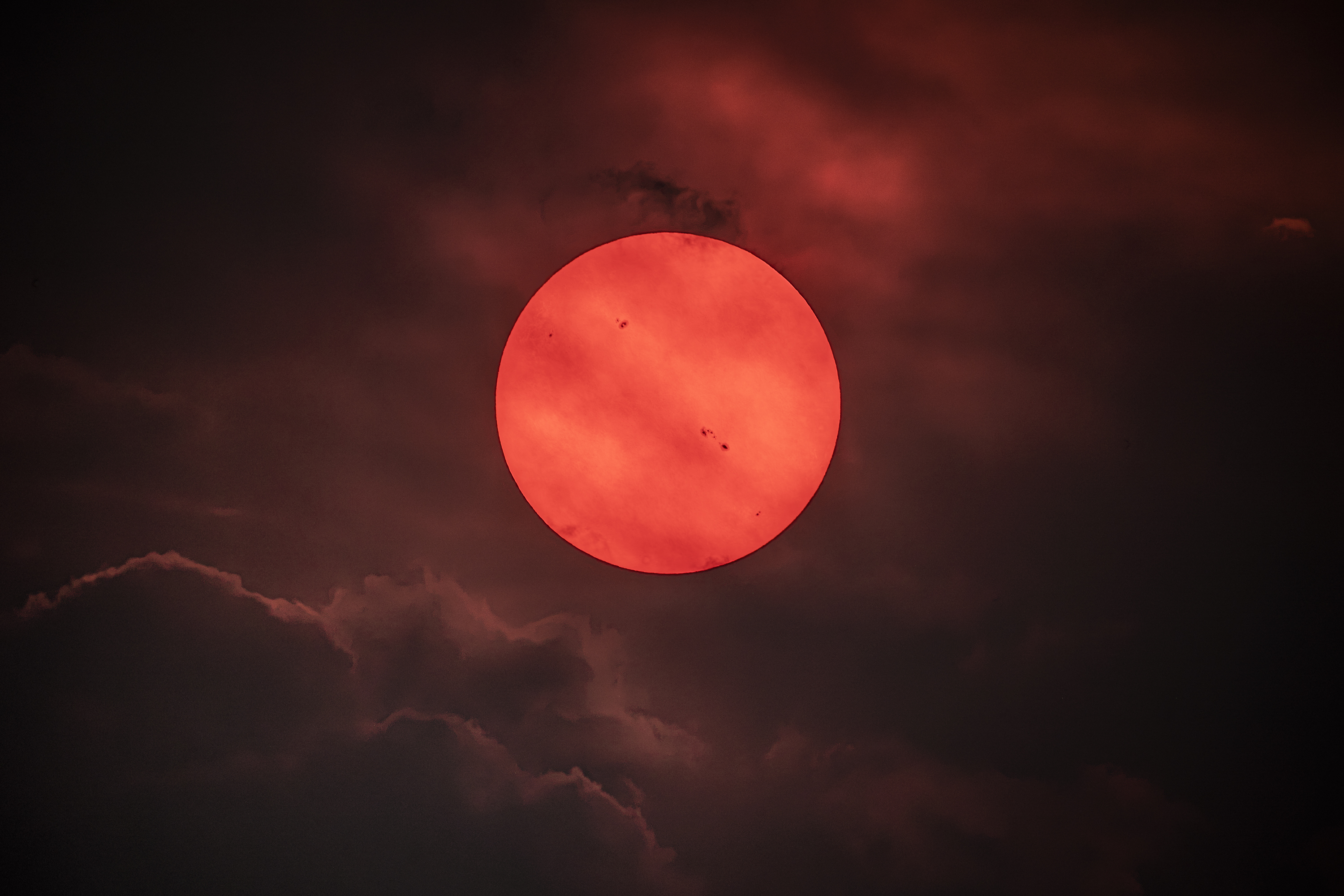
This could be the view from an exoplanet orbiting around a red dwarf star, but it is our own Sun. This image was taken on July 22, 2026, in the Okanagan region in the Canadian province of British Columbia. Wildfire smoke from the Pacific Northwest acted as a solar filter, allowing the photographer to take this photo of the Sun directly. Several sunspots are also visible in this eerie image; just below and right of the center is AR 4493, a fast evolving, giant active solar region and sunspot group. The smoke is made of tiny particles that help block and scatter light with bluer colors, so the light we see coming from the Sun is dimmer and redder than usual (but it is never safe to stare directly at the Sun). Sunsets and sunrises are also more colorful because of the smoke. Some 6 billion years from now, the Sun will actually start to turn redder as it approaches its red giant phase.
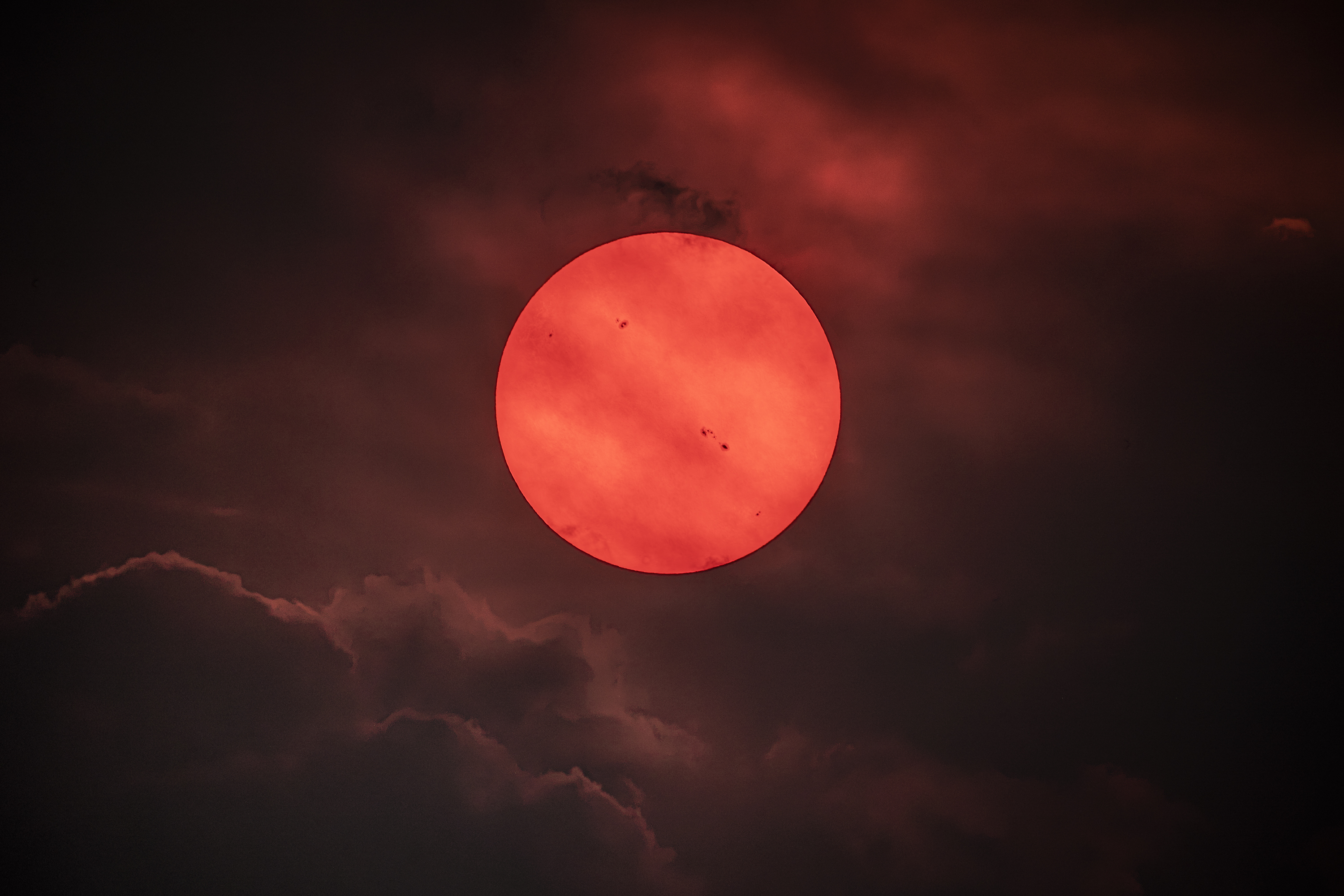
Esta podría ser la vista desde un exoplaneta en órbita alrededor de una estrella enana roja, pero se trata de nuestro propio Sol. Esta imagen fue tomada el 22 de julio de 2026 en la región de Okanagan, en la provincia canadiense de Columbia Británica. El humo de los incendios forestales del noroeste del Pacífico actuó como un filtro solar, permitiendo al fotógrafo capturar esta imagen del Sol directamente. En esta inquietante fotografía también son visibles varias manchas solares; justo debajo y a la derecha del centro se encuentra AR 4493, una región solar activa de gran tamaño y evolución rápida, junto con su grupo de manchas solares. El humo está compuesto de diminutas partículas que bloquean y dispersan la luz de colores más azules, de modo que la luz que percibimos proveniente del Sol es más tenue y más roja de lo habitual (aunque nunca es seguro mirar directamente al Sol). Las puestas y salidas de Sol también son más coloridas a causa del humo. Dentro de unos 6.000 millones de años, el Sol comenzará realmente a volverse más rojo a medida que se aproxime a su fase de gigante roja.