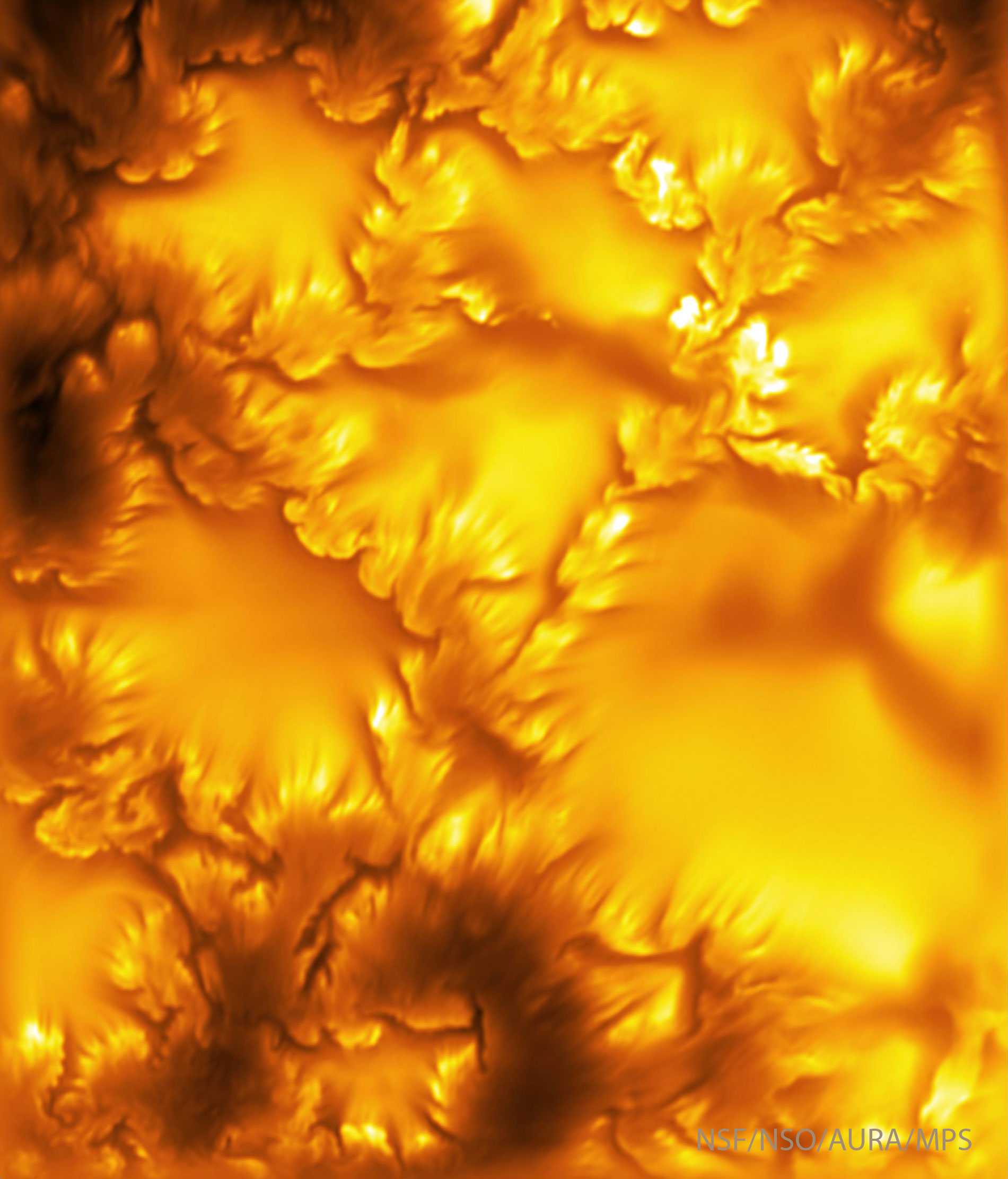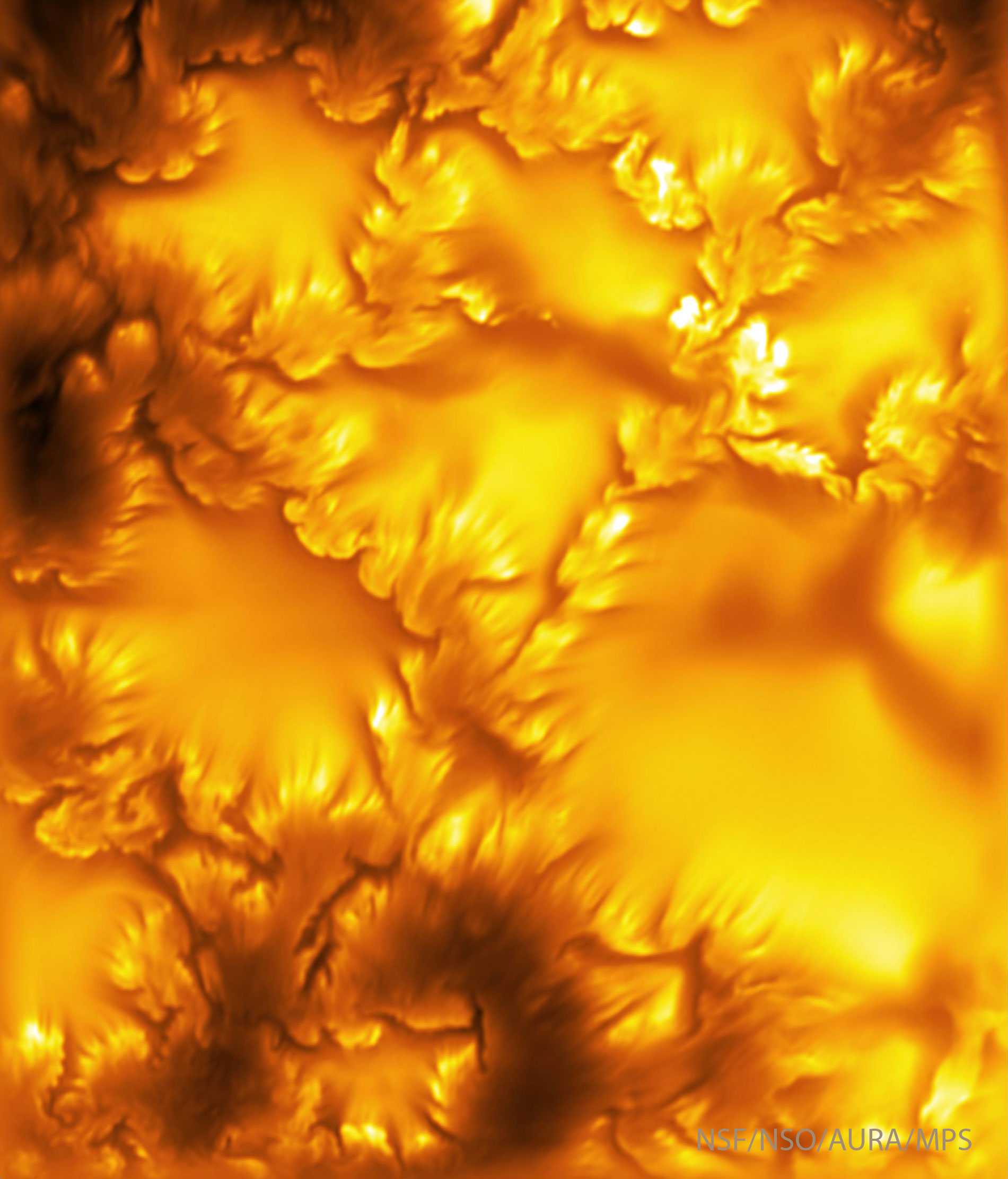
What does the new sharpest image of our Sun show? Instability. To be clear, a certain kind of interactive process called the Kelvin-Helmholtz instability (KHI). This instability can create waves and swirls when two streams flow past each other -- in this case variable streams of solar magnetic plasma. Long hypothesized to occur on the Sun's surface, KHI streaks and swirls were confirmed in just-released dramatic high-resolution images taken recently by the Inouye Solar Telescope in Hawaii, USA. The featured false-yellow image, actually taken in deep blue, is the highest resolution image yet of the Sun in visible light. It spans about the radius of the Earth, but its finest details are city sized. Visible are several smooth tops of changing solar granules, while the edges of the flower-like structures have been found to harbor multiple KHI swirls. Future research may investigate how the KHI helps move energy, magnetic fields, and may even heat the surrounding solar corona.
¿Qué muestra la nueva imagen más nítida de nuestro Sol? Una inestabilidad. Para ser precisos, un tipo particular de proceso interactivo denominado inestabilidad de Kelvin-Helmholtz (IKH). Esta inestabilidad puede generar ondas y remolinos cuando dos corrientes fluyen en sentidos opuestos —en este caso, corrientes variables de plasma magnético solar. Aunque se había postulado durante mucho tiempo que ocurría en la superficie del Sol, las estrías y remolinos de la IKH fueron confirmados en impresionantes imágenes de alta resolución recientemente publicadas, tomadas por el Telescopio Solar Inouye en Hawái, EE. UU. La imagen en falso amarillo que se presenta aquí, captada en realidad en azul profundo, es la imagen de mayor resolución jamás obtenida del Sol en luz visible. Abarca aproximadamente el radio de la Tierra, aunque sus detalles más finos tienen el tamaño de una ciudad. Son visibles las superficies lisas de varios gránulos solares en evolución, mientras que los bordes de las estructuras con forma de flor albergan múltiples remolinos de IKH. Investigaciones futuras podrían examinar cómo la IKH contribuye al transporte de energía y campos magnéticos, e incluso al calentamiento de la corona solar circundante.