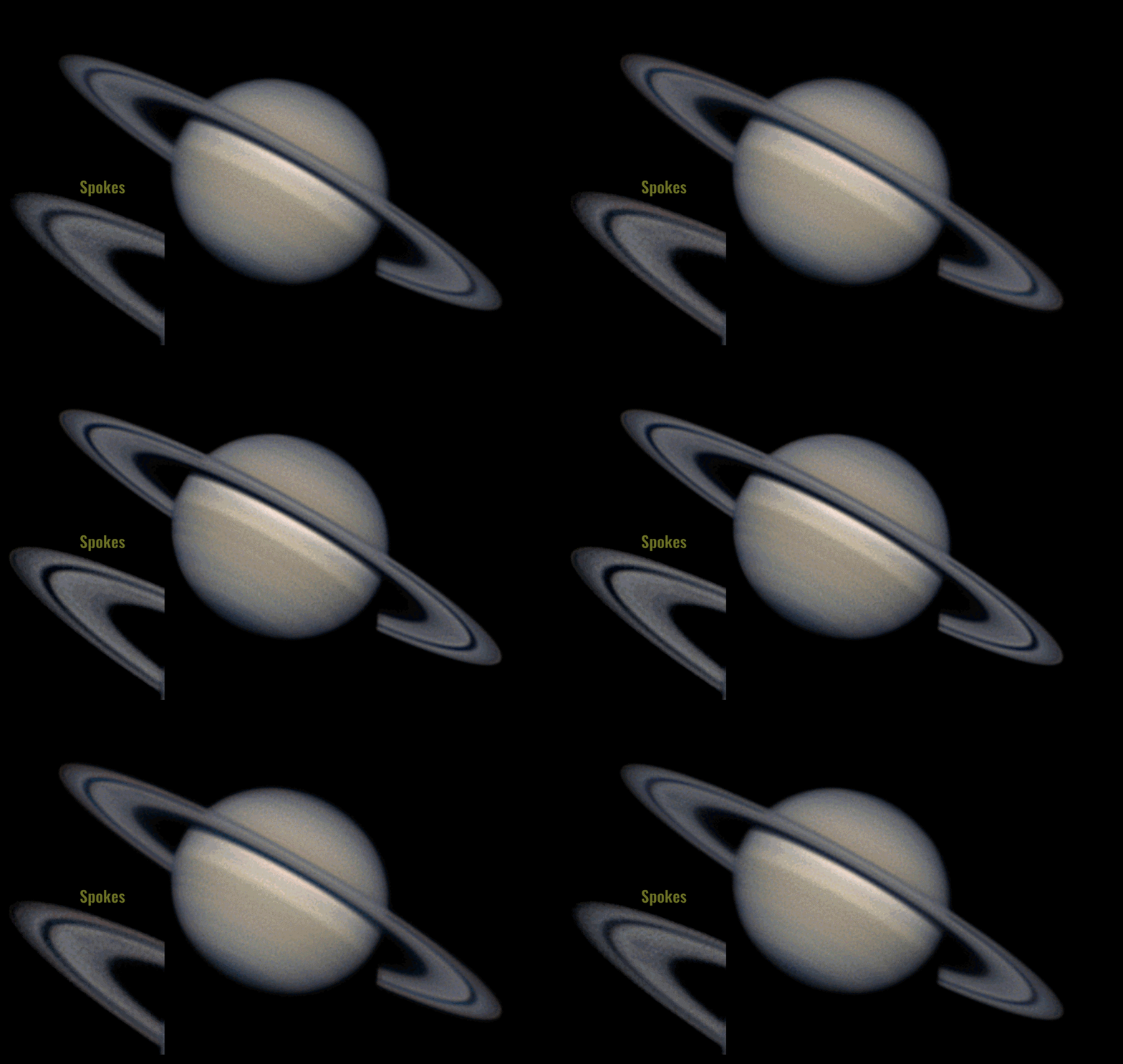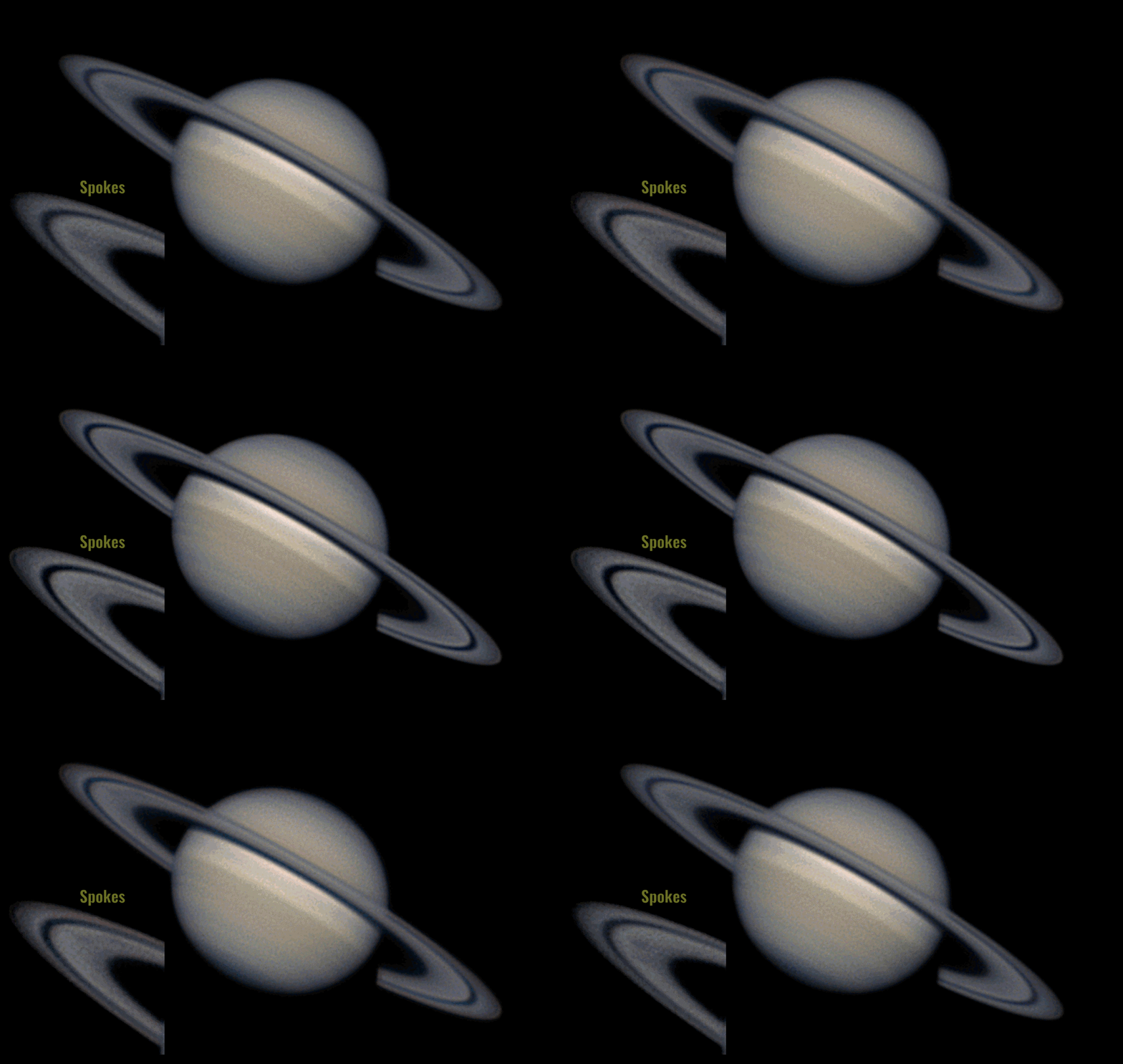
Don’t get spooked by Saturn’s ghostly spokes! Today we feature a nearly two-hour timelapse of Saturn and its rings looping forwards and backwards. A day on Saturn is only 10 hours long, so two hours of observation covers quite a bit of its rotation. If you look closely, a ghoulish shadow appears and disappears as Saturn’s B ring rotates. Decades of observation with Voyager 2, Cassini, and Hubble show the appearance of Saturn’s spokes varies with the planet’s seasons. Like Earth, Saturn’s spin axis is tilted compared to the plane of its orbit around the Sun. During Saturn’s equinox, the rings are less tilted away from the Sun and the planet receives more evenly distributed sunlight and solar wind. Although their origin is still uncertain, Saturn’s spokes may be shadows of and reflections off of dust and ice levitating above the rings caused by electromagnetic interactions between the solar wind and the planet’s magnetic field. Find dark skies and look up this August to witness the Perseid meteor shower uninhibited by the Moon!
¡No se deje intimidar por los fantasmales radios de Saturno! Hoy presentamos un timelapse de casi dos horas de Saturno y sus anillos, reproducido hacia adelante y hacia atrás en bucle. Un día en Saturno dura solo 10 horas, por lo que dos horas de observación abarcan una porción considerable de su rotación. Si se observa con atención, una sombra espectral aparece y desaparece a medida que el Anillo B de Saturno rota. Décadas de observación con las misiones Voyager 2, Cassini y el telescopio Hubble muestran que la aparición de los radios de Saturno varía con las estaciones del planeta. Al igual que la Tierra, el eje de rotación de Saturno está inclinado respecto al plano de su órbita alrededor del Sol. Durante el equinoccio de Saturno, los anillos se inclinan menos respecto al Sol y el planeta recibe luz solar y viento solar distribuidos de manera más uniforme. Aunque su origen sigue siendo incierto, los radios de Saturno podrían ser sombras y reflejos de polvo y hielo que levitan sobre los anillos, causados por interacciones electromagnéticas entre el viento solar y el campo magnético del planeta.