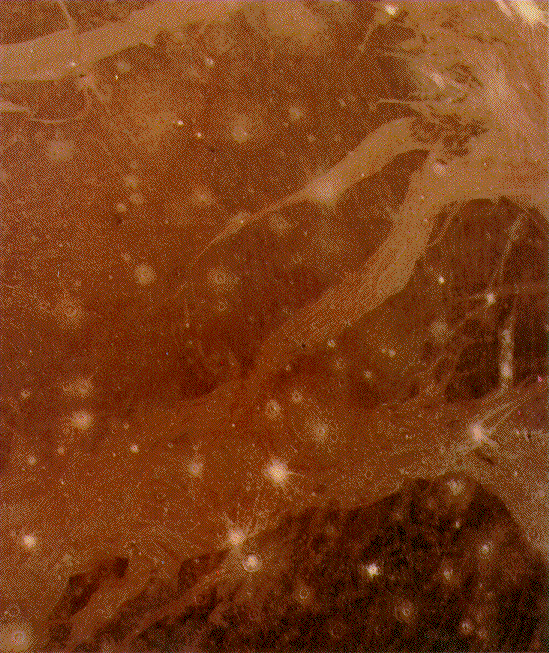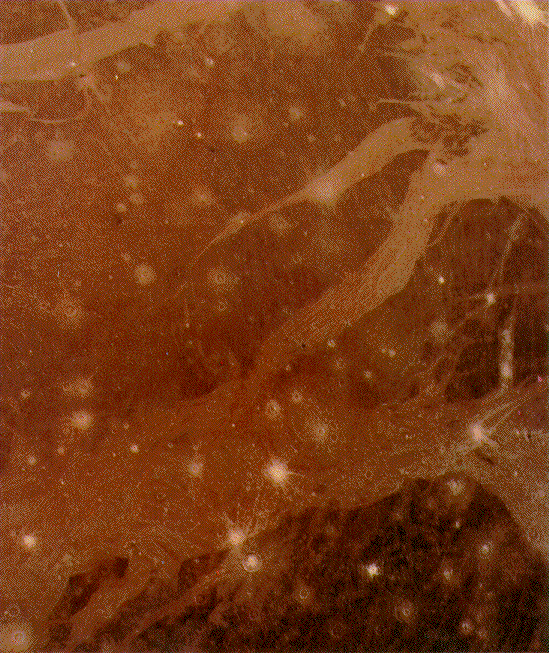
NASA's robot spacecraft Galileo began its long voyage to Jupiter in October of 1989. In December of last year it arrived in the Jovian system, beginning its unprecedented, detailed exploration by dropping a probe into the gas giant's atmosphere. By early this morning it will have accomplished another milestone in its ambitious mission. Now in orbit around Jupiter, Galileo will make its first close flyby of Ganymede, Jupiter's (and the solar system's) largest moon at 2:29 a.m. EDT. As planned, approaching to within 524 miles, it will make a series of high resolution images of the surface which will reveal features as small as 33 feet across. This close-up color image from the Voyager 2 flyby in 1979 previews sights Galileo will see in greater detail. Showing features as small as 3 miles across, it reveals a variety of terrain on Ganymede's icy surface, including impact craters with bright rays and long strips of light grooved structures suggesting large scale motions of the frozen crust. Galileo's flyby images will be stored onboard for playback and should be available during the week of July 10.
La nave espacial robótica Galileo de la NASA inició su largo viaje hacia Júpiter en octubre de 1989. En diciembre del año pasado llegó al sistema joviano, comenzando su exploración detallada y sin precedentes al lanzar una sonda hacia la atmósfera del gigante gaseoso. En la madrugada de hoy habrá alcanzado otro hito en su ambiciosa misión. Actualmente en órbita alrededor de Júpiter, Galileo realizará su primer sobrevuelo cercano a Ganimedes, la luna más grande de Júpiter (y del sistema solar), a las 2:29 a.m. EDT. Según lo planeado, aproximándose a tan solo 524 millas de distancia, tomará una serie de imágenes de alta resolución de la superficie que revelarán características de tan solo 33 pies de ancho. Esta imagen en color de cerca, obtenida durante el sobrevuelo de Voyager 2 en 1979, anticipa lo que Galileo verá con mayor detalle. Mostrando características de tan solo 3 millas de ancho, revela una variedad de terrenos en la superficie helada de Ganimedes, incluyendo cráteres de impacto con rayos brillantes y largas franjas de estructuras estriadas y claras que sugieren movimientos a gran escala de la corteza congelada. Las imágenes del sobrevuelo de Galileo serán almacenadas a bordo para su posterior transmisión y deberían estar disponibles durante la semana del 10 de julio.