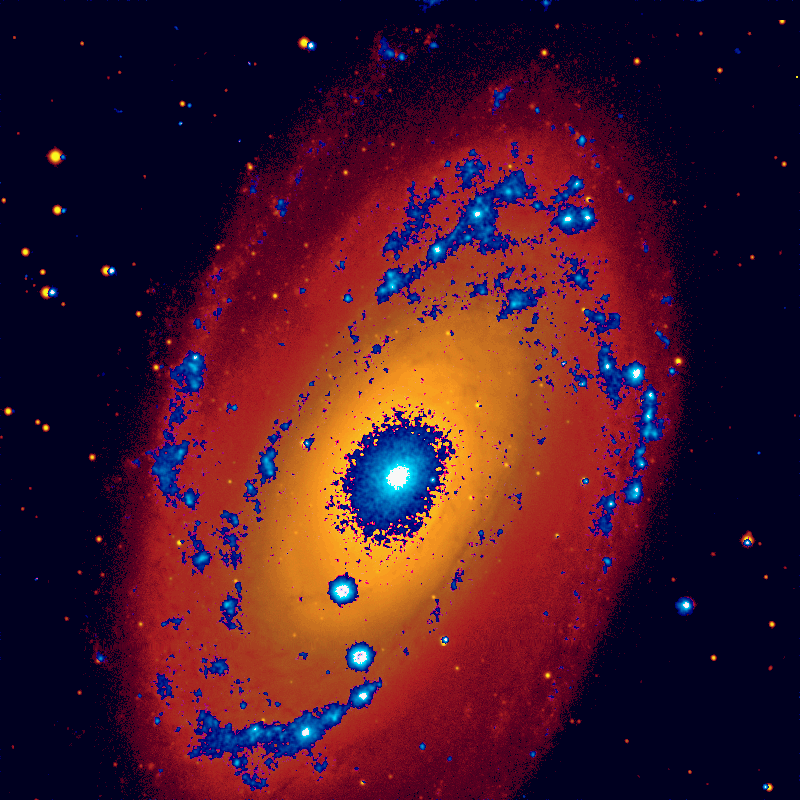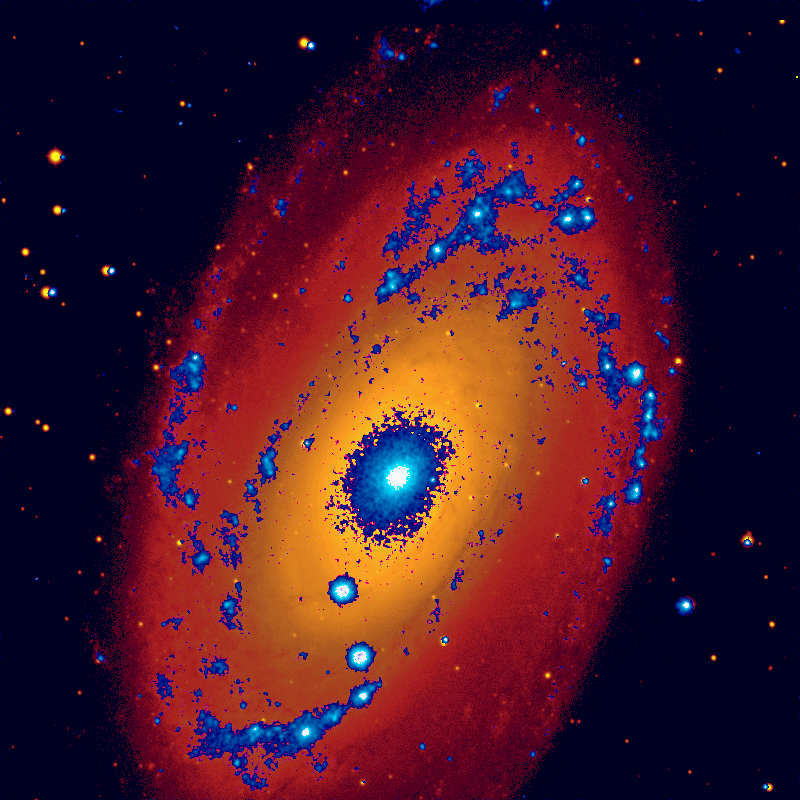
Few stars are still forming in the old giant spiral galaxy M81. The blue regions in this picture - representing ultraviolet light - highlight regions of bright young stars and star formation and appear rare than in M74 and M33. The red regions - representing the visible light - show a large population of older, less massive stars. M81 is therefore classified as spiral galaxy type "Sab" on the Hubble Sequence of Galaxies. One distinguishing feature of these types of galaxies is the relatively large central bulge surrounding the center of the galaxy. A massive density wave circulates around the center of spiral galaxies. It is not well understood why the bulge of M81 glows as bright as it does in ultraviolet light. Speculation includes that this may be due to hot evolved stars such as those found in the ancient globular cluster Omega Centauri.
Pocas estrellas se siguen formando en la antigua y gigantesca galaxia espiral M81. Las regiones azules en esta imagen —que representan la luz ultravioleta— destacan zonas de estrellas jóvenes y brillantes y de formación estelar activa, y aparecen con menor frecuencia que en M74 y M33. Las regiones rojas —que representan la luz visible— muestran una gran población de estrellas más antiguas y menos masivas. M81 se clasifica, por tanto, como galaxia espiral de tipo "Sab" en la Secuencia de Hubble de Galaxias. Una característica distintiva de este tipo de galaxias es el bulbo central relativamente grande que rodea el núcleo galáctico. Una onda de densidad masiva circula alrededor del centro de las galaxias espirales. No se comprende bien por qué el bulbo de M81 brilla con tanta intensidad en luz ultravioleta. Entre las especulaciones se incluye la posibilidad de que esto se deba a estrellas evolucionadas y calientes, como las que se encuentran en el antiguo cúmulo globular Omega Centauri.