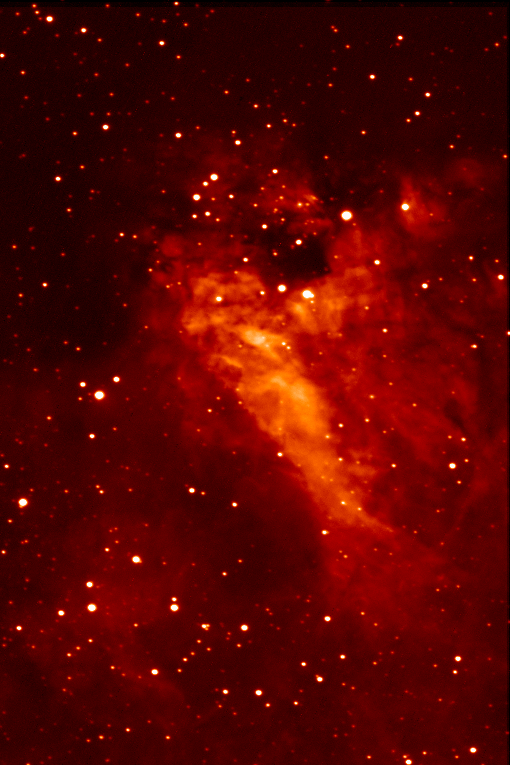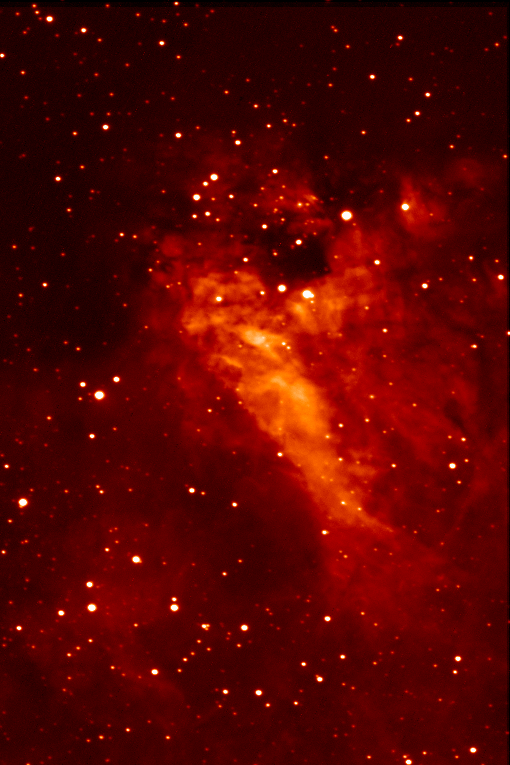
What unusual eggs have been laid by this majestic swan? The star forming region above, known as Swan Nebula, is the home of hot red-glowing gas, dark lanes of dust, bright young stars and -- what are those? Of the few stars visible in the Swan Nebula, several have quite unusual colors and are hypothesized to be very young stars still shrouded by gas from the cloud that formed them. The Swan Nebula is quite large and massive as it contains roughly 1000 times the mass of our Sun. The bright central region is about 15 light years across lies about 5000 light years away toward the constellation of Sagittarius. The distinctive shape causes this region to have several other names, including the Omega Nebula, the Horseshoe Nebula, and the Lobster Nebula.
¿Qué huevos tan inusuales ha puesto este majestuoso cisne? La región de formación estelar que se observa arriba, conocida como Nebulosa del Cisne, alberga gas candente que emite un brillo rojizo, oscuras franjas de polvo, jóvenes estrellas brillantes y... ¿qué son esas? De las pocas estrellas visibles en la Nebulosa del Cisne, varias presentan colores bastante inusuales y se hipotetiza que son estrellas muy jóvenes aún envueltas por el gas de la nube que las formó. La Nebulosa del Cisne es bastante grande y masiva, ya que contiene aproximadamente 1000 veces la masa de nuestro Sol. La brillante región central mide unos 15 años luz de diámetro y se encuentra a unos 5000 años luz de distancia, en dirección a la constelación de Sagitario. Su distintiva forma ha dado lugar a que esta región reciba varios otros nombres, entre ellos Nebulosa Omega, Nebulosa de la Herradura y Nebulosa de la Langosta.