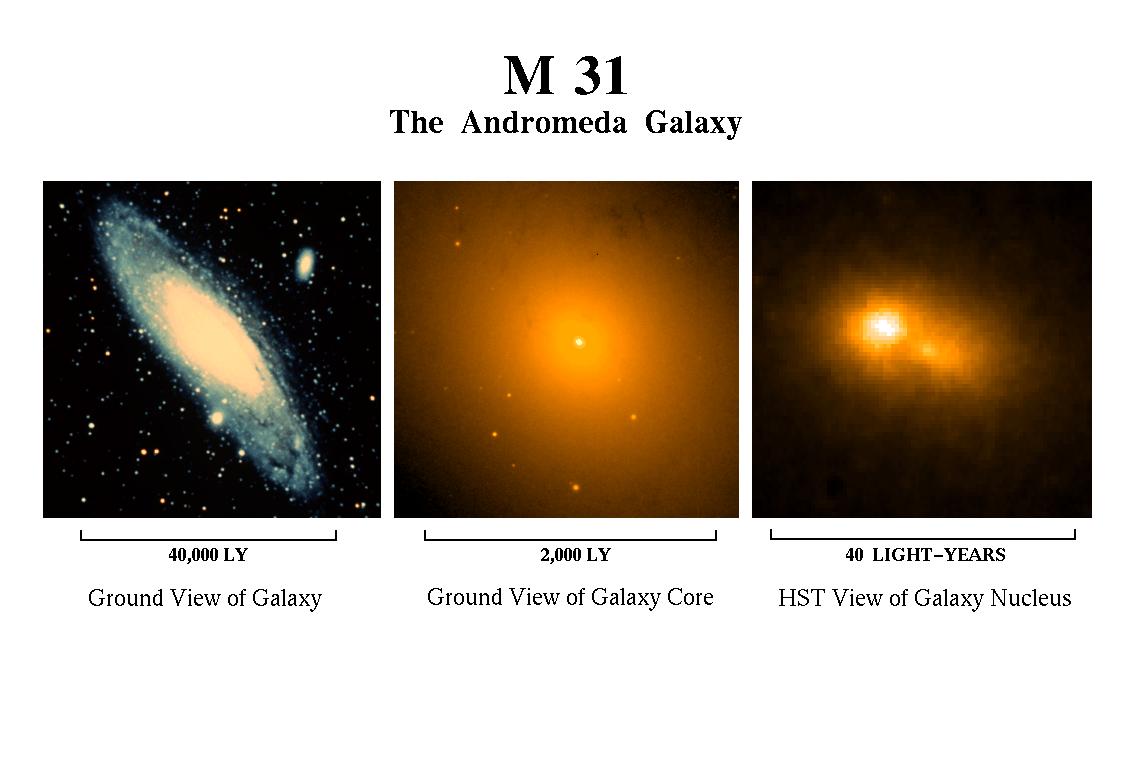
The center of M31 is twice as unusual as previously thought. In 1991 the Planetary Camera then onboard the Hubble Space Telescope pointed toward the center of our Milky Way's closest major galactic neighbor: Andromeda (M31). To everyone's surprise, M31's nucleus showed a double structure. The nuclear hot-spots are quite close together when considering Galactic distances: M31 is about 150,000 light years across while the above shows only the central 30 light-years. Subsequent ground-based observations have led to speculation that indeed two nuclei exist, are moving with respect to each other, that one nucleus is slowly tidally disrupting the other, and that one nucleus may be the remains of smaller galaxy "eaten" by M31. The nuclei of many galaxies, including M31, are known to be quite violent places, and the existence of massive black holes are frequently postulated to explain them.
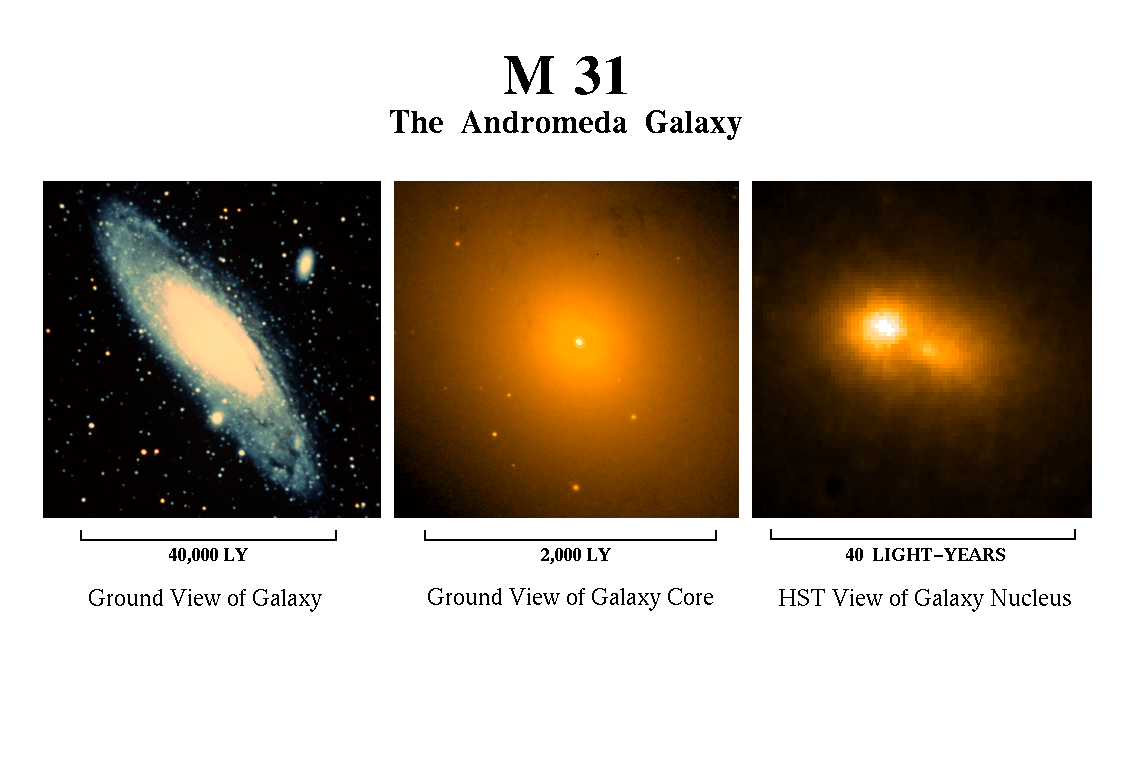
El centro de M31 es dos veces más inusual de lo que se pensaba anteriormente. En 1991, la Cámara Planetaria que entonces se encontraba a bordo del Telescopio Espacial Hubble apuntó hacia el centro del vecino galáctico mayor más cercano a nuestra Vía Láctea: Andrómeda (M31). Para sorpresa de todos, el núcleo de M31 mostró una estructura doble. Los puntos calientes nucleares están bastante próximos entre sí si se consideran las distancias galácticas: M31 tiene aproximadamente 150.000 años luz de diámetro, mientras que la imagen anterior muestra únicamente los 30 años luz centrales. Observaciones posteriores realizadas desde tierra han dado lugar a especulaciones de que efectivamente existen dos núcleos, que se desplazan uno respecto al otro, que uno de ellos está perturbando mareal y lentamente al otro, y que uno de los núcleos podría ser los restos de una galaxia más pequeña «devorada» por M31. Se sabe que los núcleos de muchas galaxias, incluida M31, son lugares bastante violentos, y con frecuencia se postula la existencia de agujeros negros masivos para explicar dicho comportamiento.