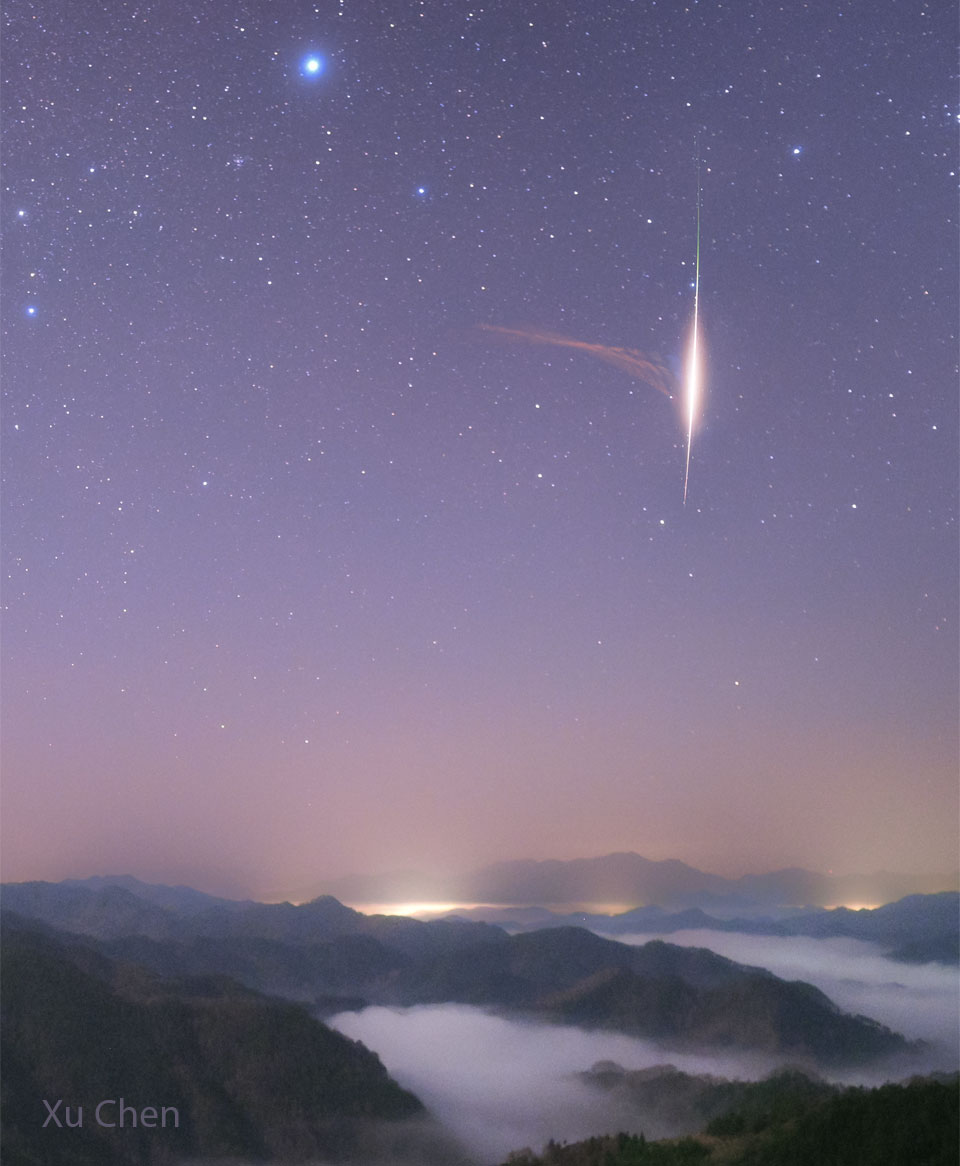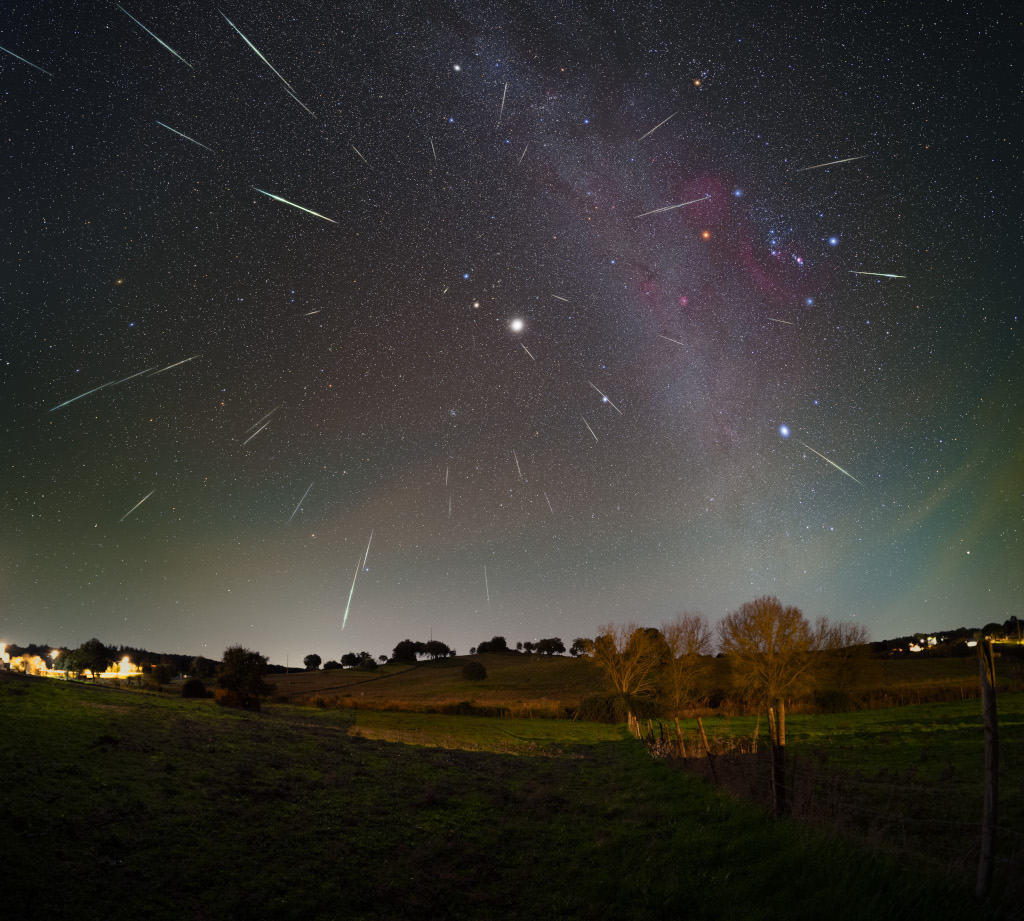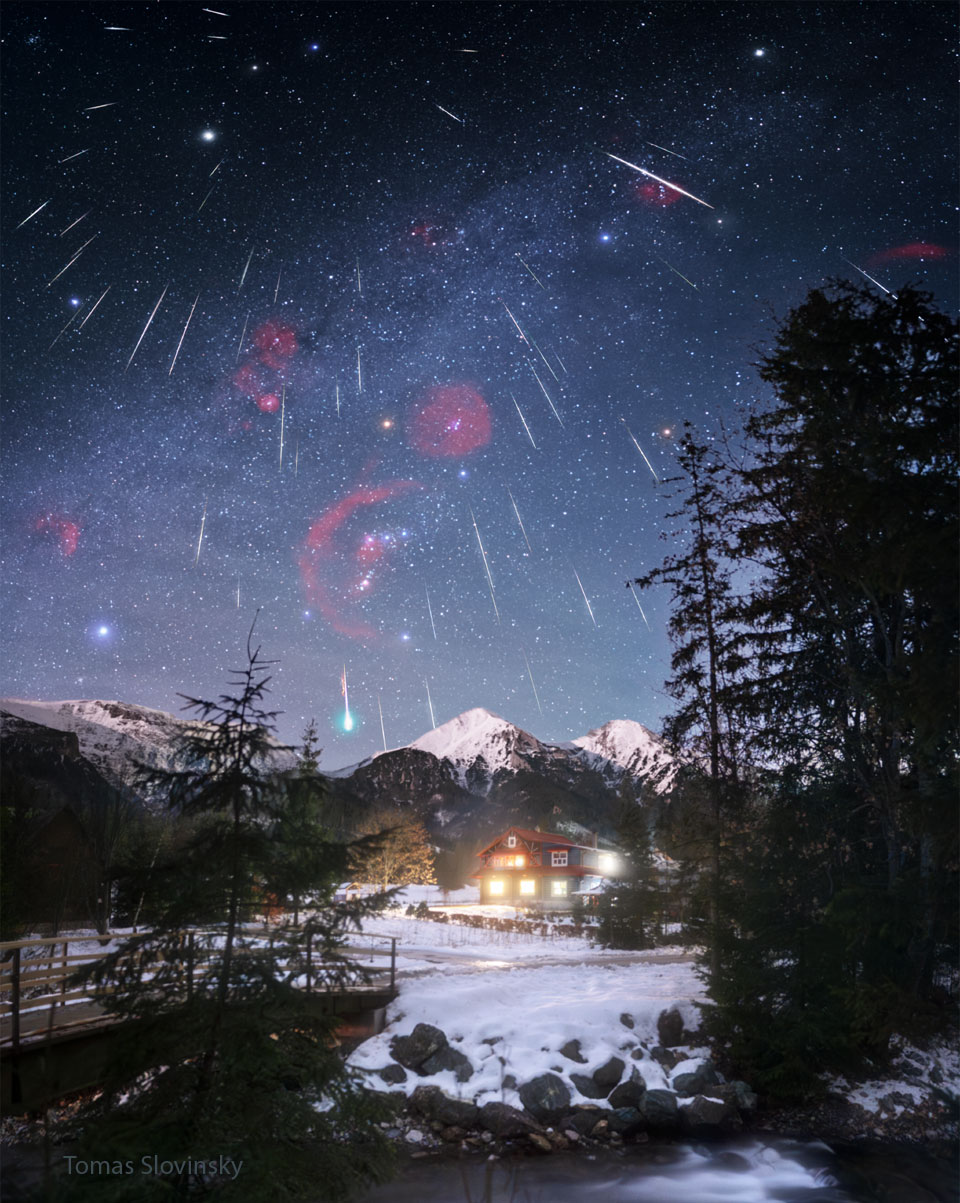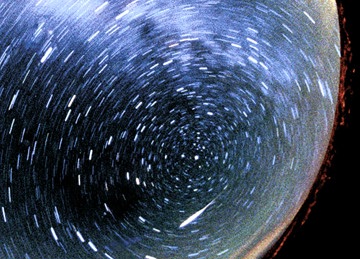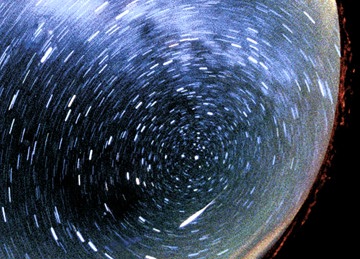
Tonight you might be able to see Halley's Comet again - or at least some pieces of it. It is widely thought that that the meteors from the Orionids meteor shower, which peaks tonight, are just small pieces of Halley's Comet falling to Earth. During each pass near the Sun, a comet will heat up and shed pieces of ice and rock from its nucleus. This debris continues to orbit the Sun until either evaporating or being swept up by some large solar-system body. A piece of comet debris striking the Moon creates a small crater, but a piece striking the Earth usually burns up in the atmosphere causing a brief, bright streak. Every year at this time the Earth crosses an old stream of bits from Halley's Comet causing the Orionids display, named from the constellation (Orion) from which the meteors appear to originate. The streak below center in the above picture of the northern sky actually depicts a meteor from the Perseid meteor shower, a usually even more impressive display that peaks every year in mid-August.
Esta noche podría ser posible ver el Cometa Halley de nuevo, o al menos algunos fragmentos de él. Se cree ampliamente que los meteoros de la lluvia de las Oriónidas, que alcanza su máximo esta noche, son pequeños fragmentos del Cometa Halley cayendo hacia la Tierra. Durante cada paso cercano al Sol, un cometa se calienta y desprende fragmentos de hielo y roca de su núcleo. Estos escombros continúan orbitando el Sol hasta que se evaporan o son barridos por algún cuerpo de gran tamaño del sistema solar. Un fragmento de escombros cometarios que impacta la Luna crea un pequeño cráter, pero un fragmento que golpea la Tierra generalmente se consume en la atmósfera produciendo un breve y brillante trazo luminoso. Cada año, en esta época, la Tierra cruza una antigua corriente de partículas del Cometa Halley, dando lugar al espectáculo de las Oriónidas, cuyo nombre proviene de la constelación (Orión) desde la cual los meteoros parecen originarse. El trazo visible por debajo del centro en la imagen del cielo septentrional representa en realidad un meteoro de la lluvia de las Perseidas, un espectáculo que habitualmente resulta aún más impresionante y que alcanza su máximo cada año a mediados de agosto.