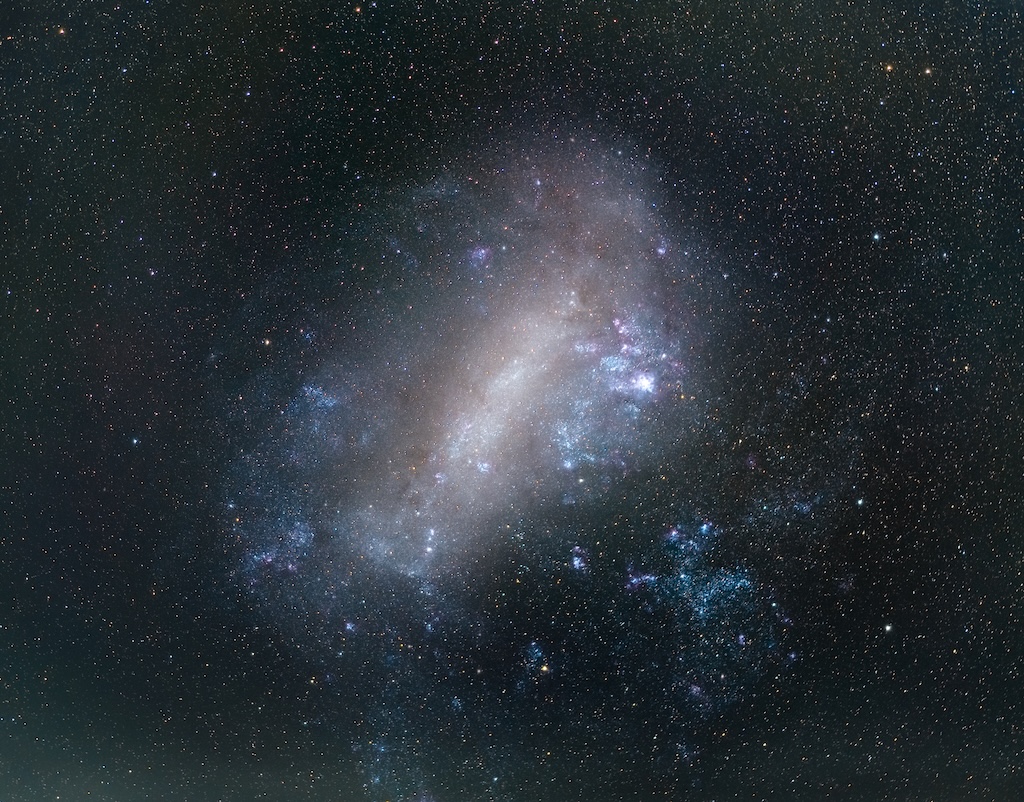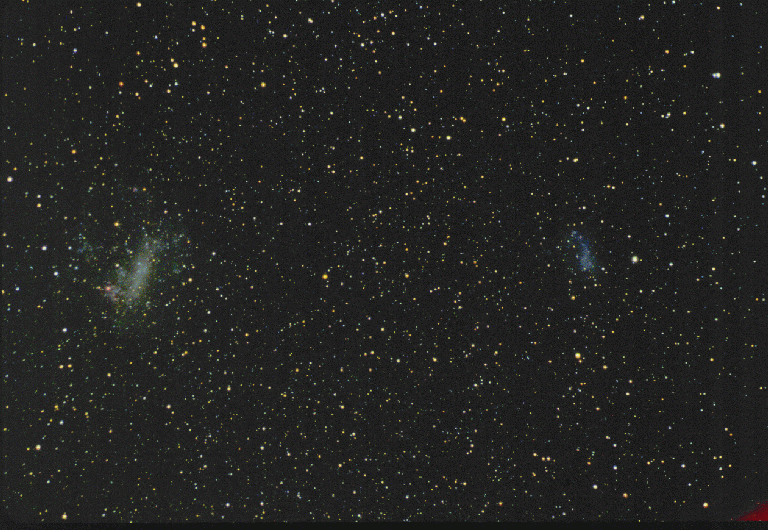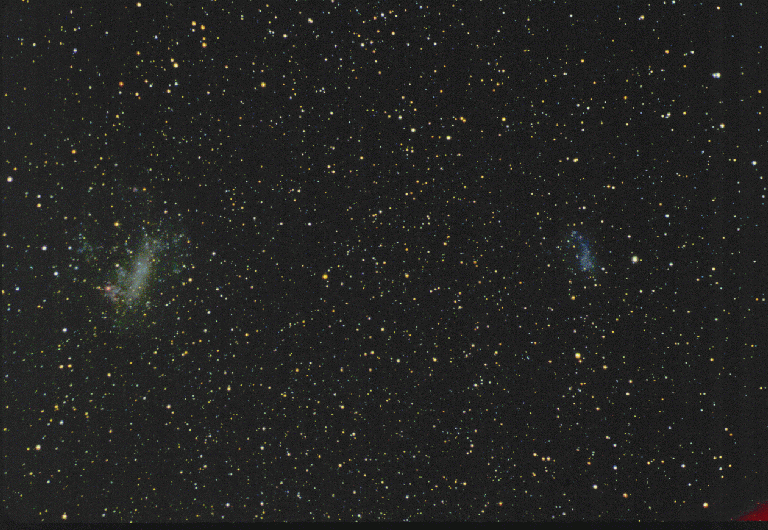
Two galaxies stand out to casual observers in Earth's Southern Hemisphere: the Large Magellanic Cloud (LMC) and the Small Magellanic Cloud (SMC). These irregular galaxies are two of the closest galaxies to our Milky Way Galaxy. Recent observations of the LMC (on the left) have determined that it is on a nearly circular orbit around our Galaxy, and have even helped in the determination of the composition of dark matter in our Galaxy. The above photograph spans 40 degrees. Visible on the lower left of the LMC is the Tarantula Nebula (in red). In the foreground to the right of the SMC is globular cluster 47 Tucanae, appearing here as a bright point of light.
Dos galaxias destacan a los observadores casuales en el hemisferio sur de la Tierra: la Gran Nube de Magallanes (LMC, por sus siglas en inglés) y la Pequeña Nube de Magallanes (SMC). Estas galaxias irregulares son dos de las galaxias más cercanas a nuestra Vía Láctea. Observaciones recientes de la LMC (a la izquierda) han determinado que se encuentra en una órbita casi circular alrededor de nuestra Galaxia, y han contribuido incluso a determinar la composición de la materia oscura en ella. La fotografía abarca 40 grados. Visible en la parte inferior izquierda de la LMC se encuentra la Nebulosa de la Tarántula (en rojo). En primer plano, a la derecha de la SMC, se distingue el cúmulo globular 47 Tucanae, que aparece aquí como un punto brillante de luz.