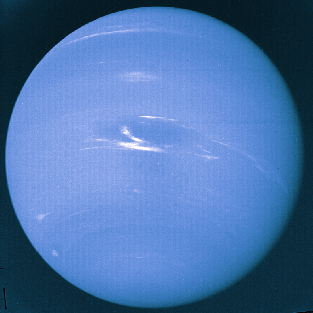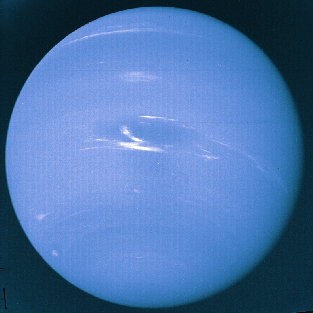
This picture was taken by the Voyager 2 spacecraft in 1989 - the only spacecraft ever to visit Neptune. Neptune will be the farthest planet from the Sun until 1999, when the elliptical orbit of Pluto will cause it to once again resume this status. Neptune, like Uranus, is composed mostly of liquid water, methane and ammonia, is surrounded by a thick gas atmosphere of mostly hydrogen and helium, and has many moons and rings. Neptune's moon Triton is unlike any other and has active volcanoes. The nature of Triton's unusual orbit around Neptune is the focus of much discussion and speculation.
Esta imagen fue tomada por la sonda espacial Voyager 2 en 1989, la única nave espacial que ha visitado Neptuno hasta la fecha. Neptuno será el planeta más lejano del Sol hasta 1999, cuando la órbita elíptica de Plutón hará que este último retome dicha condición. Neptuno, al igual que Urano, está compuesto principalmente de agua líquida, metano y amoníaco, está rodeado por una densa atmósfera gaseosa compuesta en su mayor parte de hidrógeno y helio, y posee numerosas lunas y anillos. Tritón, la luna de Neptuno, es completamente singular y alberga volcanes activos. La naturaleza de la inusual órbita de Tritón alrededor de Neptuno es objeto de numerosos debates y especulaciones.