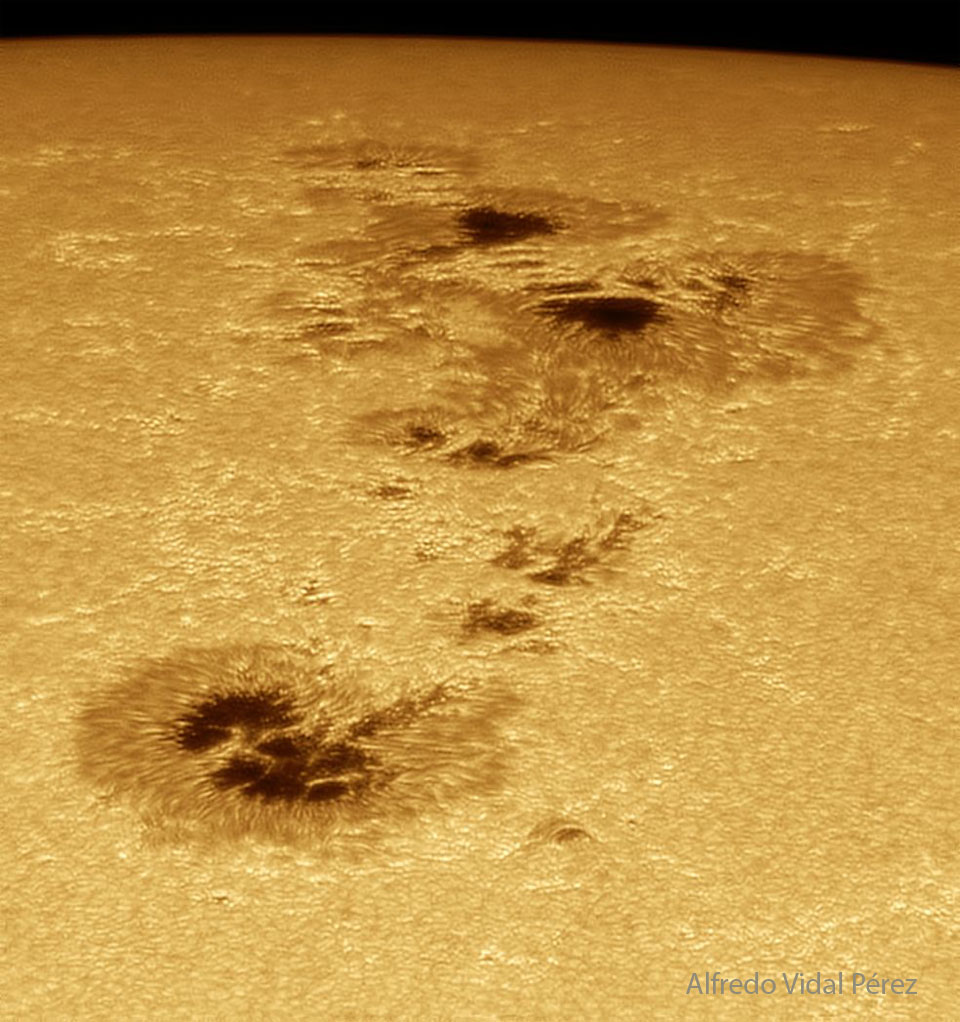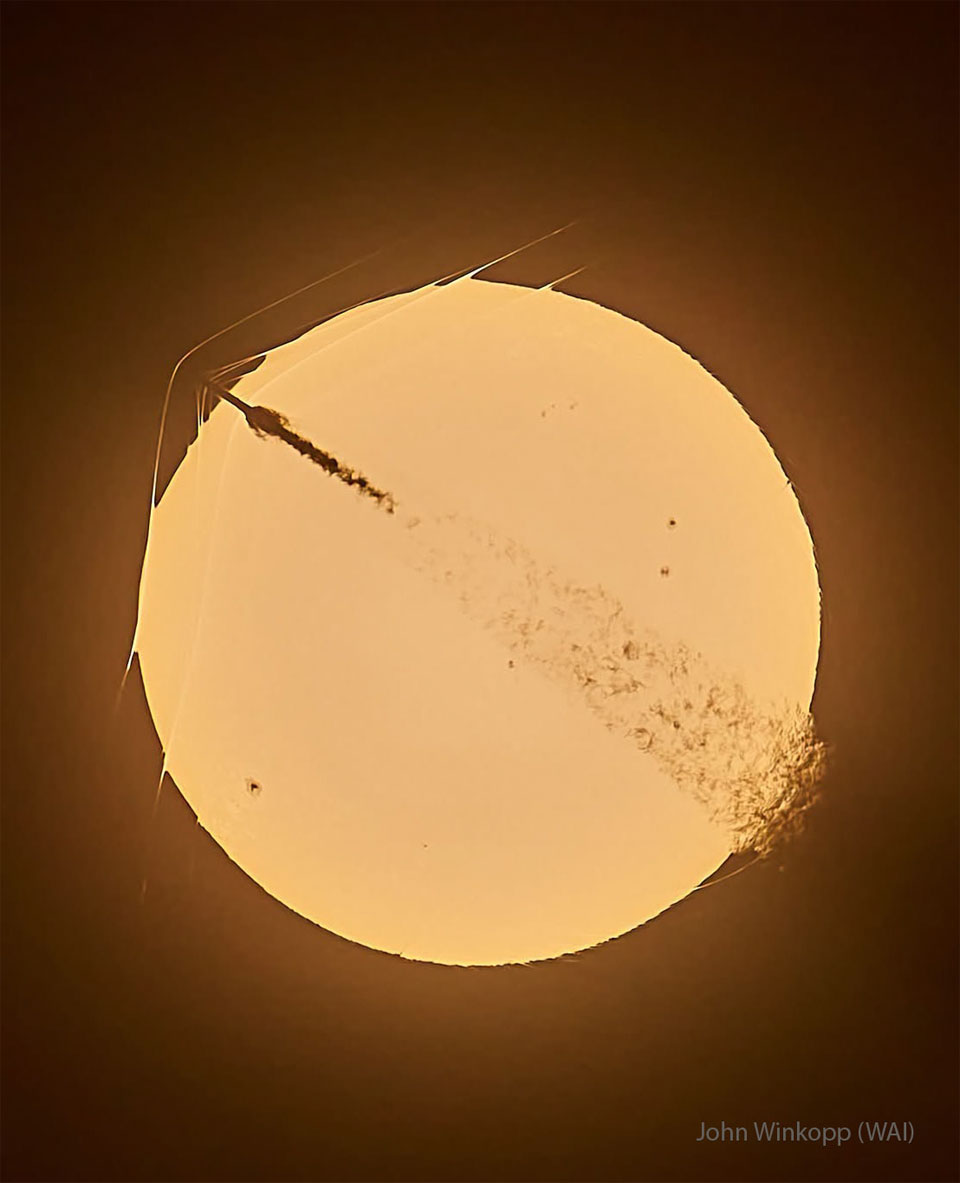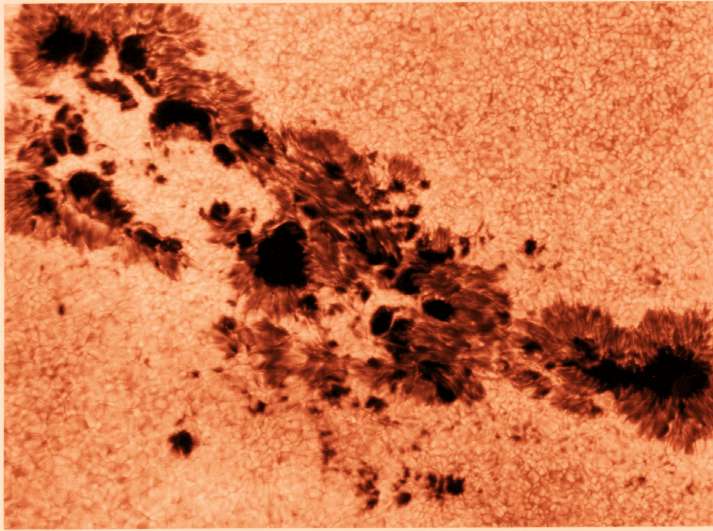
Our Sun has spots! These spots appear dark in photographs like the one above, but in fact sunspots are quite bright - they are just dark compared to the rest of the Sun. Sunspots are about the size of the Earth and frequently occur in groups, as shown above. Sunspots occur when a concentrated portion of the Solar magnetic field pokes through the surface. This field slows energy from entering the sunspot region, causing sunspots to appear cooler, darker, and lower than the surrounding surface. Sunspots typically last a few days before dissipating. The number of sunspots is always changing, generally going from a maximum to a minimum about every 5 ½ years. In fact, the Sun just passed a minimum two years ago. The Sun and sunspots should never be looked at directly.
¡Nuestro Sol tiene manchas! Estas manchas aparecen oscuras en fotografías como la que se muestra arriba, pero en realidad las manchas solares son bastante brillantes: simplemente son oscuras en comparación con el resto del Sol. Las manchas solares tienen aproximadamente el tamaño de la Tierra y con frecuencia aparecen en grupos, como se muestra arriba. Las manchas solares se forman cuando una porción concentrada del campo magnético solar atraviesa la superficie. Este campo ralentiza la energía que ingresa a la región de la mancha solar, haciendo que estas aparezcan más frías, más oscuras y más bajas que la superficie circundante. Las manchas solares suelen durar algunos días antes de disiparse. El número de manchas solares cambia constantemente, pasando generalmente de un máximo a un mínimo aproximadamente cada 5 años y medio. De hecho, el Sol acaba de pasar un mínimo hace dos años. El Sol y las manchas solares nunca deben observarse directamente.