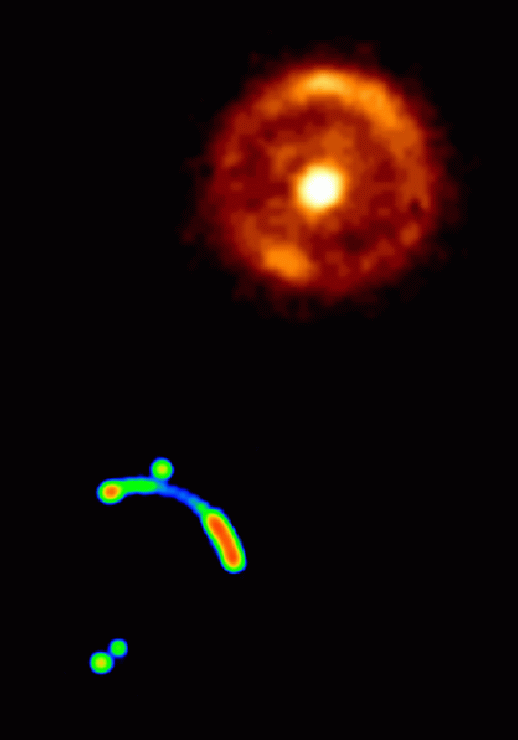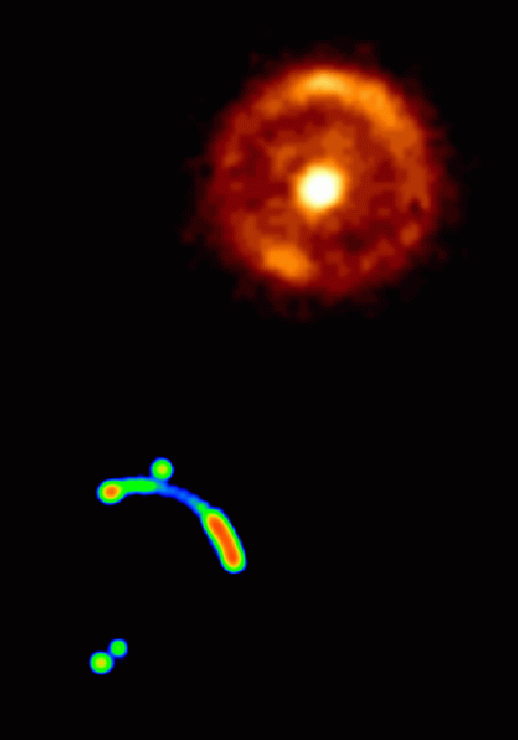
Can one galaxy hide behind another? Not in the case of B1938+666. Here the foreground galaxy acts like a huge gravitational lens, pulling the light from the background object around it, keeping it visible. Here the alignment is so precise that the distant galaxy is distorted into a nearly perfect giant ring around the foreground galaxy, a formation known as an Einstein ring. The bright peak at the center of the bulls-eye is the nearer galaxy. The cosmic mirage was found initially with the MERLIN radio telescope array. The follow-up image shown above from the Hubble Space Telescope was released earlier today. Although appearing extremely small at 1 arcsecond diameter, the above Einstein ring is really tens of thousands of light years across.
¿Puede una galaxia ocultarse detrás de otra? No en el caso de B1938+666. En este caso, la galaxia en primer plano actúa como una enorme lente gravitacional, curvando la luz del objeto de fondo a su alrededor y manteniéndolo visible. El alineamiento es tan preciso que la galaxia distante queda distorsionada en un anillo casi perfecto alrededor de la galaxia delantera, una formación conocida como anillo de Einstein. El pico brillante en el centro de la diana es la galaxia más cercana. Este espejismo cósmico fue descubierto inicialmente con el conjunto de radiotelescopios MERLIN. La imagen de seguimiento mostrada aquí, obtenida por el Telescopio Espacial Hubble, fue publicada a principios de hoy. Aunque aparece extremadamente pequeño con un diámetro de 1 segundo de arco, el anillo de Einstein tiene en realidad decenas de miles de años luz de diámetro.