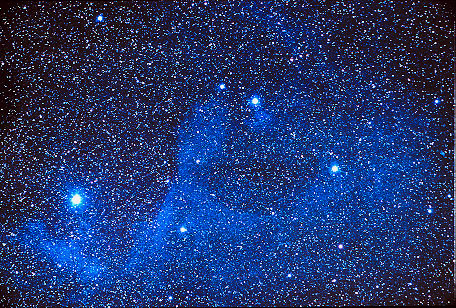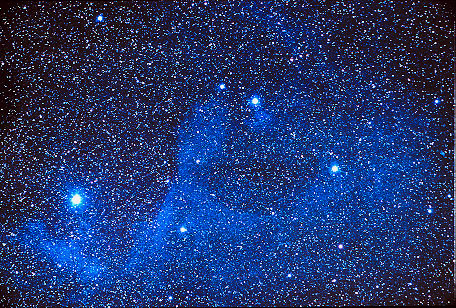
Wisps of dust fill the space between the stars. This dust is usually invisible, subtly acting to dim the light of more distant stars. Sometimes this dust is thick and prominent as dark patches on otherwise bright emission nebulae. Other times this dust may show itself by reflecting the light of bright, nearby stars. Because bright stars tend to be blue, and because dust reflects blue light more easily than red, the resulting reflection nebula usually appears blue. Pictured above is the reflection nebula Sharpless 2-1 in the constellation of Scorpius.
Filamentos de polvo llenan el espacio entre las estrellas. Este polvo suele ser invisible, actuando sutilmente para atenuar la luz de las estrellas más lejanas. En ocasiones, este polvo es denso y prominente, apareciendo como manchas oscuras sobre nebulosas de emisión que de otro modo serían brillantes. Otras veces, el polvo puede hacerse visible al reflejar la luz de estrellas brillantes cercanas. Dado que las estrellas brillantes tienden a ser azules, y debido a que el polvo refleja la luz azul con mayor facilidad que la roja, la nebulosa de reflexión resultante suele presentar una tonalidad azul. En la imagen se muestra la nebulosa de reflexión Sharpless 2-1, ubicada en la constelación de Escorpius.