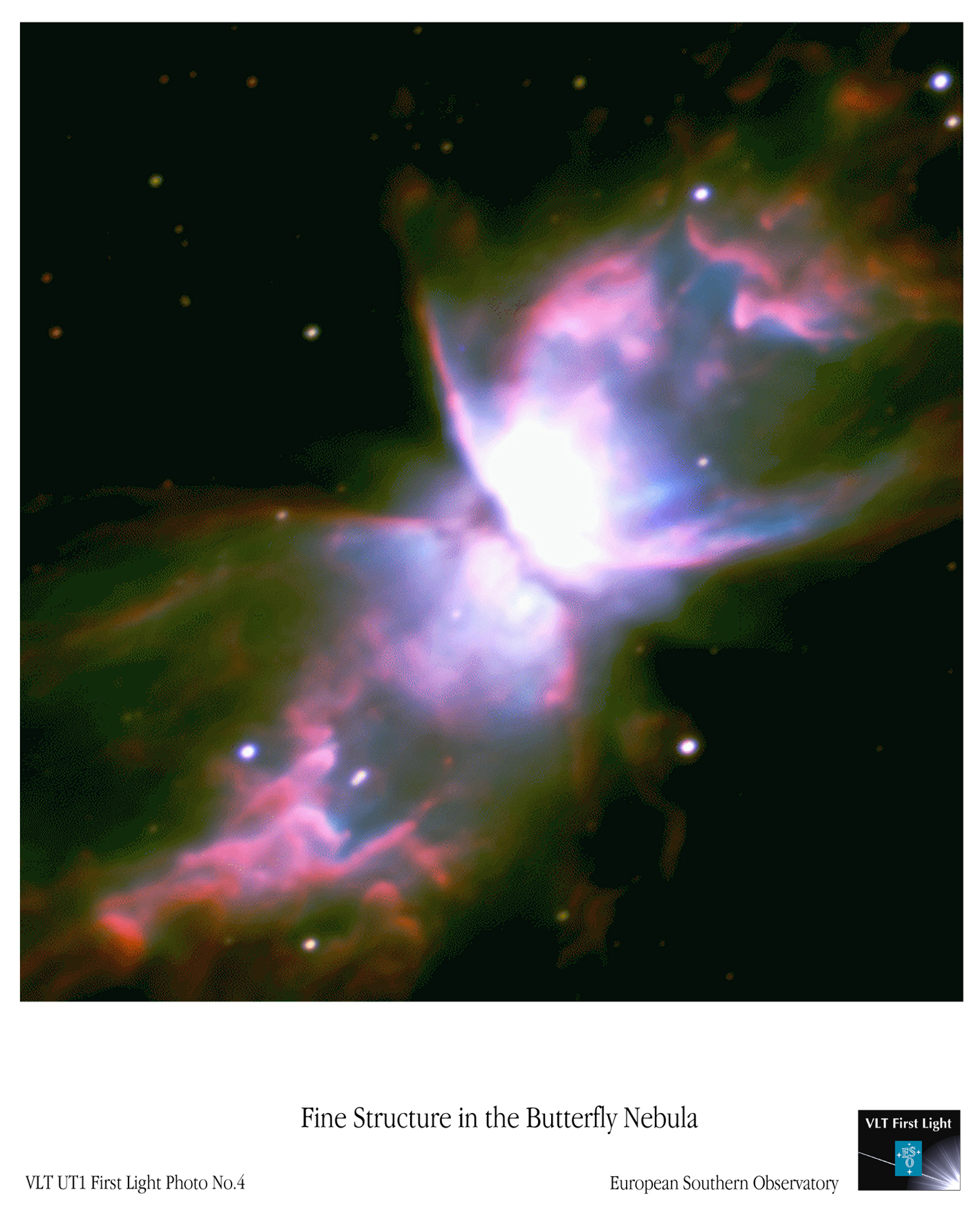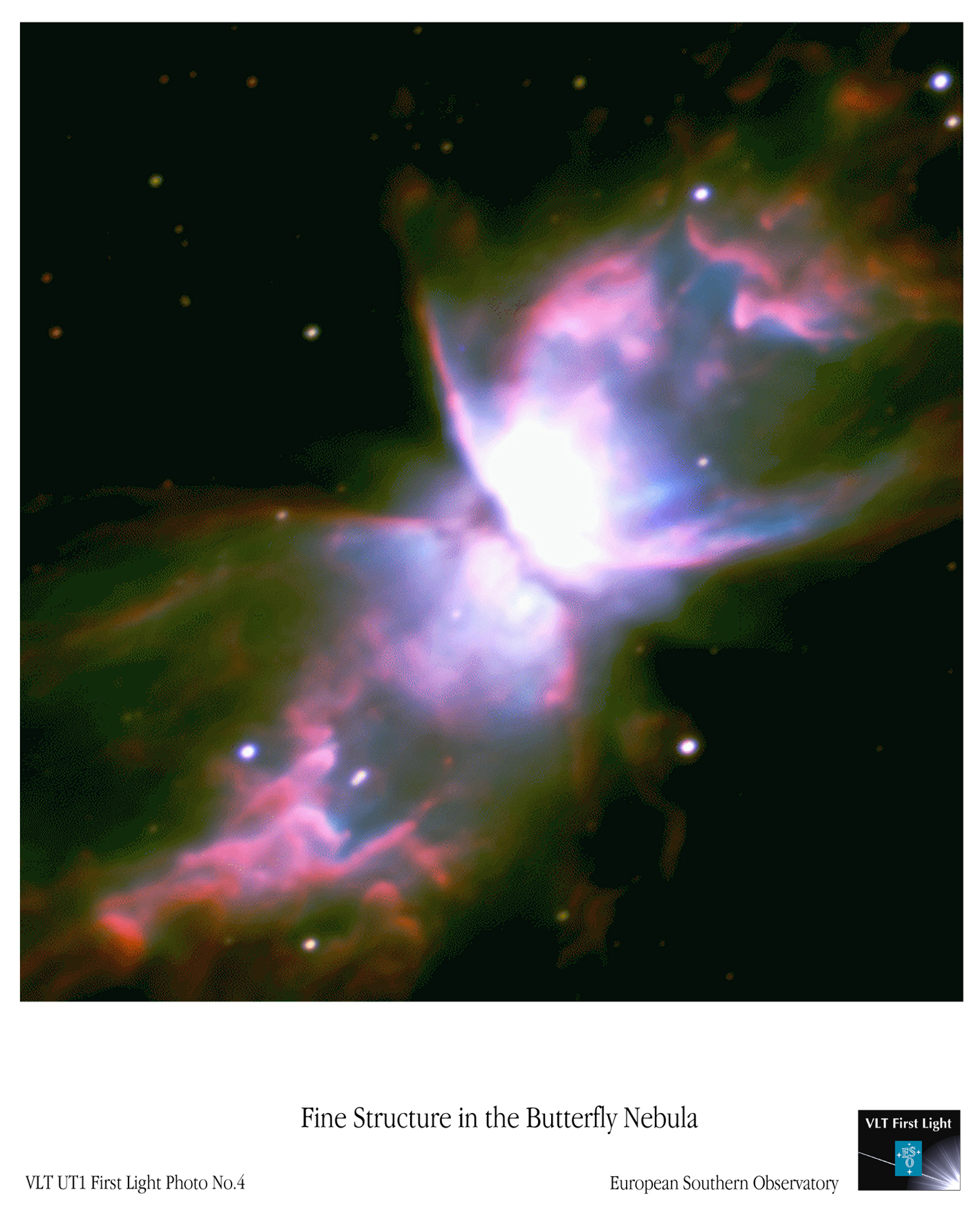
The Butterfly Nebula is only thousands of years old. As a central star of a binary system aged, it threw off its outer envelopes of gas in a strong stellar wind. The remaining stellar core is so hot it ionizes the previously ejected gas, causing it to glow. The different colors of this planetary nebula are determined by small differences in its composition. This bipolar nebula will continue to shine brightly for only a few thousand more years, after which its central star will fade and become a white dwarf star. The above picture is one of the first ever taken by the Very Large Telescope (VLT), a new 8.2-meter telescope located in Chile.
La Nebulosa Mariposa tiene apenas miles de años de antigüedad. A medida que la estrella central de un sistema binario envejeció, expulsó sus capas externas de gas mediante un intenso viento estelar. El núcleo estelar restante es tan caliente que ioniza el gas previamente eyectado, provocando que este brille. Los diferentes colores de esta nebulosa planetaria están determinados por pequeñas diferencias en su composición. Esta nebulosa bipolar continuará brillando intensamente solo por unos pocos miles de años más, tras los cuales su estrella central se apagará y se convertirá en una enana blanca. La imagen superior es una de las primeras tomadas por el Very Large Telescope (VLT), un nuevo telescopio de 8,2 metros ubicado en Chile.