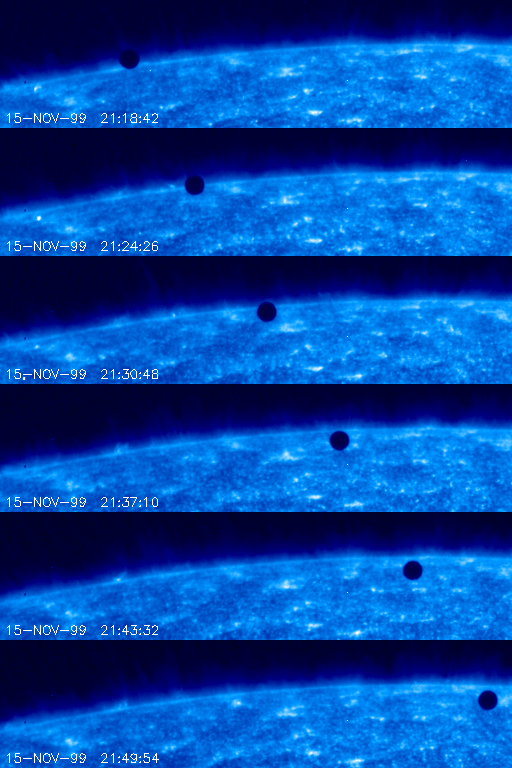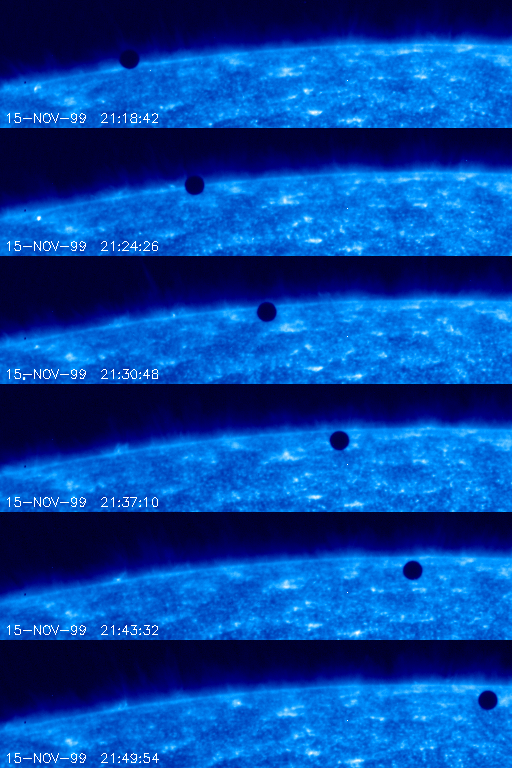
Just days before the peak of the Leonid meteor shower, skywatchers were offered another astronomical treat as planet Mercury crossed the face of the Sun on November 15. Viewed from planet Earth, a transit of Mercury is not all that rare. The last occurred in 1993 and the next will happen in 2003. Enjoying a mercurial transit does require an appropriately filtered telescope, still the event can be dramatic as the diminutive well-done world drifts past the dominating solar disk. This slow loading gif animation is based on images recorded by the earth-orbiting TRACE satellite. The false-color TRACE images were made in ultraviolet light and tend to show the hot gas just above the Sun's visible surface. Mercury's disk is silhouetted against the seething plasma as it follows a trajectory near the edge of the Sun.
Solo unos días antes del pico de la lluvia de meteoros de las Leónidas, los observadores del cielo disfrutaron de otro espectáculo astronómico cuando el planeta Mercurio cruzó la cara del Sol el 15 de noviembre. Visto desde el planeta Tierra, un tránsito de Mercurio no es algo especialmente infrecuente. El último ocurrió en 1993 y el siguiente tendría lugar en 2003. Presenciar un tránsito de Mercurio requiere un telescopio con el filtro adecuado; aun así, el evento puede resultar espectacular mientras el diminuto mundo abrasa el disco solar dominante. Esta animación GIF de carga lenta está basada en imágenes captadas por el satélite TRACE en órbita terrestre. Las imágenes en falso color de TRACE fueron obtenidas en luz ultravioleta y tienden a mostrar el gas caliente justo por encima de la superficie visible del Sol. El disco de Mercurio se recorta en silueta contra el plasma hirviente mientras sigue una trayectoria cerca del borde del Sol.