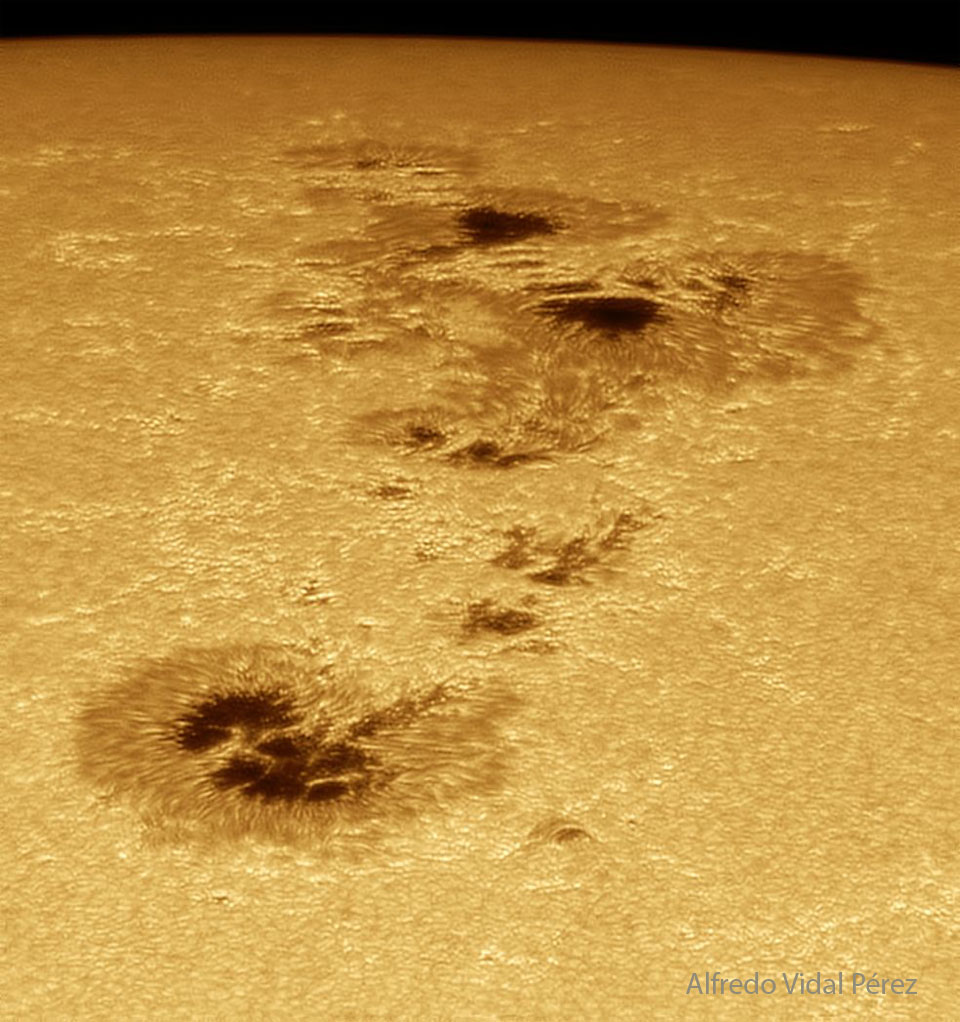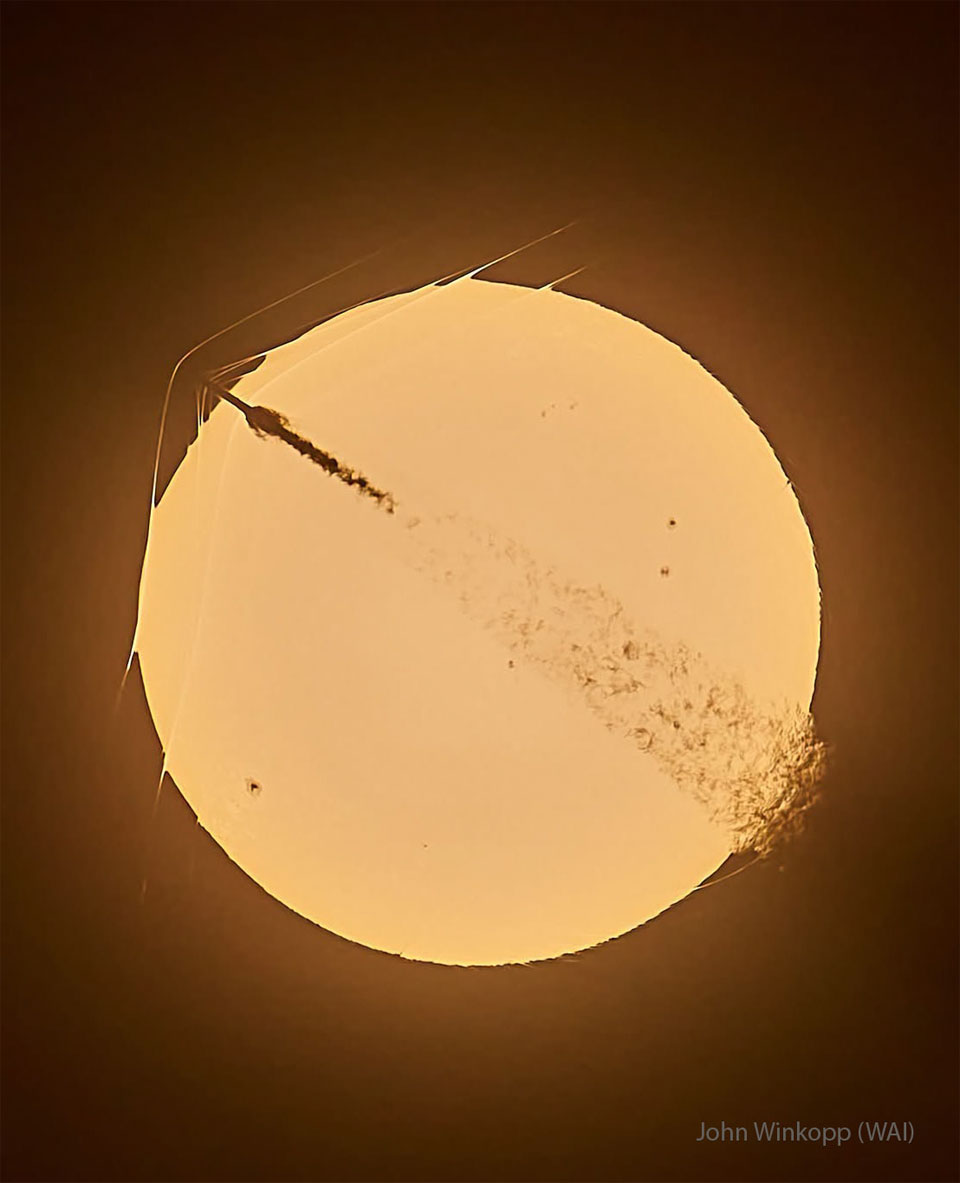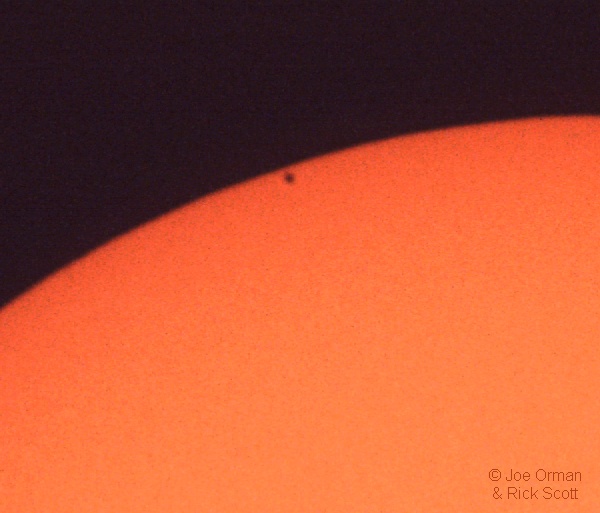
OK, it's a picture of the Sun (duh!), but can you spot the planet? Of course, most of the spots you've spotted are sunspots, as large or larger than planet Earth itself. The sunspots are regions of strong surface magnetic fields which are dark in this picture only because they are relatively cool compared to their surroundings. Over the past few years, the number of sunspots has been steadily increasing as the Sun approaches the maximum in its 11 year activity cycle. But also visible in this photograph from November 15, is planet Mercury. At just over 1/3 Earth's size, Mercury is passing in front of the Sun, its silhouette briefly creating a diminutive dark spot drifting across an enormous solar disk. While "transits" of Mercury do occur 13 times a century, this one was additionally a very rare grazing transit of our Solar System's innermost planet. Spotted Mercury yet? Click on the picture for a hint.
Está bien, es una imagen del Sol (¡obvio!), pero ¿puedes encontrar el planeta? Por supuesto, la mayoría de las manchas que has detectado son manchas solares, tan grandes o incluso mayores que la propia Tierra. Las manchas solares son regiones con fuertes campos magnéticos superficiales que aparecen oscuras en esta imagen únicamente porque son relativamente frías en comparación con su entorno. Durante los últimos años, el número de manchas solares ha ido aumentando de manera constante, a medida que el Sol se aproxima al máximo de su ciclo de actividad de 11 años. Sin embargo, también es visible en esta fotografía del 15 de noviembre el planeta Mercurio. Con un tamaño apenas superior a 1/3 del de la Tierra, Mercurio está pasando frente al Sol, y su silueta crea brevemente una diminuta mancha oscura que se desplaza a través del enorme disco solar. Si bien los "tránsitos" de Mercurio ocurren 13 veces por siglo, este fue además un rarísimo tránsito rasante del planeta más interior de nuestro Sistema Solar. ¿Ya has localizado a Mercurio? Haz clic en la imagen para obtener una pista.