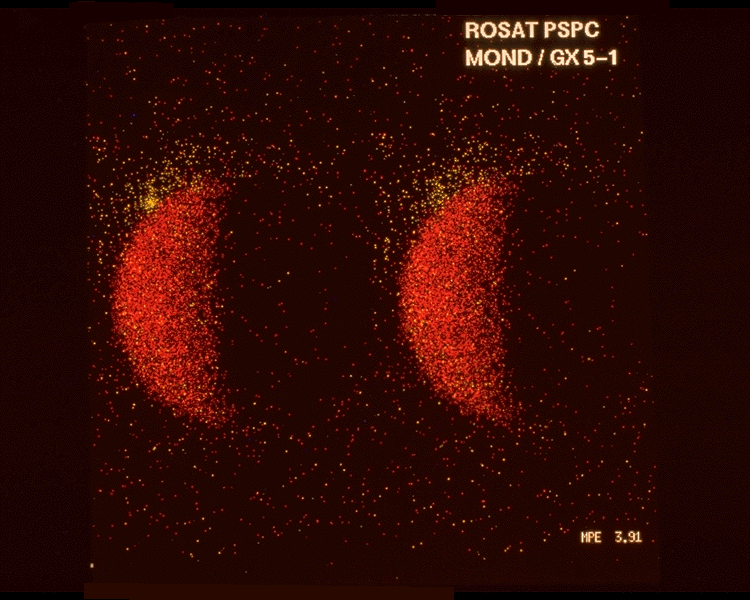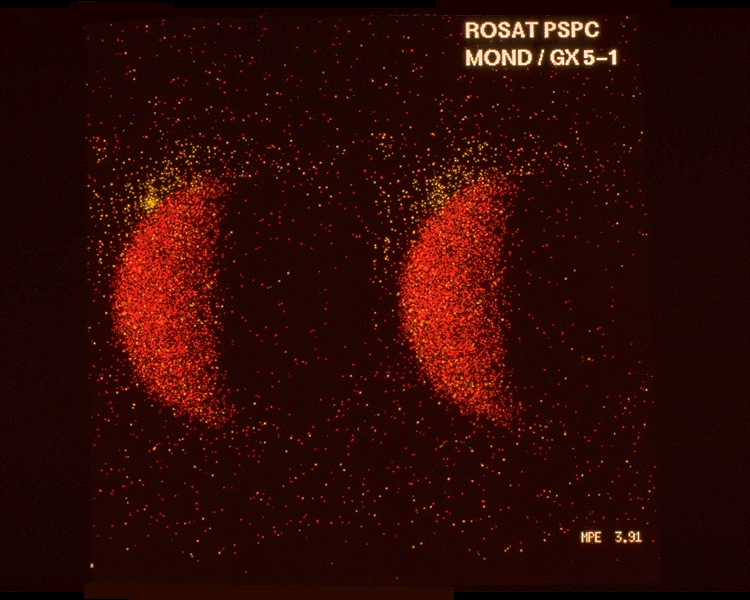
An x-ray star winks out behind the Moon in these before (left) and after views of a lunar occultation of the galactic x-ray source designated GX5-1. The false color images were made using data from the ROSAT (ROentgen SATellite), orbiting observatory. They show high energy x-rays in yellow (mostly from GX5-1), and lower energy x-rays in red (the Moon reflecting x-rays from the Sun). GX5-1 is a binary system consisting of a neutron star and a companion star in mutual orbit about the system's center of mass. The gas in the companion star's outer envelope falls toward the neutron star and accumulates in a disk around it. This disk material swirls deeper in to the neutron star's gravitational well, and is finally dumped onto its surface - in the process creating tremendous temperatures and generating the high energy x-rays.
Una estrella de rayos X desaparece detrás de la Luna en estas vistas del antes (izquierda) y el después de una ocultación lunar de la fuente de rayos X galáctica denominada GX5-1. Las imágenes en falso color fueron creadas utilizando datos del observatorio orbital ROSAT (ROentgen SATellite). Muestran rayos X de alta energía en amarillo (principalmente provenientes de GX5-1) y rayos X de menor energía en rojo (la Luna reflejando rayos X del Sol). GX5-1 es un sistema binario compuesto por una estrella de neutrones y una estrella compañera en órbita mutua alrededor del centro de masa del sistema. El gas de la envolvente exterior de la estrella compañera cae hacia la estrella de neutrones y se acumula en un disco a su alrededor. El material de este disco se adentra en espiral hacia el pozo gravitacional de la estrella de neutrones y finalmente se precipita sobre su superficie, generando en el proceso temperaturas tremendas y produciendo los rayos X de alta energía.