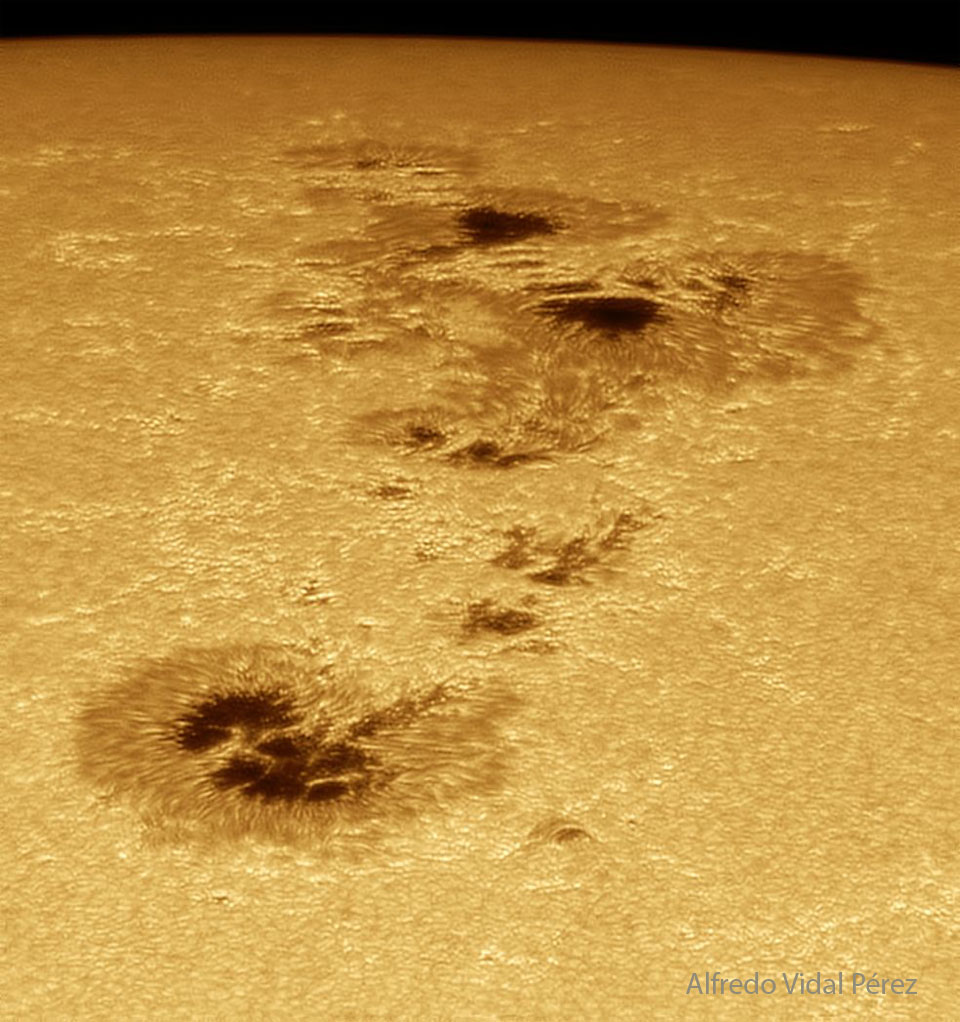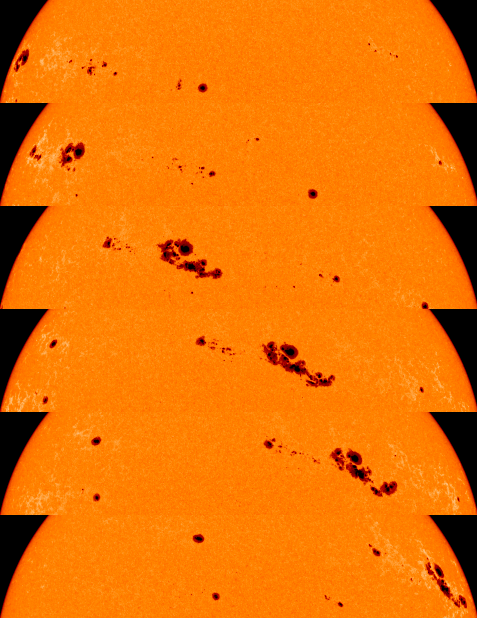
The largest sunspot group of the past ten years crossed the surface of the Sun late last month and early this month. The group was designated Active Region 9393 as it was the 9393rd region identified since counting officially began in 1973. The number of active regions on the Sun is high recently because the Sun is reaching the maximum of its current 11-year cycle of magnetic activity. The above time-lapse sequence shows AR 9393 as it evolved from 27 March to April 2 to become over 10 times larger than our Earth. Just after the end of the movie, on April 2, AR 9393 unleashed the largest solar flare of the last 25 years. Luckily, the flare was not pointed toward the Earth, or flare particles might have damaged satellites or even caused local electrical blackouts. Yesterday morning, however, a less powerful flare was ejected from a different sunspot group (AR 9415) toward Earth that has already caused radio interference. This and solar activity from Monday should cause significant aurorae over the next two nights. Will the above sunspot group remain as its region rotates back into view in a few days, or will it break up on the far side of the Sun? Currently, no one knows for sure.
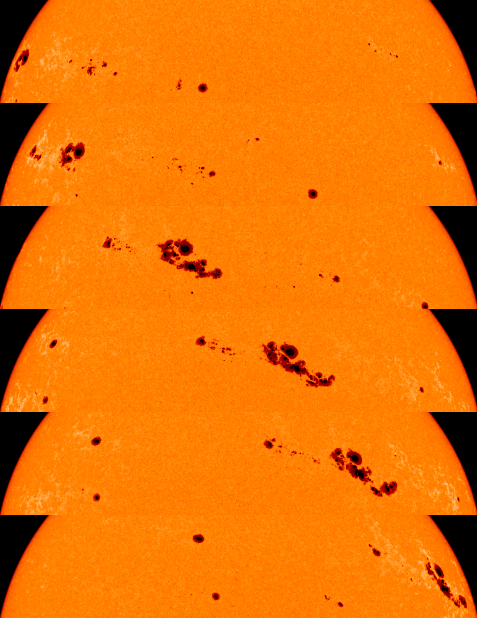
El grupo de manchas solares más grande de los últimos diez años cruzó la superficie del Sol a finales del mes pasado y principios de este mes. El grupo fue designado como Región Activa 9393, ya que es la 9393ª región identificada desde que el conteo comenzó oficialmente en 1973. El número de regiones activas en el Sol es actualmente alto, ya que el Sol se acerca al máximo de su ciclo actual de actividad magnética de 11 años. La secuencia de imágenes acelerada mostrada arriba presenta la evolución de la AR 9393 desde el 27 de marzo hasta el 2 de abril, cuando llegó a ser más de 10 veces más grande que la Tierra. Justo después del final de la secuencia, el 2 de abril, la AR 9393 liberó la mayor eyección de radiación solar de los últimos 25 años. Afortunadamente, la eyección no estaba dirigida hacia la Tierra, de lo contrario las partículas podrían haber dañado satélites o incluso causado apagones eléctricos locales. Sin embargo, esta mañana se eyectó desde un grupo diferente de manchas solares (AR 9415) una eyección menos potente hacia la Tierra, que ya ha causado interferencia en las comunicaciones por radio. Esta y la actividad solar del lunes deberían causar auroras significativas durante las próximas dos noches. ¿Permanecerá el grupo de manchas solares anterior cuando su región regrese a la vista en unos días, o se desintegrará en el lado oculto del Sol? Actualmente, nadie lo sabe con certeza.