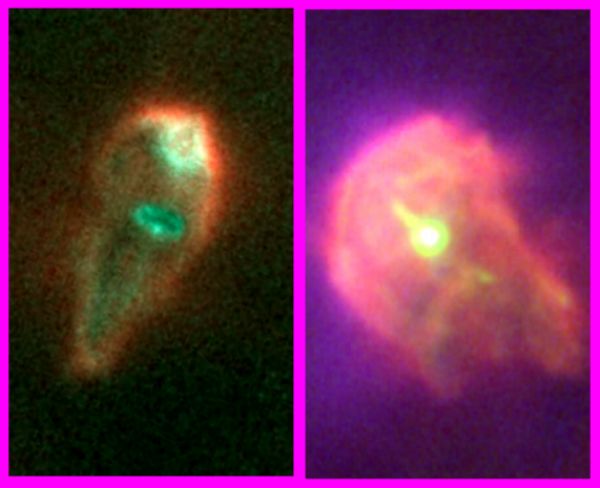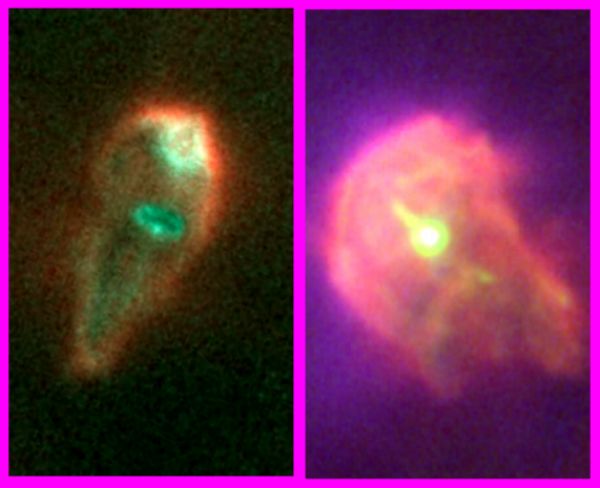
The Orion Nebula is a nuturing stellar nursery filled with hot young stars and their natal clouds of gas and dust. But for planetary systems, the active star-forming region can present a hazardous and inhospitable birthplace. While the formation of dusty protoplanetary disks seems common in Orion, these Hubble Space Telescope close-up images dramatically reveal the torturous conditions they must face while trying to grow into full-fledged planetary systems. In each case, a central young star is surrounded by a disk substantially wider than our solar system. The disks likely contain material in the process of planet formation. However, withering ultraviolet radiation from one of Orion's nearby hot stars is rapidly destroying the disks -- ultimately creating the comet-shaped clouds of glowing gas seen engulfing the protoplanetary systems. Planet formation must occur quickly here, if at all. Researchers estimate that about 90 percent of Orion's youngest protoplanetary disks will not survive the next 100,000 years.
La Nebulosa de Orión es una cuna estelar nutrida, llena de estrellas jóvenes y calientes junto con sus nubes natales de gas y polvo. Sin embargo, para los sistemas planetarios, esta región activa de formación estelar puede representar un lugar de nacimiento peligroso e inhóspito. Aunque la formación de discos protoplanetarios polvorientos parece común en Orión, estas imágenes detalladas del Telescopio Espacial Hubble revelan dramáticamente las condiciones adversas que deben enfrentar mientras intentan evolucionar hacia sistemas planetarios completos. En cada caso, una estrella joven central está rodeada por un disco significativamente más ancho que nuestro sistema solar. Estos discos probablemente contienen material en proceso de formación planetaria. Sin embargo, la radiación ultravioleta intensa proveniente de una de las estrellas calientes cercanas a Orión está destruyendo rápidamente los discos, creando finalmente las nubes en forma de cometa de gas brillante que se observan envolviendo a los sistemas protoplanetarios. La formación planetaria debe ocurrir rápidamente aquí, si es que ocurre en absoluto. Los investigadores estiman que aproximadamente el 90 por ciento de los discos protoplanetarios más jóvenes de Orión no sobrevivirán los próximos 100,000 años.