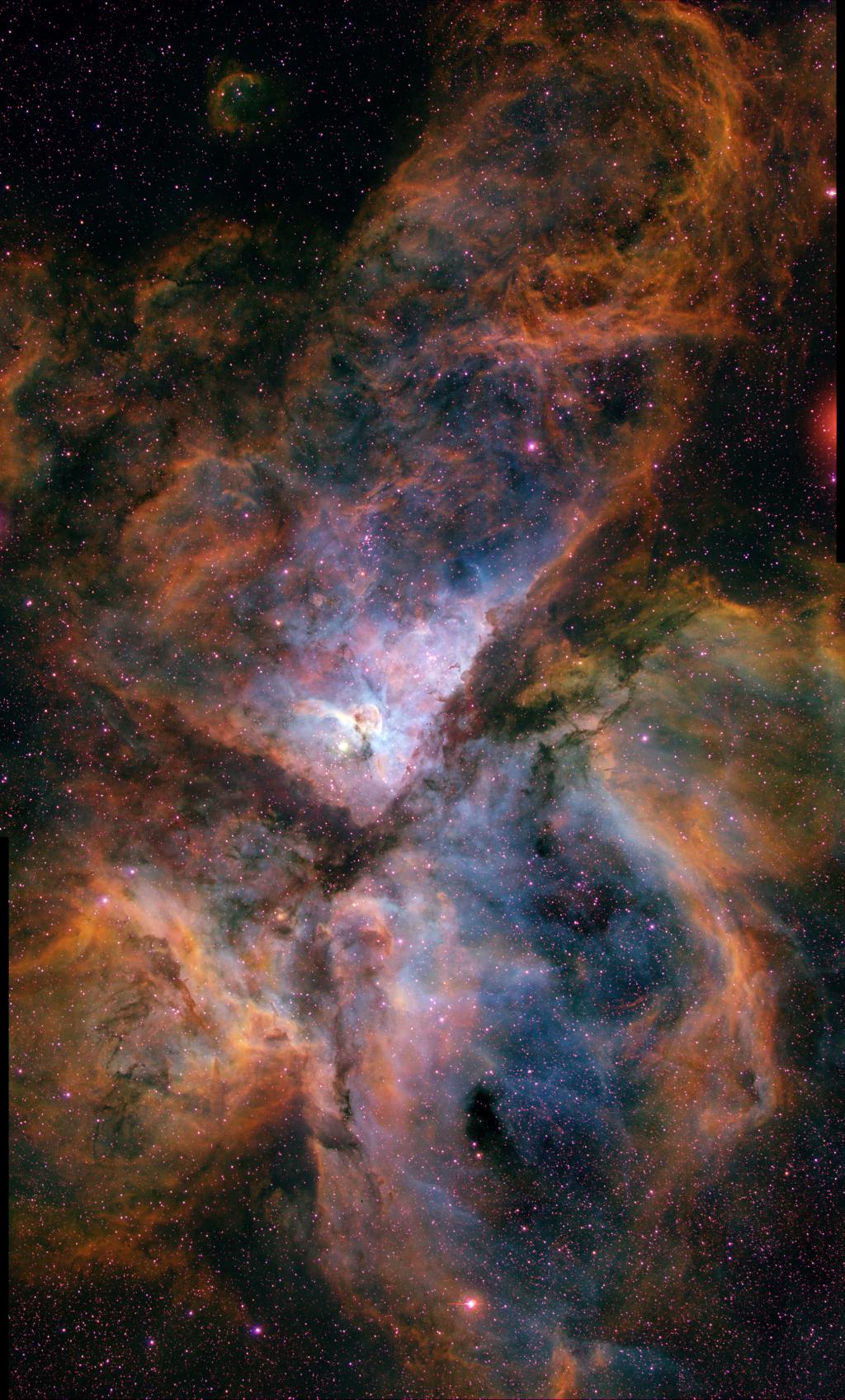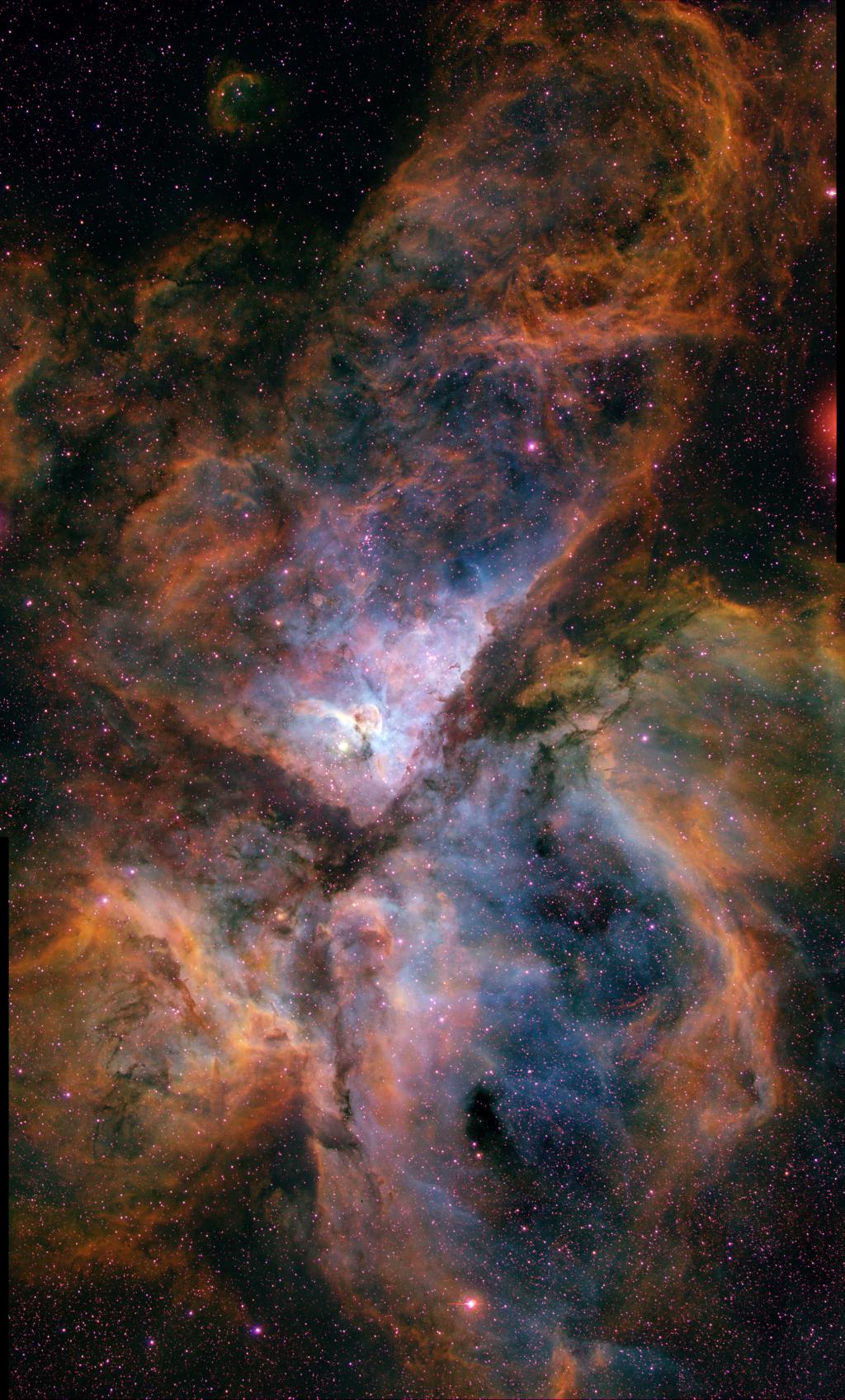
Stars, like people, do not always go gentle into that good night. The above Carina Nebula, also known as the Keyhole Nebula and NGC 3372, results from dying star Eta Carinae's violently casting off dust and gas during its final centuries. Eta Carinae, one of the most luminous stars known, is visible as the bright star near the center of the nebula. The above picture was taken in three distinct colors of light: blue light as emitted from hot oxygen, green light as emitted by warm hydrogen, and red light as emitted by cool sulfur. Eta Carinae faded from being one of the brightest stars in the sky during the 1800s, but is still visible with binoculars in southern skies towards the constellation of Carina.
Las estrellas, al igual que las personas, no siempre se van suavemente hacia esa buena noche. La nebulosa Carina, también conocida como la nebulosa del Agujero de la Llave y NGC 3372, es el resultado de que la estrella moribunda Eta Carinae haya expulsado violentamente polvo y gas durante sus siglos finales. Eta Carinae, una de las estrellas más luminosas conocidas, es visible como la estrella brillante cerca del centro de la nebulosa. La imagen anterior fue tomada en tres colores distintos de luz: luz azul emitida por oxígeno caliente, luz verde emitida por hidrógeno tibio y luz roja emitida por azufre frío. Eta Carinae dejó de ser una de las estrellas más brillantes del cielo durante el siglo XIX, pero aún es visible con binoculares en los cielos del sur hacia la constelación de Carina.