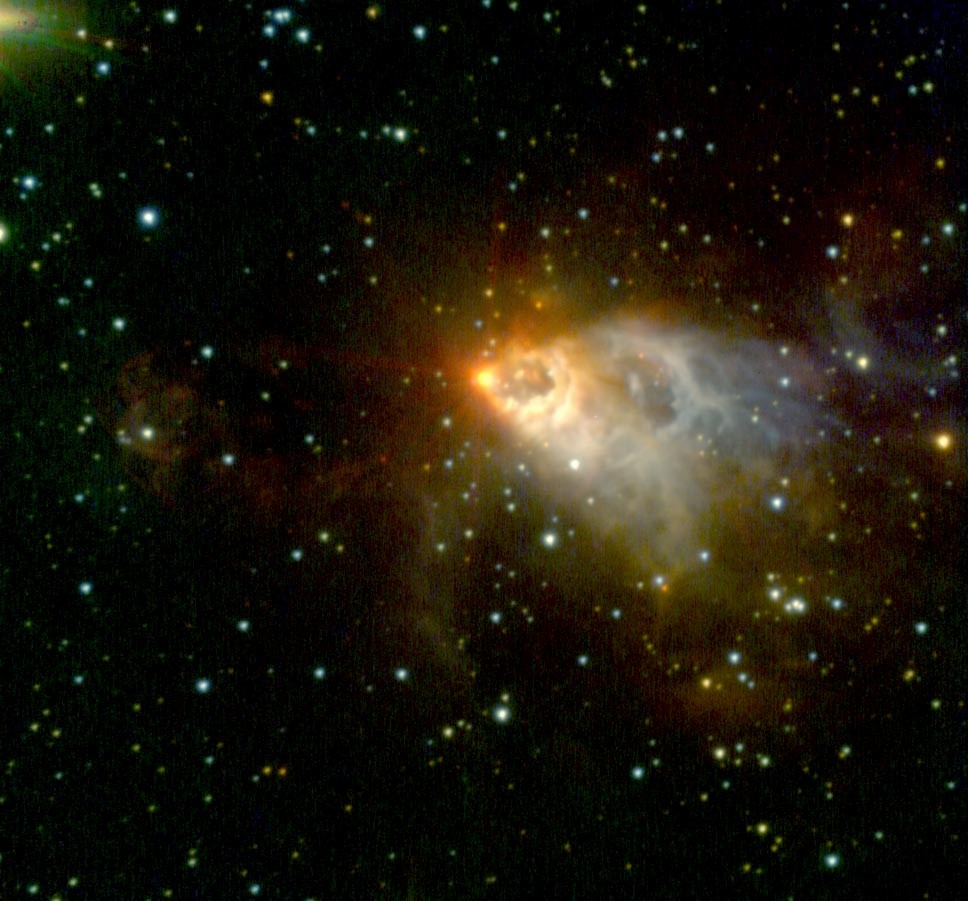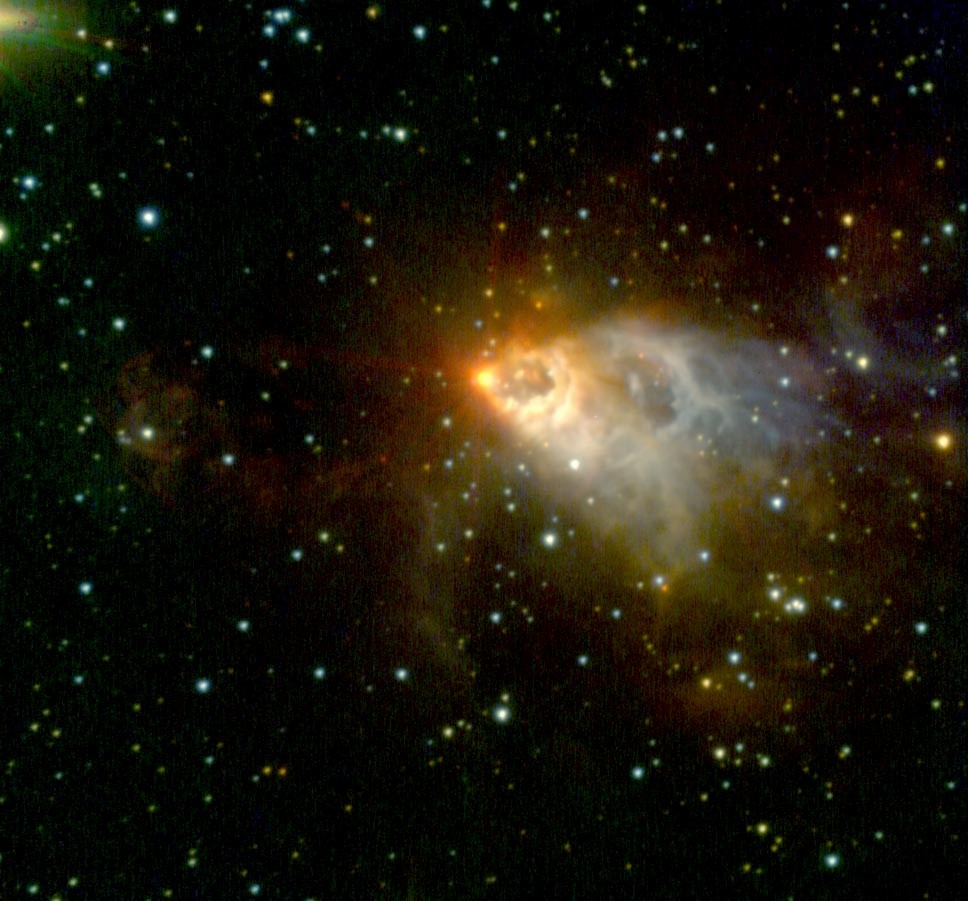
Young star AFGL 2591 is putting on a show. The massive star is expelling outer layers of dust-laced gas as gravity pulls inner material toward the surface. AFGL 2591 is estimated to be about one million years old -- much younger than our own Sun's 5 billion-year age -- and has created a nebula over 500 times the diameter of our Solar System in just the past 10,000 years. The above image in infrared light is one of the first from the new NIRI instrument mounted on one of the largest ground-based optical telescopes in the world: Gemini North. Sharp details are discernable that are blocked by opaque dust in visible-light images. Close inspection of the image reveals at least four expanding rings, indicating an episodic origin to the mysterious activity. AFGL 2591 lies about 3000 light years away toward the constellation of Cygnus.
La joven estrella AFGL 2591 está ofreciendo un espectáculo. La estrella masiva está expulsando capas externas de gas impregnado de polvo, mientras que la gravedad atrae material interno hacia la superficie. AFGL 2591 se estima que tenga aproximadamente un millón de años, mucho más joven que la edad de nuestro Sol, que es de 5 mil millones de años, y ha creado una nebulosa más de 500 veces el diámetro de nuestro Sistema Solar en solo los últimos 10 000 años. La imagen superior en luz infrarroja es una de las primeras obtenidas con el nuevo instrumento NIRI montado en uno de los telescopios ópticos terrestres más grandes del mundo: Gemini North. Se pueden apreciar detalles nítidos que están bloqueados por polvo opaco en las imágenes en luz visible. Una inspección cuidadosa de la imagen revela al menos cuatro anillos en expansión, lo que indica un origen episódico de la misteriosa actividad. AFGL 2591 se encuentra a unos 3000 años luz de distancia en dirección a la constelación de Cisne.