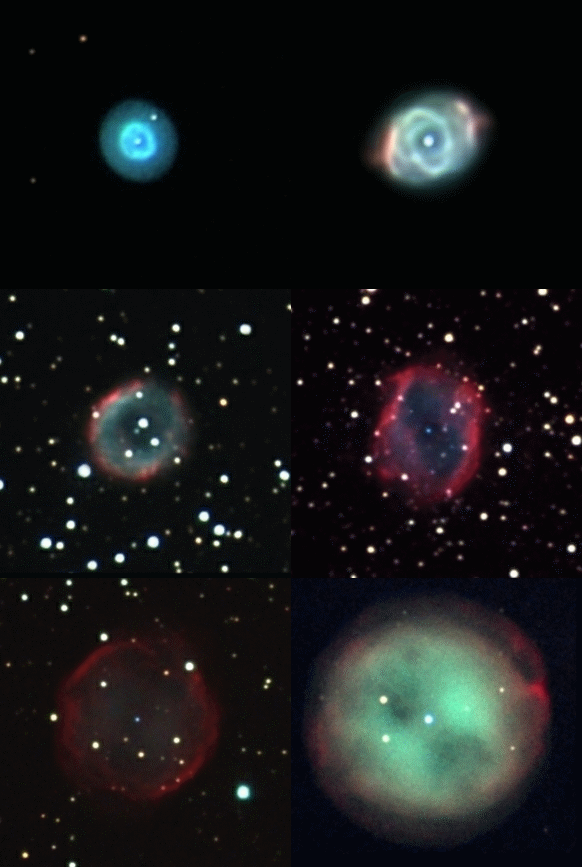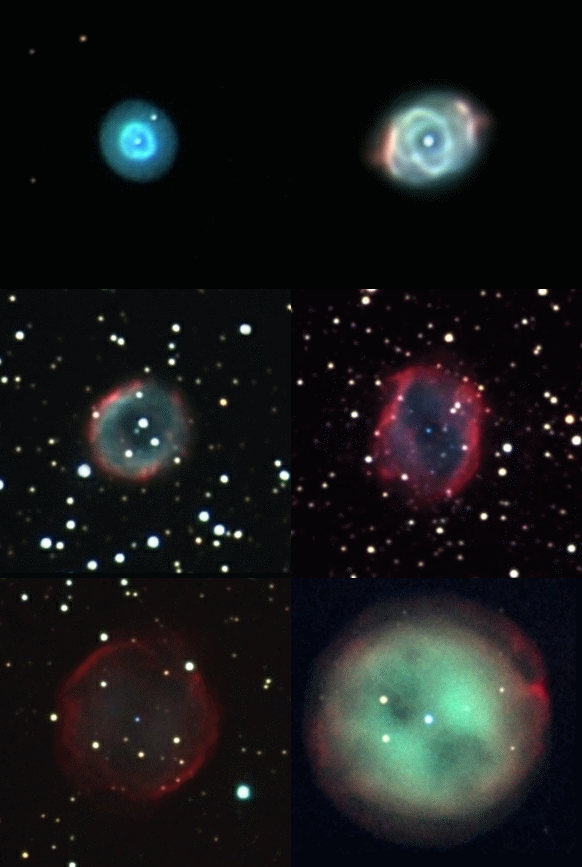
What do the Owl, the Cat's Eye, the Ghost of Jupiter, and Saturn have in common? They're all planetary nebulae of course(!), glowing gaseous shrouds shed by dying sun-like stars as they run out of nuclear fuel. Beautiful to look at, the symmetric, planet-like shapes of these cosmic clouds, typically 1,000 times the size of our solar system, evoke their popular names. Flipping through digital pictures made by participants in the Kitt Peak National Observatory Visitor Center's Advanced Observing Program, astronomer Adam Block created this delightful animation. Ten different planetary nebula images are presented, each registered on the central star. In order, their catalog designations are NGC 1535, NGC 3242 (Ghost of Jupiter), NGC 6543 (Cat's Eye), NGC 7009 (Saturn Nebula), NGC 2438, NGC 6772, Abell 39, NGC 7139, NGC 6781, and M97 (Owl Nebula). This glorious final phase in the life of a star lasts only about 10,000 years.
¿Qué tienen en común el Búho, el Ojo de Gato, el Fantasma de Júpiter y el planeta Saturno? ¡Son todas nebulosas planetarias!, velos gaseosos brillantes expulsados por estrellas similares al Sol cuando se les acaba el combustible nuclear. Hermosas de ver, las formas simétricas y planetarias de estas nubes cósmicas, típicamente 1000 veces el tamaño de nuestro sistema solar, evocan sus nombres populares. Al revisar imágenes digitales hechas por participantes del Programa Avanzado de Observación del Centro de Visitantes del Observatorio Nacional Kitt Peak, el astrónomo Adam Block creó esta encantadora animación. Se presentan diez imágenes diferentes de nebulosas planetarias, cada una registrada sobre la estrella central. En orden, sus designaciones catastrales son NGC 1535, NGC 3242 (Fantasma de Júpiter), NGC 6543 (Ojo de Gato), NGC 7009 (Nebulosa de Saturno), NGC 2438, NGC 6772, Abell 39, NGC 7139, NGC 6781 y M97 (Nebulosa del Búho). Esta gloriosa fase final en la vida de una estrella dura aproximadamente 10 000 años.