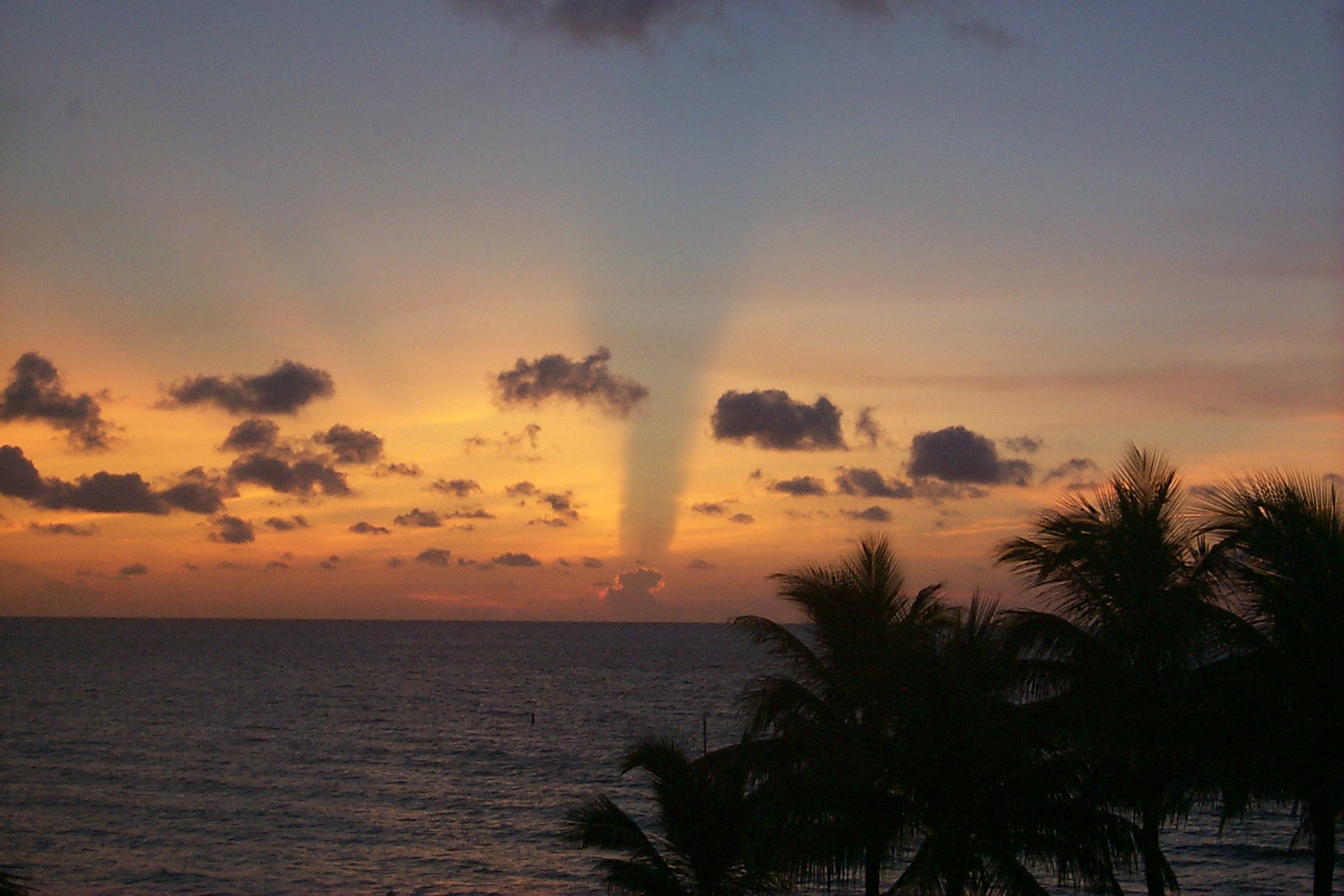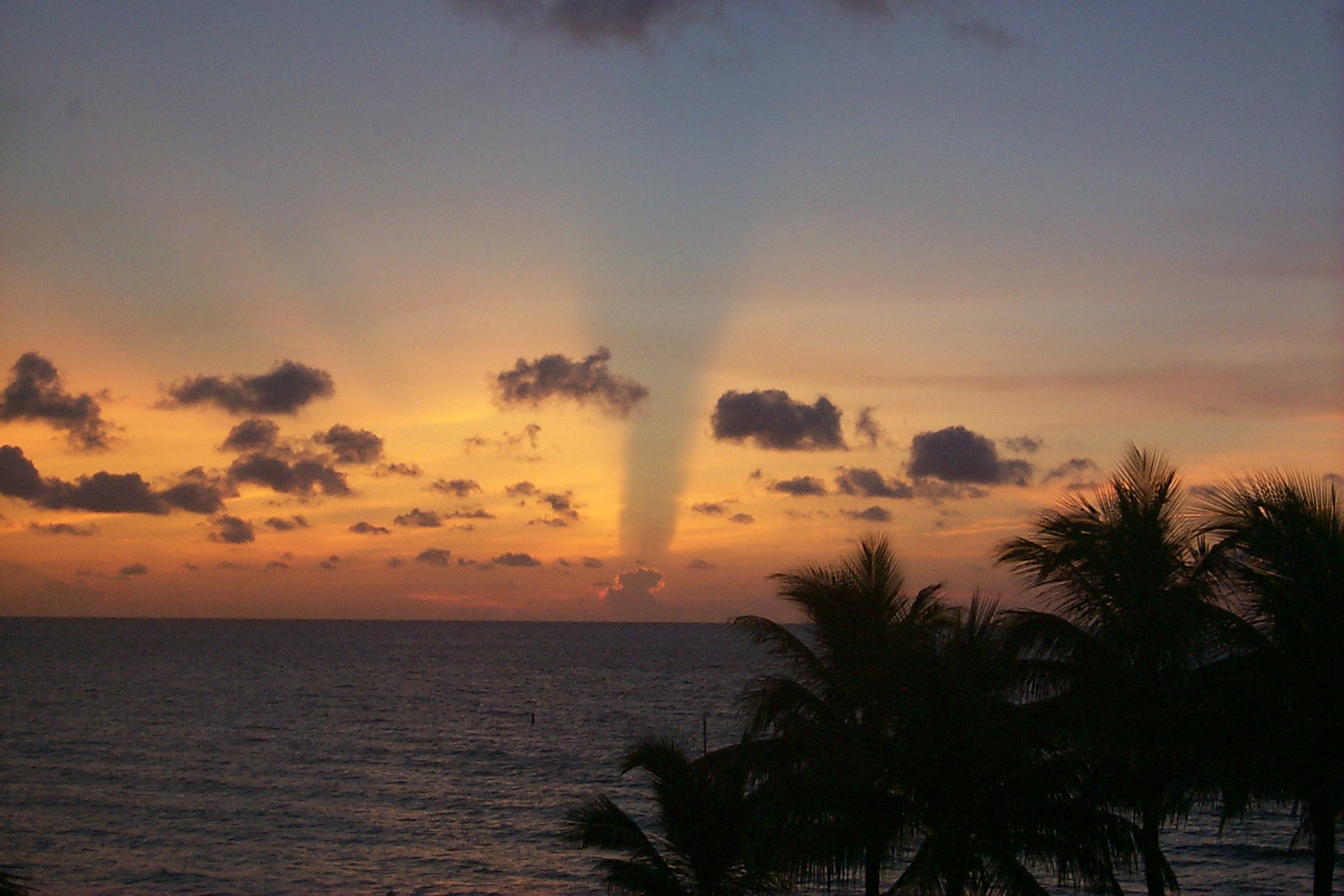
What could cause a ray of dark? Such a ray was caught in spectacular fashion above the Florida Everglades two years ago. The cause is something surprisingly familiar: a shadow. The gold-tinged cloud near the horizon blocks sunlight from reflecting off air behind the cloud, making that column of air appear unusually dark. Cloud shadows can be thought of the inverse of the more commonly highlighted crepuscular rays, where sunlight pours though cloud holes. Another seemingly opposite phenomenon, a sun pillar, involves small ice crystals floating high in the atmosphere.
¿Qué podría causar un rayo oscuro? Tal rayo fue capturado de manera espectacular sobre los Everglades de Florida hace dos años. La causa es algo sorprendentemente familiar: una sombra. La nube teñida de oro cerca del horizonte bloquea la luz solar que se refleja en el aire detrás de la nube, haciendo que esa columna de aire parezca inusualmente oscura. Las sombras de nubes pueden considerarse lo opuesto de los rayos crepusculares, el fenómeno más comúnmente destacado, donde la luz solar se filtra a través de agujeros en las nubes. Otro fenómeno aparentemente opuesto, un pilar solar, involucra pequeños cristales de hielo flotando en la atmósfera alta.