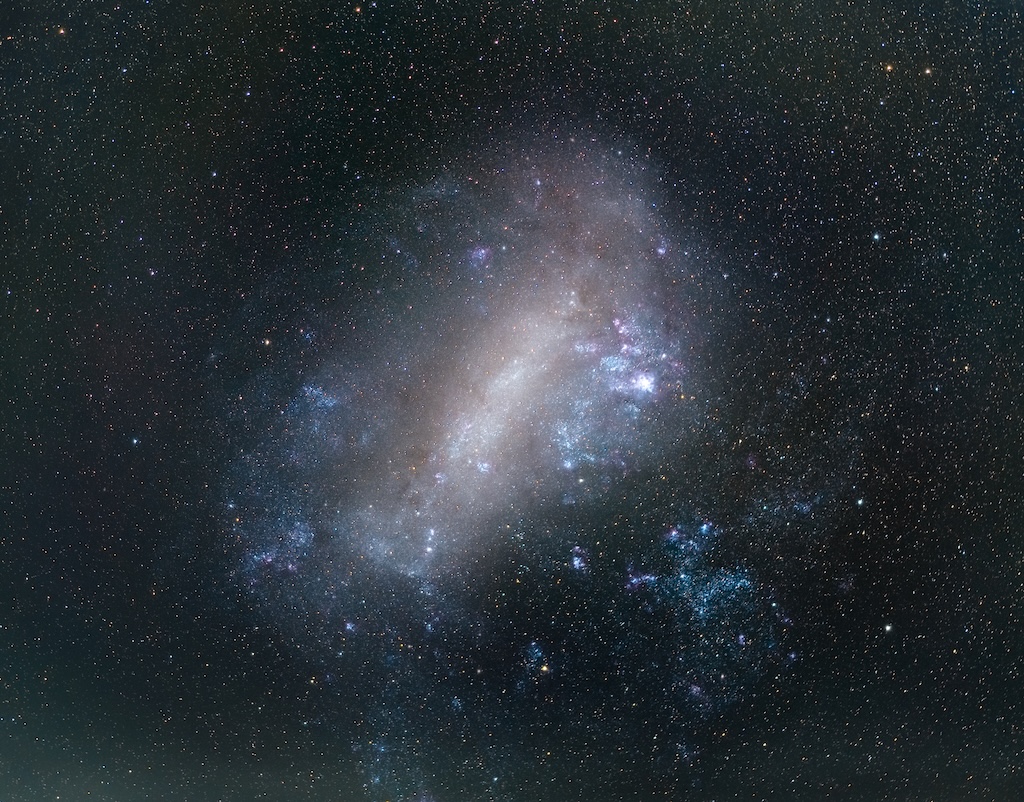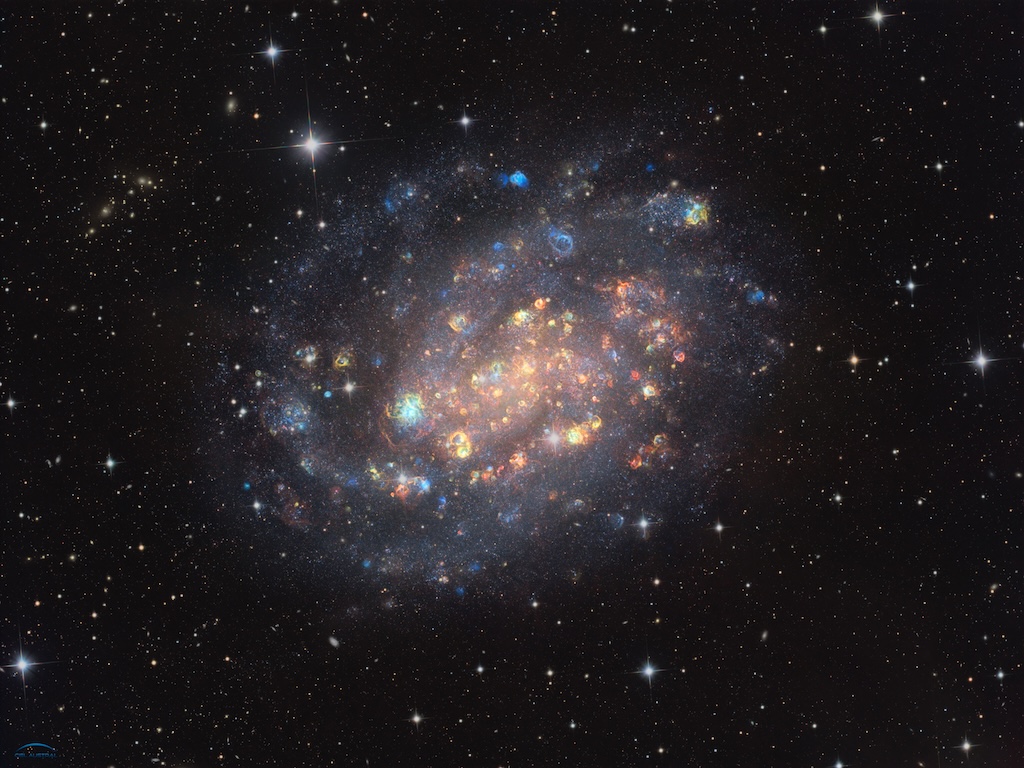
What are these two bands in the sky? The more commonly seen band is on the left and is the central band of our Milky Way galaxy. Our Sun orbits in the disk of this spiral galaxy so that from inside, it appears as a band of comparable brightness all the way around the sky. The less commonly seen band, on the right, is zodiacal light -- sunlight reflected from dust orbiting the Sun in our Solar System. Zodiacal light is brightest near the Sun and so is best seen just before sunrise or just after sunset. On some evenings, this ribbon of zodiacal light can appear quite prominent. It was discovered only in this century that zodiacal dust was mostly expelled by comets that have passed near Jupiter. The featured image was captured about a year ago from the Atacama Desert in Chile.
¿Qué son estas dos bandas en el cielo? La banda que se observa con mayor frecuencia es la de la izquierda, y corresponde a la banda central de nuestra galaxia, la Vía Láctea. Nuestro Sol orbita en el disco de esta galaxia espiral, de modo que, vista desde su interior, aparece como una franja de brillo uniforme que rodea todo el cielo. La banda que se ve con menos frecuencia, a la derecha, es la luz zodiacal: luz solar reflejada por el polvo que orbita alrededor del Sol en nuestro Sistema Solar. La luz zodiacal es más brillante cerca del Sol, por lo que se observa mejor justo antes del amanecer o justo después del atardecer. En algunas noches, esta cinta de luz zodiacal puede resultar muy llamativa. Solo en este siglo se descubrió que el polvo zodiacal es expulsado principalmente por cometas que han pasado cerca de Júpiter. La imagen destacada fue capturada hace aproximadamente un año en el desierto de Atacama, en Chile.