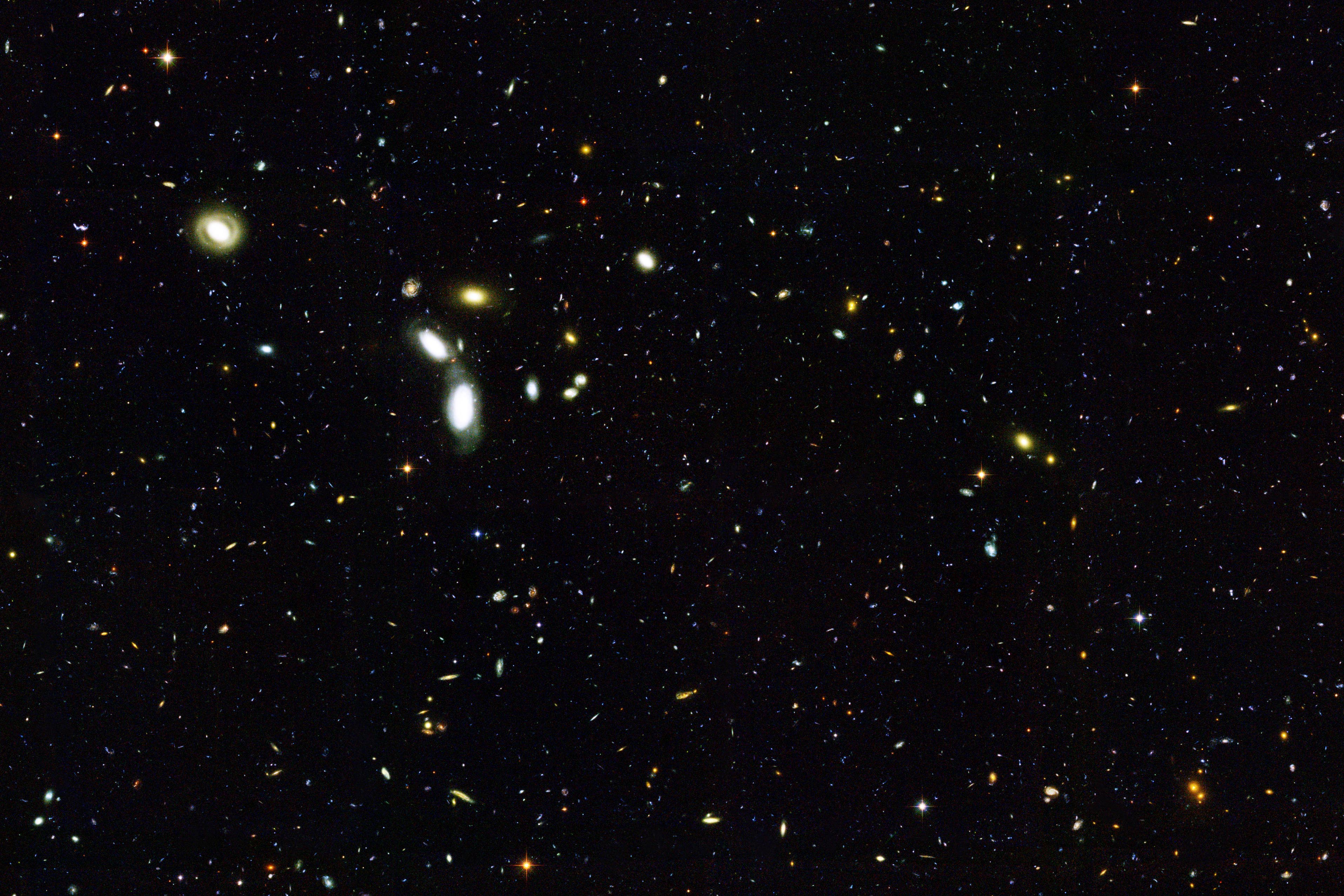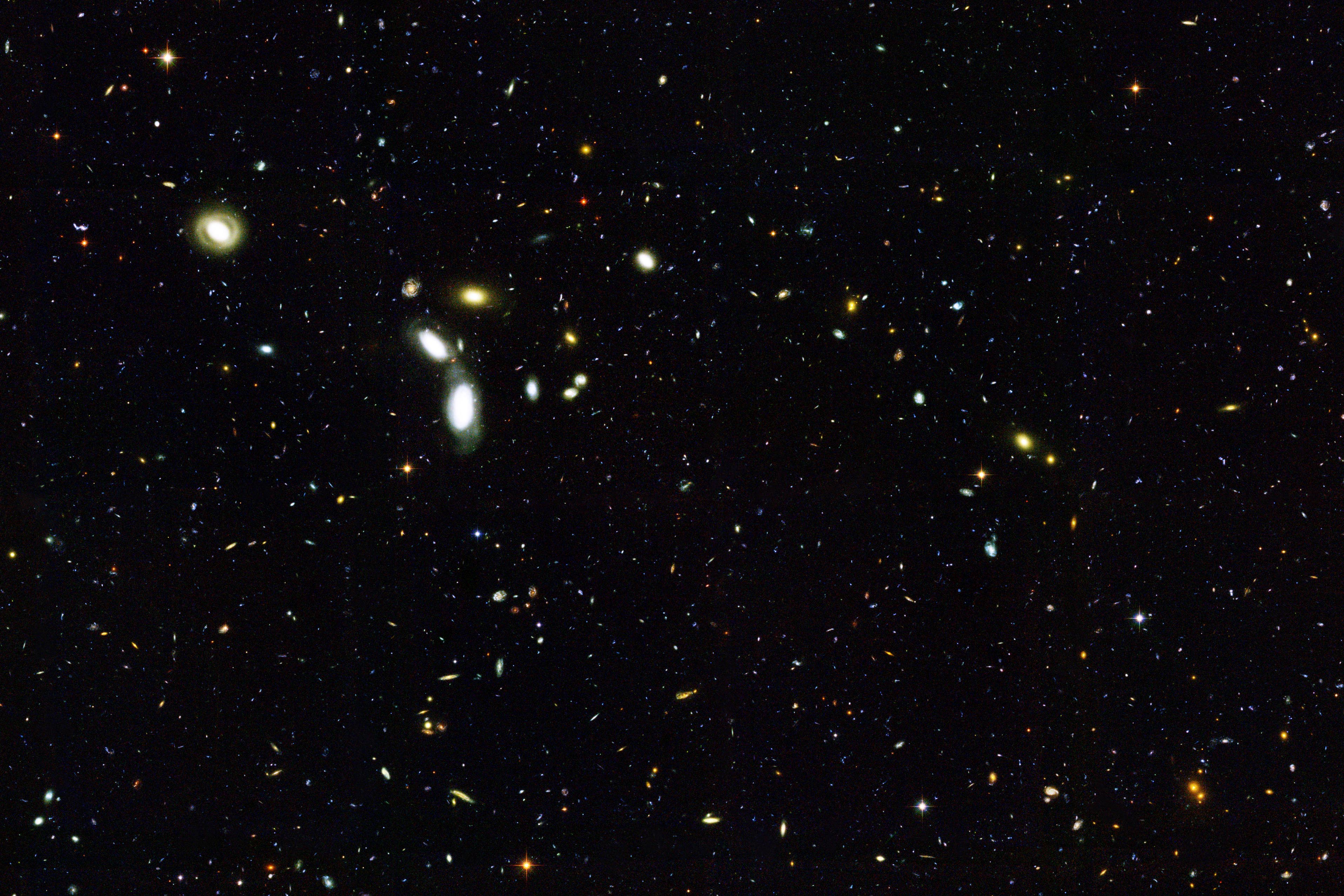
This tantalizing view of galaxies scattered near and far is part of the Hubble Space Telescope's contribution to the GOODS - the Great Observatories Origins Deep Survey project. The GOODS' goal is to study galaxy formation and evolution over an unprecedent wide range of cosmic distances, therefore spanning time from the present to the early Universe. Joined by the Chandra X-ray Observatory and soon by the anticipated Space Infrared Telescope Facility along with major ground-based observatories, the project expands greatly on the past Hubble Deep Fields of regions in the northern constellation of Ursa Major and southern constellation Tucana. Across the electromagnetic spectrum, a sample of large nearby galaxies, like the interacting pair at the lower left above, will be compared with distant younger galaxies in a search for clues to the origins of these lighthouses of the cosmos. Preliminary results of the project confirm that the birth rate of stars was higher in the past and that galaxies have indeed been constructed from the "bottom up", growing from mergers and accretion of small infant galaxies to their present day forms.
Esta cautivadora vista de galaxias dispersas a distancias variables forma parte de la contribución del Telescopio Espacial Hubble al proyecto GOODS (Gran Encuesta de Orígenes de los Grandes Observatorios). El objetivo del GOODS es estudiar la formación y evolución de galaxias en un rango sin precedentes de distancias cósmicas, abarcando desde el presente hasta el Universo primitivo. Junto con el Observatorio de Rayos X Chandra y próximamente con el Telescopio Espacial Infrarrojo anticipado, además de los principales observatorios terrestres, el proyecto amplía significativamente los anteriores Campos Profundos del Hubble en regiones de la constelación boreal de la Osa Mayor y de la constelación austral de la Túcana. A lo largo del espectro electromagnético, se compararán muestras de galaxias grandes cercanas, como el par interactuante en la parte inferior izquierda anterior, con galaxias distantes y más jóvenes en la búsqueda de pistas sobre los orígenes de estos faros del cosmos. Los resultados preliminares del proyecto confirman que la tasa de formación de estrellas fue mayor en el pasado y que las galaxias ciertamente se han construido de "abajo hacia arriba", creciendo a partir de fusiones y acreción de pequeñas galaxias infantes hasta sus formas actuales.