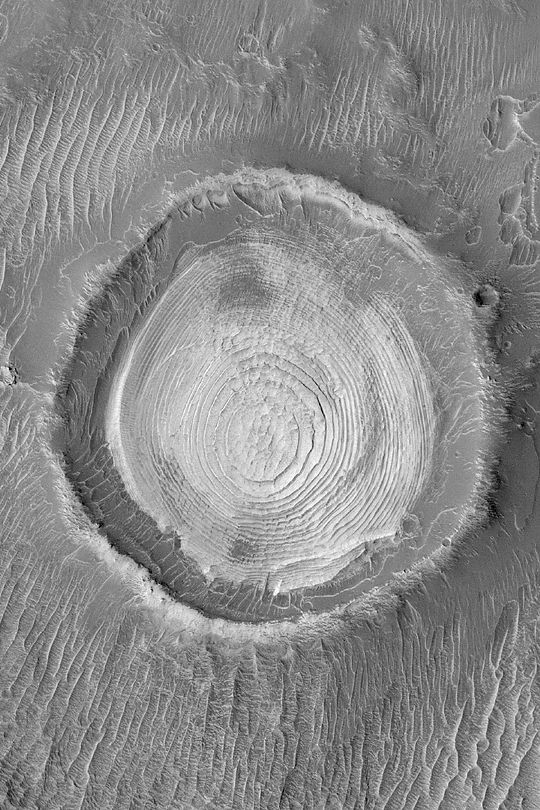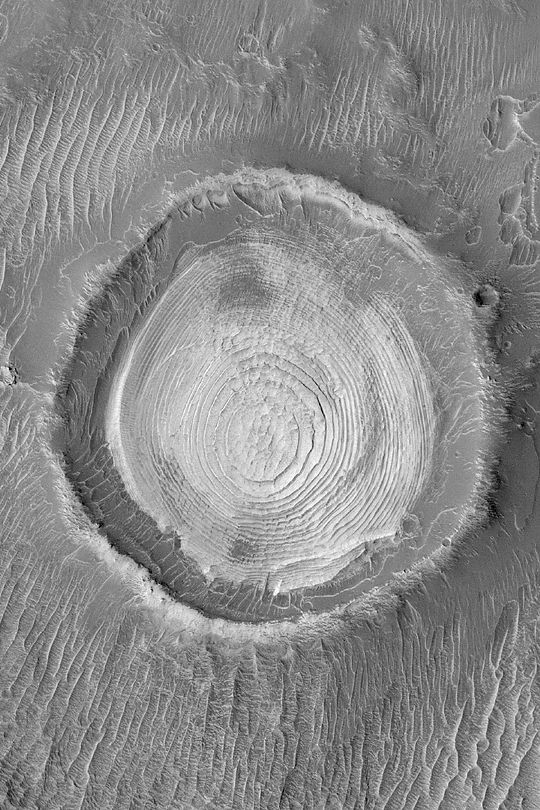
High-resolution imaging of an area in the Schiaparelli Basin of Mars on June 3 by the MGS Mars Orbiter camera produced this stunning example of layered formations within an old impact crater. On planet Earth, such structures would be seen in sedimentary rock -- material deposited at the bottom of ancient lakes or oceans and then subsequently weathered away to reveal the layers. With the Sun shining from the left, the central layer appears to stand above the others within the 2.3 kilometer wide crater. The crater could well have been filled with water in Mars' distant past, perhaps resting at the bottom of a lake filling the Schiaparelli impact basin. Still, such layers might also have been formed by material settling out of the windy martian atmosphere. As satellites continue to examine the martian surface from orbit, NASA's Spirit and Opportunity spacecraft will attempt to land on on Mars early next year to further explore the tantalizing history of water on the Red Planet.
La obtención de imágenes de alta resolución de un área en la Cuenca Schiaparelli de Marte el 3 de junio por la cámara del orbitador Mars Orbiter del MGS produjo este ejemplo extraordinario de formaciones estratificadas dentro de un antiguo cráter de impacto. En el planeta Tierra, tales estructuras se verían en roca sedimentaria —material depositado en el fondo de antiguos lagos u océanos y posteriormente erosionado para revelar las capas. Con el Sol brillando desde la izquierda, la capa central parece elevarse sobre las otras dentro del cráter de 2,3 kilómetros de ancho. El cráter bien podría haber estado lleno de agua en el pasado distante de Marte, quizás reposando en el fondo de un lago que llenaba la cuenca de impacto Schiaparelli. Sin embargo, tales capas también podrían haber sido formadas por material que se depositó de la atmósfera marciana ventosa. A medida que los satélites continúan examinando la superficie marciana desde órbita, las naves espaciales Spirit y Opportunity de la NASA intentarán aterrizar en Marte a principios del próximo año para explorar más a fondo la intrigante historia del agua en el Planeta Rojo.