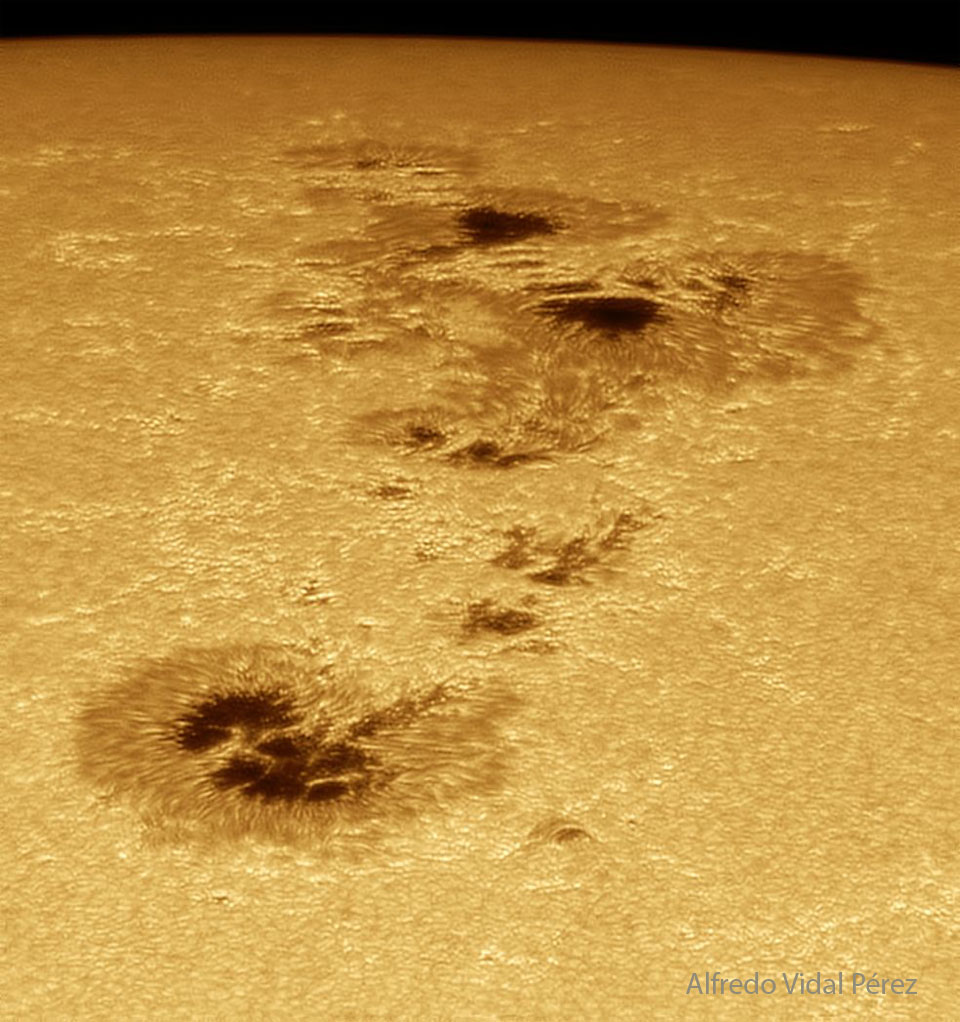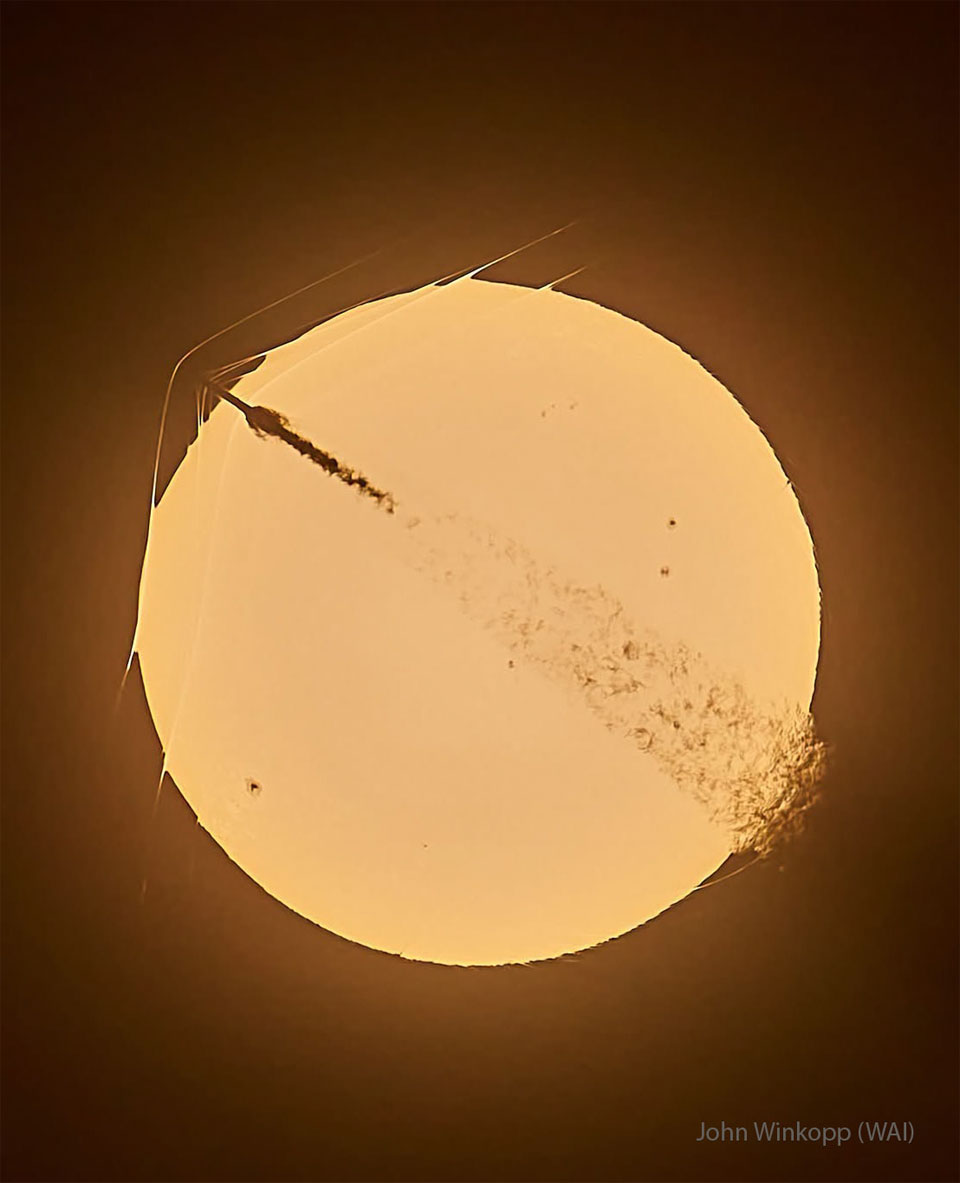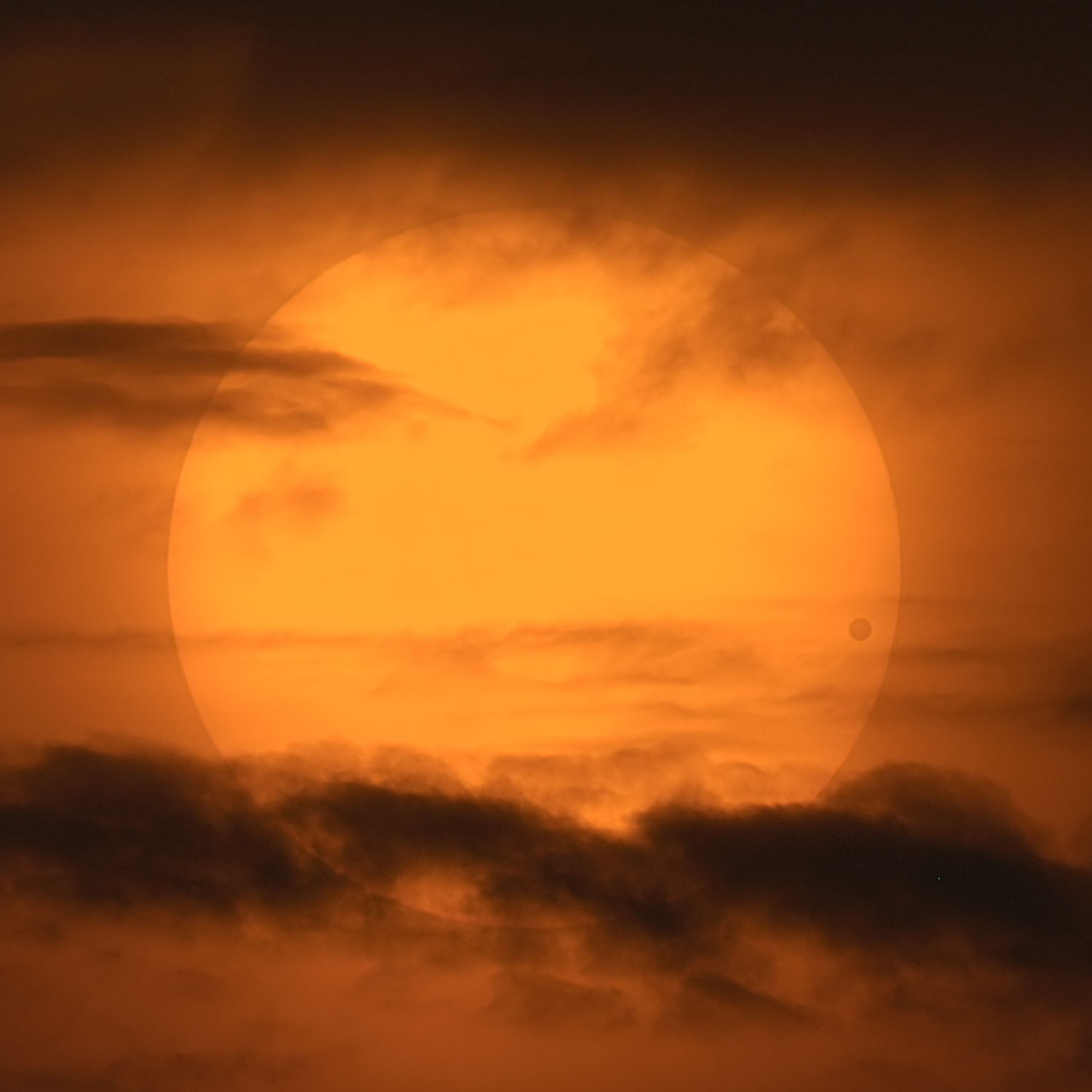
The rare transit of Venus across the face of the Sun earlier this month was one of the better-photographed events in sky history. Both scientific and artistic images have been flooding in from the areas that could see the transit: Europe and much of Asia, Africa, and North America. Scientifically, solar photographers confirmed that the black drop effect is really better related to the viewing clarity of the camera or telescope than the atmosphere of Venus. Artistically, images might be divided into several categories. One type captures the transit in front of a highly detailed Sun. Another category captures a double coincidence such as both Venus and an airplane simultaneously silhouetted, or Venus and the International Space Station in low Earth orbit. A third image type involves a fortuitous arrangement of interesting looking clouds, as shown by example in the above image taken from North Carolina, USA. There the distant orb of giant Venus might have been mistaken, at first glance, for a small but unusually circular cloud.
El raro tránsito de Venus cruzando el disco del Sol a principios de este mes fue uno de los eventos del cielo mejor fotografiados en la historia. Tanto imágenes científicas como artísticas han llegado en abundancia desde las áreas que pudieron observar el tránsito: Europa y gran parte de Asia, África y América del Norte. Científicamente, los fotógrafos solares confirmaron que el efecto de gota negra está realmente más relacionado con la claridad de visión de la cámara o telescopio que con la atmósfera de Venus. Artísticamente, las imágenes podrían dividirse en varias categorías. Un tipo captura el tránsito frente a un Sol altamente detallado. Otra categoría captura una coincidencia doble, como Venus y un avión simultáneamente silueteados, o Venus y la Estación Espacial Internacional en órbita terrestre baja. Un tercer tipo de imagen implica una alineación fortuita de nubes interesantes, como se muestra en el ejemplo de la imagen anterior tomada desde Carolina del Norte, EE.UU. Allí, el orbe distante del gigante Venus podría haberse confundido, a primera vista, con una nube pequeña pero inusualmente circular.