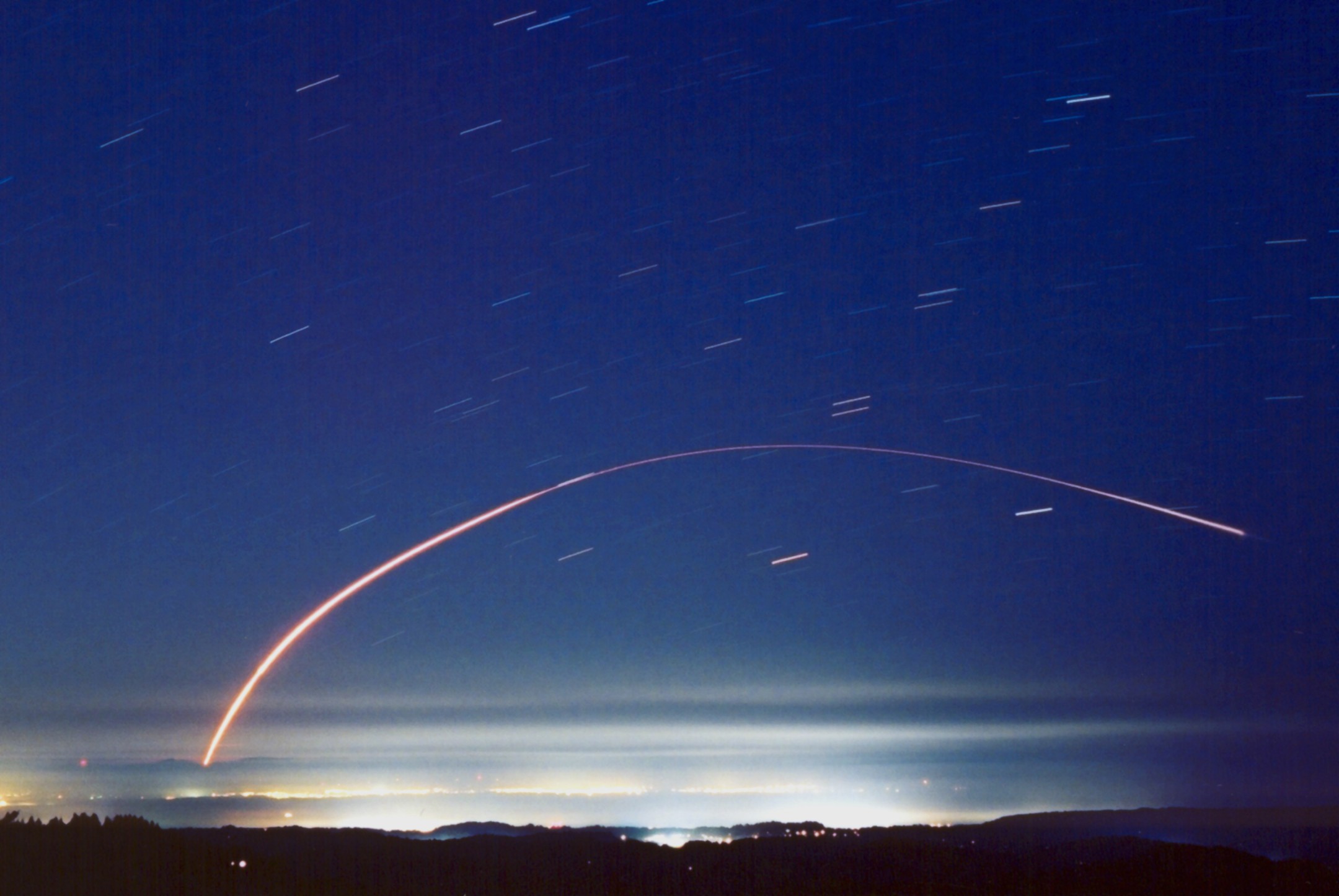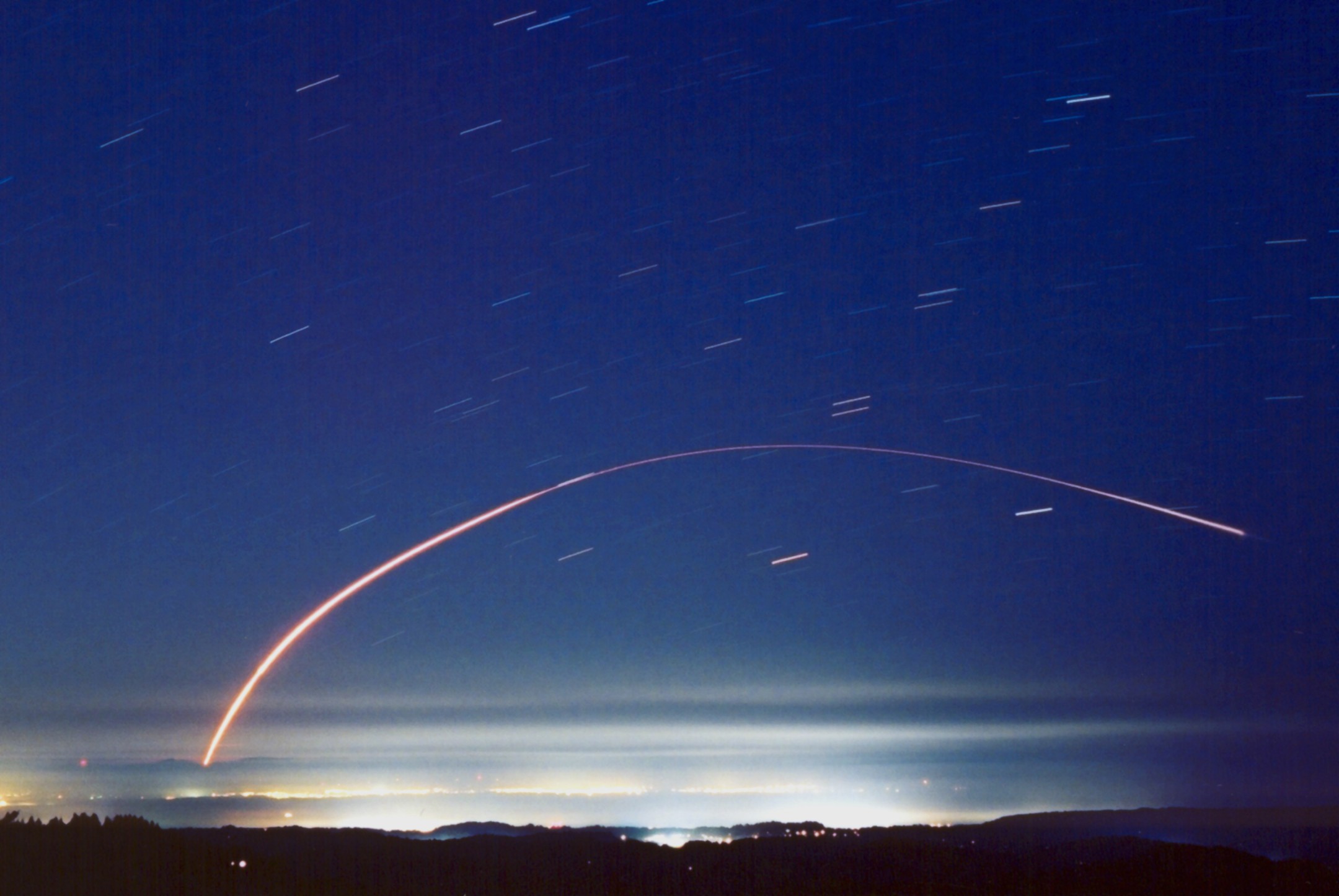
In this alluring time exposure, star trails arc across the night sky above Monterey Bay and the lights of Santa Cruz, California, USA. But since the exposure began around 3:01am PDT on July 15 it also records the long trail of a Delta II rocket lofting NASA's Aura spacecraft into Earth orbit. Watching from a vantage point about 200 miles north of the Vandenberg Air Force Base launch site, photographer Rick Baldridge reports that the trail represents the first five minutes of the rocket's powered flight with the ignition of additional solid fuel strap-on motors visible after liftoff, near the beginning of the track. The rocket trail ends at first stage shutdown. Seen under the rocket's path, the two brightest star trails mark the alpha and beta stars of the high-flying constellation Grus. The Aura spacecraft's goal is a comprehensive study of planet Earth's nurturing atmosphere.
En esta cautivadora fotografía de larga exposición, los rastros estelares trazan arcos a través del cielo nocturno sobre la Bahía de Monterey y las luces de Santa Cruz, California, EE.UU. Pero como la exposición comenzó alrededor de las 3:01 a.m. PDT del 15 de julio, también registra el largo rastro del cohete Delta II que lanzó la nave espacial Aura de la NASA hacia la órbita terrestre. Observando desde un punto ubicado aproximadamente 200 millas al norte del sitio de lanzamiento de la Base Aérea de Vandenberg, el fotógrafo Rick Baldridge informa que el rastro representa los primeros cinco minutos del vuelo impulsado del cohete, con el encendido de motores adicionales de combustible sólido acoplados visibles después del lanzamiento, cerca del comienzo del trazo. El rastro del cohete termina al apagarse el primer estadio. Vistos bajo la trayectoria del cohete, los dos rastros estelares más brillantes marcan las estrellas alfa y beta de la constelación Grus, de vuelo elevado. El objetivo de la nave espacial Aura es un estudio integral de la atmósfera protectora del planeta Tierra.