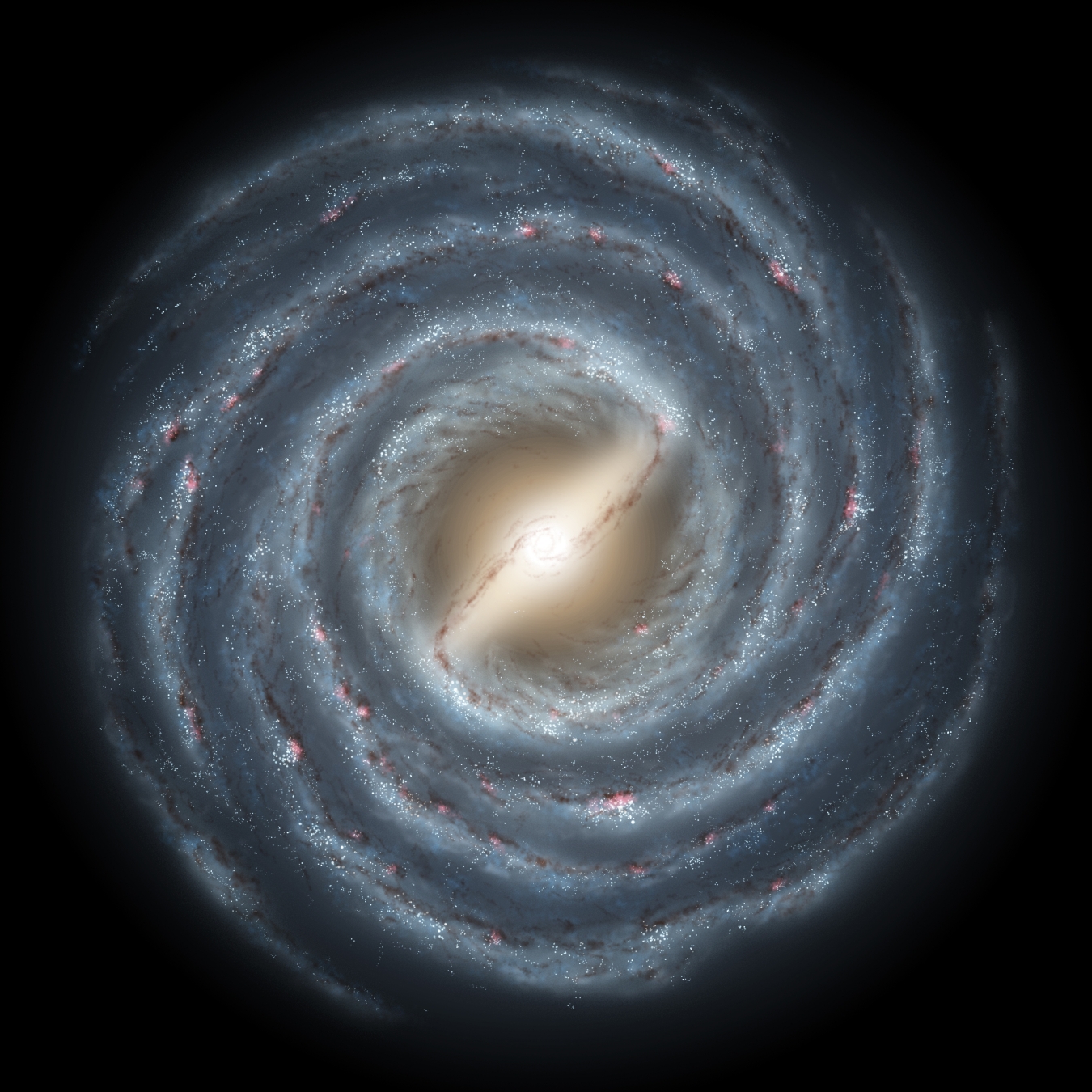
A recent survey of stars conducted with the Spitzer Space Telescope is convincing astronomers that our Milky Way Galaxy is not just your ordinary spiral galaxy anymore. Looking out from within the Galaxy's disk, the true structure of the Milky Way is difficult to discern. However, the penetrating infrared census of about 30 million stars indicates that the Galaxy is distinguished by a very large central bar some 27,000 light-years long. In fact, from a vantage point that viewed our galaxy face-on, astronomers in distant galaxies would likely see a striking barred spiral galaxy suggested in this artist's illustration. While previous investigations have identified a small central barred structure, the new results indicate that the Milky Way's large bar would make about a 45 degree angle with a line joining the Sun and the Galaxy's center. DON'T PANIC ... astronomers still place the Sun beyond the central bar region, about a third of the way in from the Milky Way's outer edge.
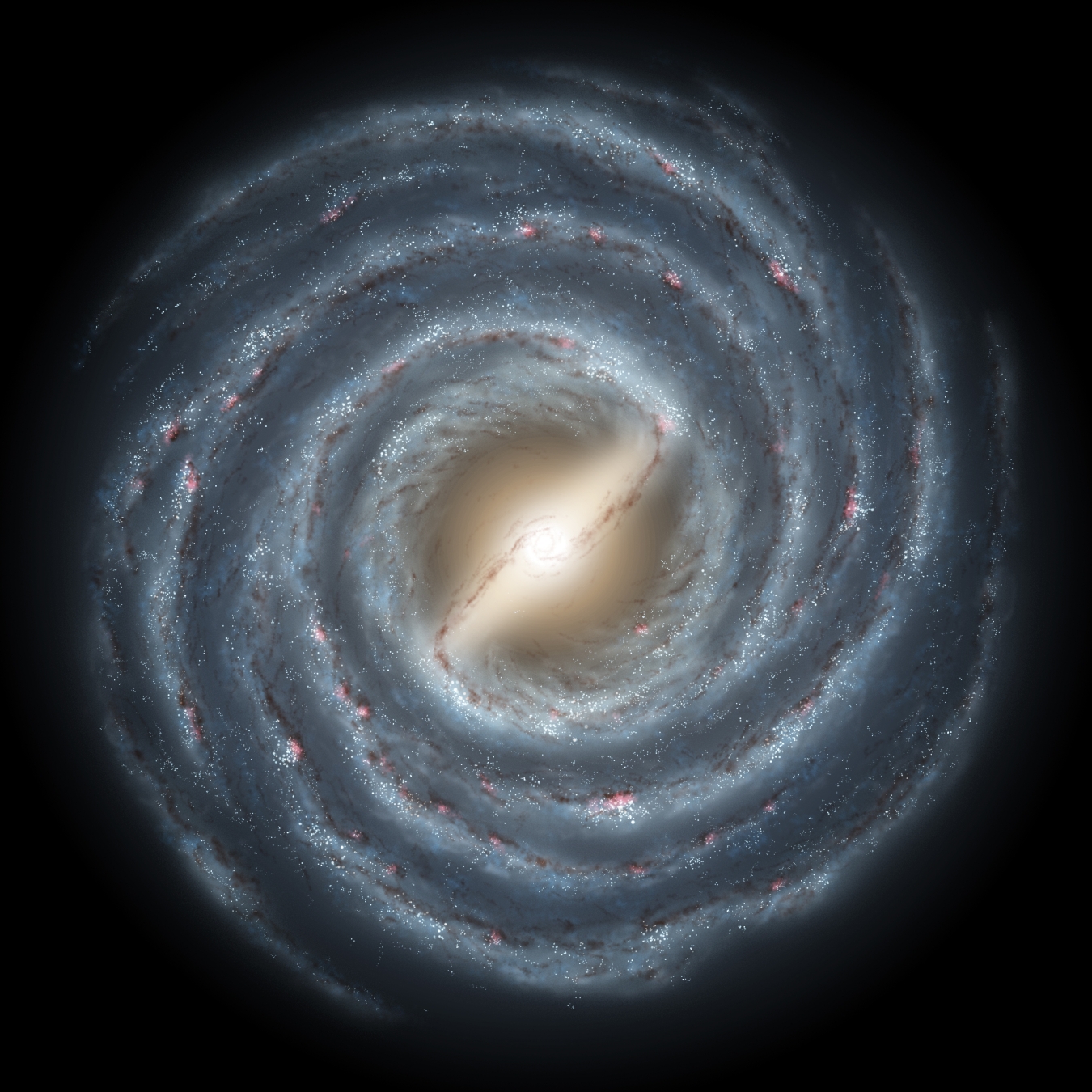
Un estudio reciente de estrellas realizado con el Telescopio Espacial Spitzer está convenciendo a los astrónomos de que nuestra Galaxia Vía Láctea no es simplemente una galaxia espiral ordinaria. Observando desde dentro del disco galáctico, la verdadera estructura de la Vía Láctea es difícil de discernir. Sin embargo, el censo infrarrojo exhaustivo de aproximadamente 30 millones de estrellas indica que la Galaxia se distingue por una barra central muy grande de unos 27.000 años luz de largo. De hecho, desde un punto de vista que permitiera observar nuestra galaxia de frente, los astrónomos en galaxias distantes probablemente verían una llamativa galaxia espiral barrada como se sugiere en esta ilustración artística. Aunque investigaciones anteriores han identificado una pequeña estructura central barrada, los nuevos resultados indican que la gran barra de la Vía Láctea formaría un ángulo de aproximadamente 45 grados con una línea que une el Sol y el centro de la Galaxia. NO ENTREN EN PÁNICO... los astrónomos aún ubican el Sol más allá de la región de la barra central, aproximadamente a un tercio de la distancia desde el borde exterior de la Vía Láctea.