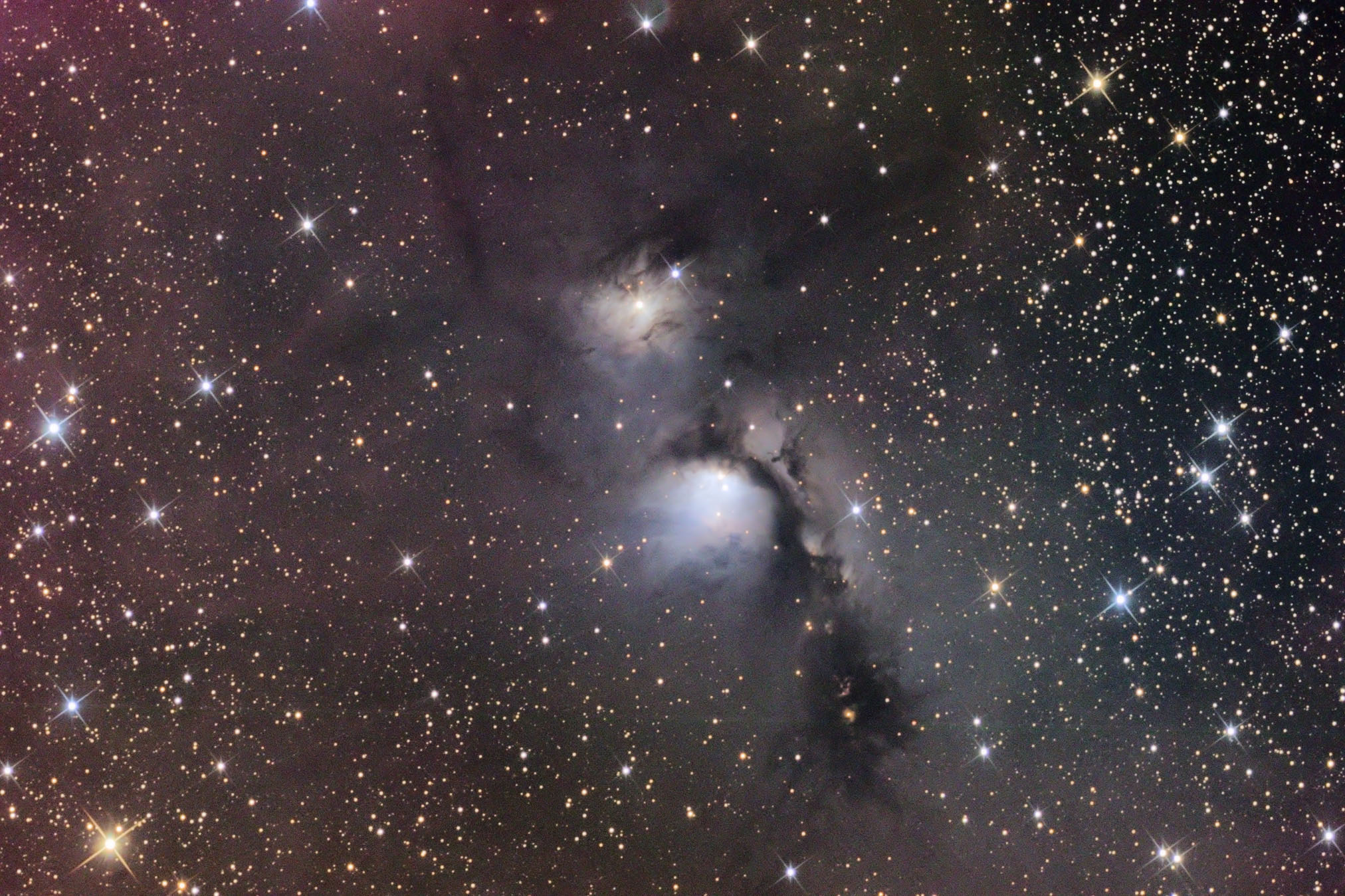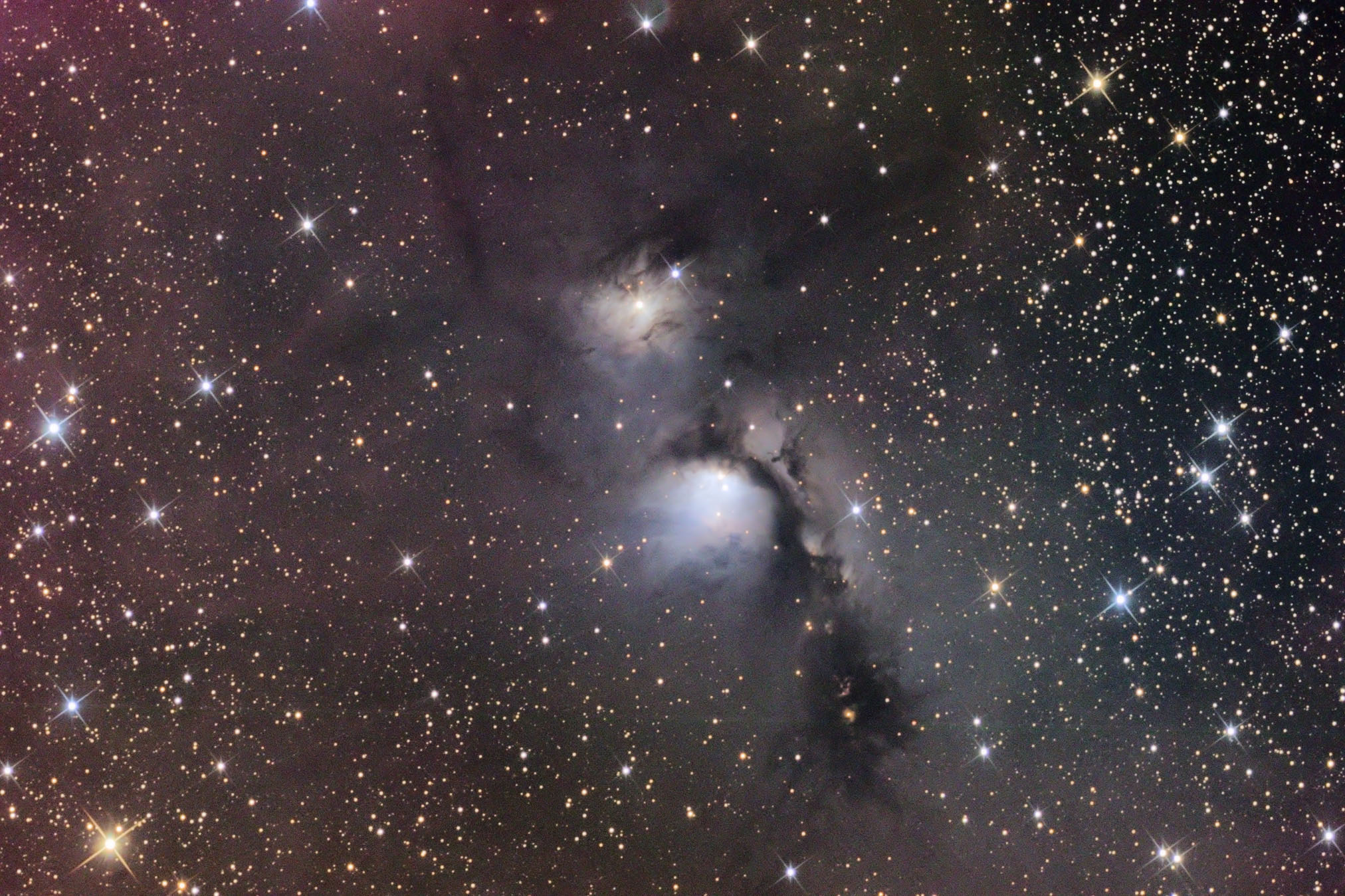
Interstellar dust clouds and bright nebulae abound in the fertile constellation of Orion. One of the brightest, M78, is just below center in this sharp widefield view, covering an area north of Orion's belt. At a distance of about 1,500 light-years, the bluish nebula itself is about 5 light-years across. Its blue tint is due to dust preferentially reflecting the blue light of hot, young stars in the region. Dark dust lanes and other nebulae can easily be traced through this gorgeous skyscape that also includes the remarkable McNeil's Nebula -- a newly recognized nebula associated with the formation of a sun-like star.
Las nubes de polvo interestelar y las brillantes nebulosas abundan en la fértil constelación de Orión. Una de las más brillantes, M78, se encuentra justo debajo del centro en esta aguda vista de gran angular, abarcando un área al norte del cinturón de Orión. A una distancia de aproximadamente 1.500 años luz, la nebulosa azulada en sí tiene un diámetro de unos 5 años luz. Su tinte azul se debe a que el polvo refleja preferencialmente la luz azul de las jóvenes y calientes estrellas de la región. Los oscuros carriles de polvo y otras nebulosas pueden ser fácilmente rastreados a través de este magnífico paisaje celeste que también incluye la notable Nebulosa de McNeil, una nebulosa recientemente reconocida asociada con la formación de una estrella similar al Sol.