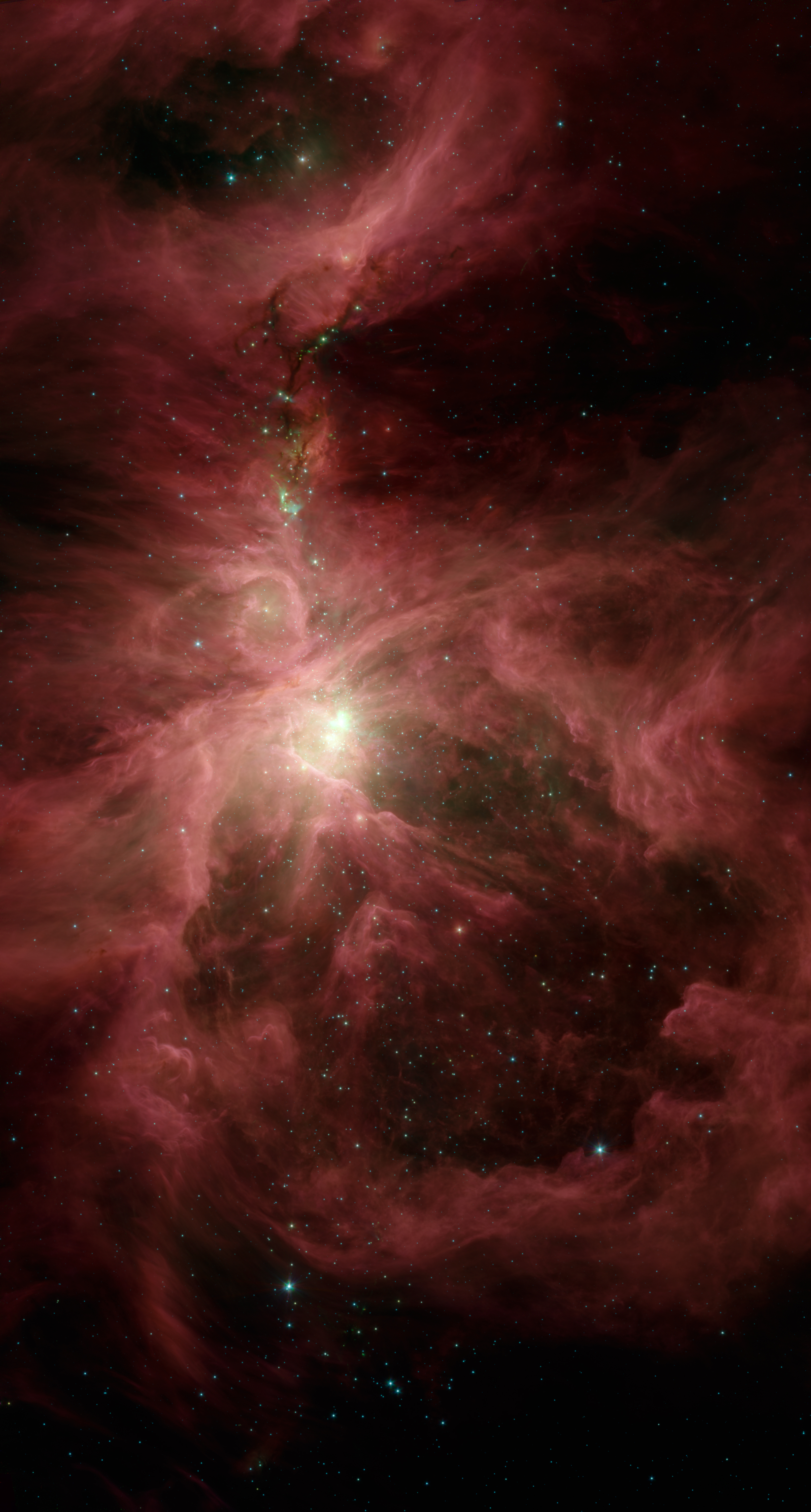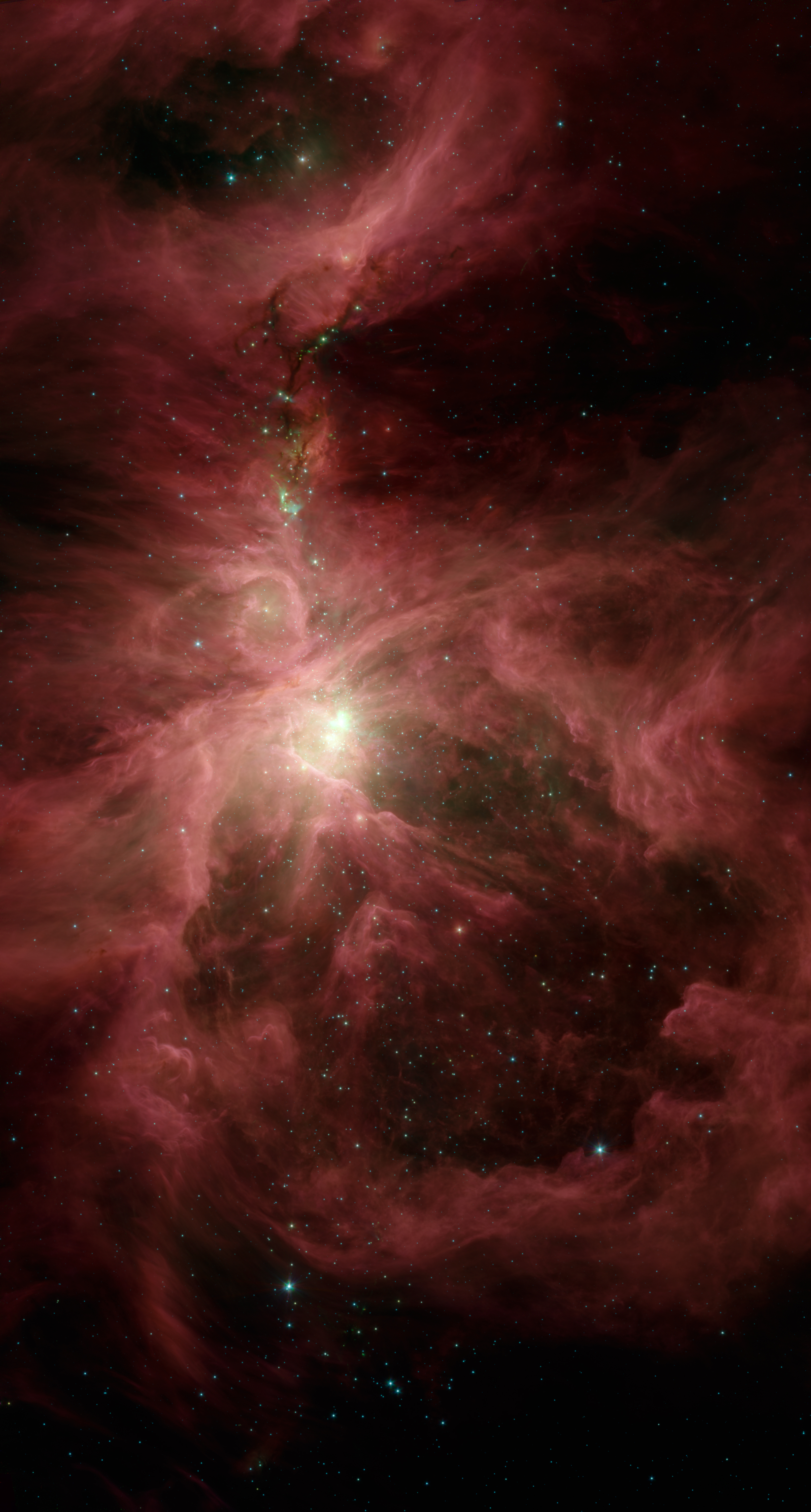
Few cosmic vistas excite the imagination like the Orion Nebula, an immense stellar nursery some 1,500 light-years away. Also known as M42, the nebula is visible to the unaided eye, but this stunning infrared view from the Spitzer Space Telescope penetrates the turbulent cosmic gas and dust clouds to explore the region in unprecedented detail. At full resolution, the remarkable image data yields a census of new stars and potential solar systems. About 2,300 young stars surrounded by planet-forming disks were detected based on the infrared glow of their warm dust, along with about 200 stellar embryos, stars too young to have developed disks. This 0.8 by 1.4 degree false-color image is about 20 light-years wide at the distance of the Orion Nebula.
Pocas vistas cósmicas capturan la imaginación como la Nebulosa de Orión, una inmensa guardería estelar ubicada a aproximadamente 1.500 años luz de distancia. También conocida como M42, la nebula es visible a simple vista, pero esta impresionante vista infrarroja del Telescopio Espacial Spitzer penetra las turbulentas nubes de gas y polvo cósmico para explorar la región con un nivel de detalle sin precedentes. A resolución completa, los notables datos de imagen permiten hacer un censo de las nuevas estrellas y posibles sistemas solares. Se detectaron aproximadamente 2.300 estrellas jóvenes rodeadas de discos formadores de planetas basándose en el brillo infrarrojo de su polvo cálido, junto con aproximadamente 200 embriones estelares, estrellas demasiado jóvenes para haber desarrollado discos. Esta imagen en falso color de 0,8 por 1,4 grados tiene aproximadamente 20 años luz de ancho a la distancia de la Nebulosa de Orión.