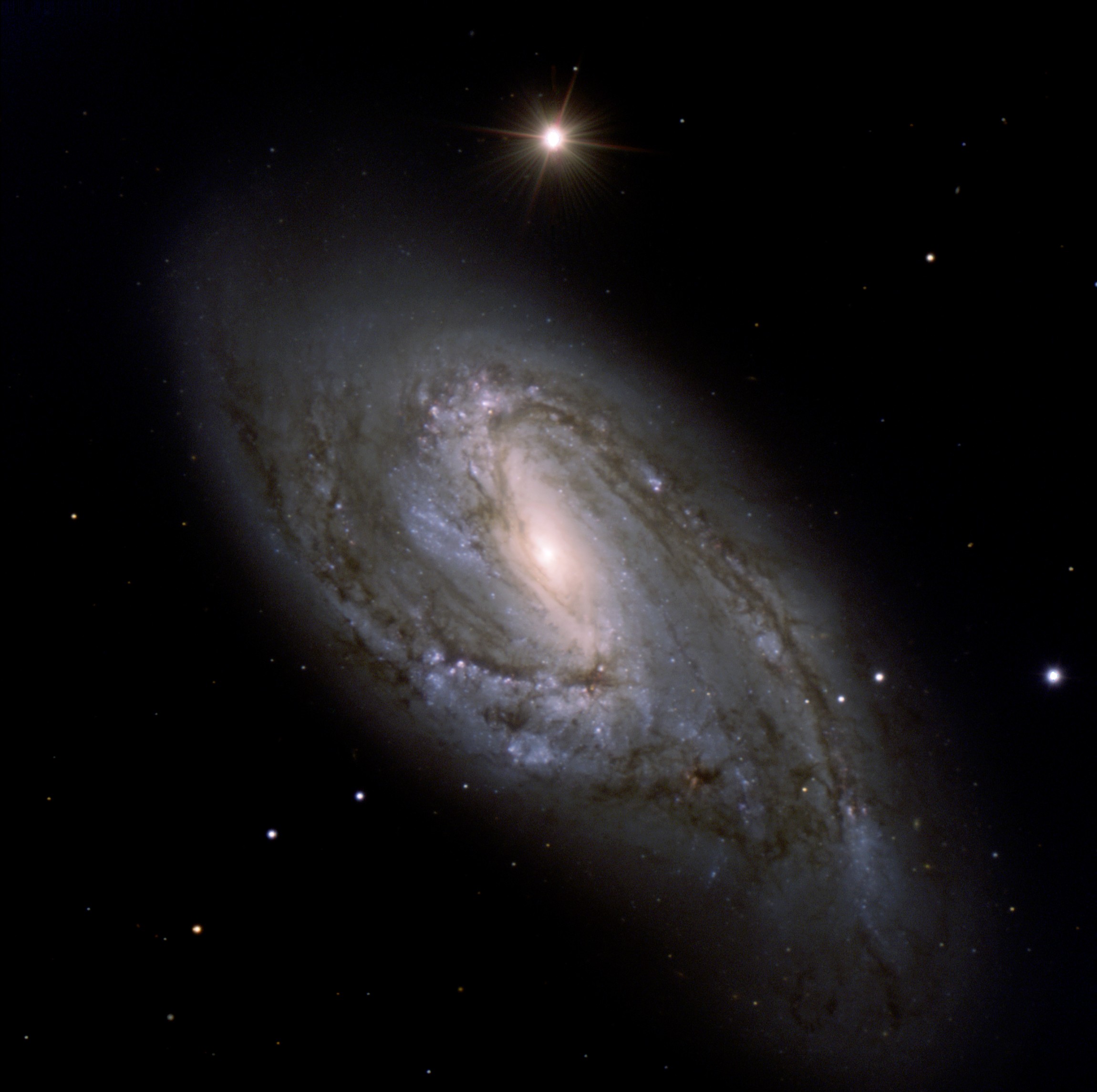
When morning twilight came to the Paranal Observatory in Chile, astronomers Mark Neeser and Peter Barthel interrupted their search for faint quasars, billions of light-years away. And just for a moment, they used Very Large Telescopes at the European Southern Observatory to appreciate the beauty of the nearby Universe. One result was this stunning view of beautiful spiral galaxy M66, a mere 35 million light-years away. About 100 thousand light-years across with striking dust lanes and bright star clusters along sweeping spiral arms, M66 is well known to astronomers as a member of the Leo Triplet of galaxies. Gravitational interactions with its neighborhood galaxies have likely influenced the shape of dusty spiral M66.
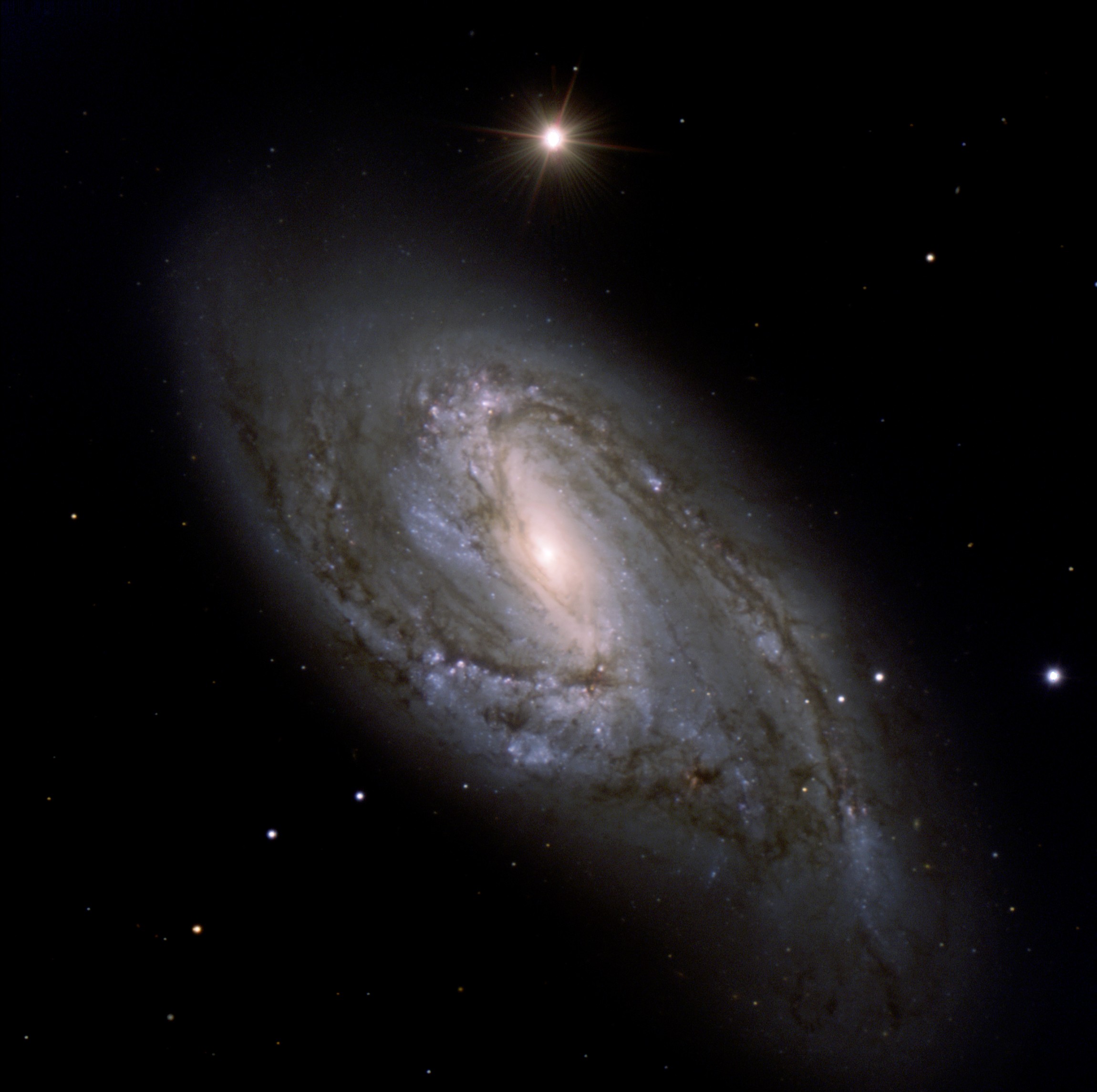
Cuando llegó la aurora en la Observatorio de Paranal en Chile, los astrónomos Mark Neeser y Peter Barthel interrumpieron su búsqueda de cuásares tenues, a miles de millones de años luz de distancia. Y solo por un momento, utilizaron los Telescopios Muy Grandes del Observatorio Europeo del Sur para apreciar la belleza del Universo cercano. Uno de los resultados fue esta impresionante vista de la hermosa galaxia espiral M66, a solo 35 millones de años luz de distancia. Con aproximadamente 100 mil años luz de diámetro, con llamativas vías de polvo y brillantes cúmulos estelares a lo largo de sus brazos espirales, M66 es bien conocida por los astrónomos como miembro del Triplete de Leo de galaxias. Las interacciones gravitacionales con sus galaxias vecinas probablemente hayan influido en la forma de la espiral polvorienta M66.