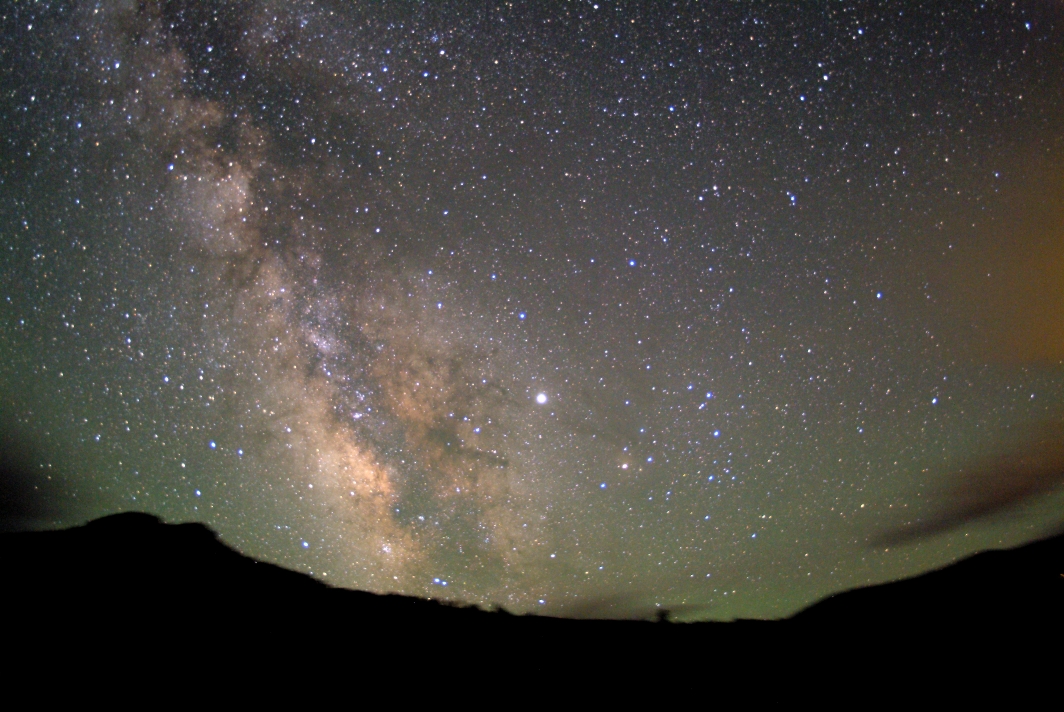
In this gorgeous skyscape, gas giant Jupiter along with the stars and cosmic dust clouds of the Milky Way hang over the southern horizon in the early morning hours as seen from Stagecoach, Colorado, USA. Recorded on Thursday, Jupiter is the brightest object near picture center. Along with the stunning Milky Way, Jupiter is hard to miss, but a careful inspection of the view also reveals main belt asteroid Vesta. Of all the asteroids Vesta is the brightest and is now just bright enough to be visible to the naked eye from locations with very dark, clear skies. Vesta (as well as Jupiter) appears relatively bright now because it is near opposition, literally opposite the Sun in planet Earth's sky and closest to Earth in its orbit. For Vesta, this opposition offers the best viewing in many years. The year 2007 also coincides with the 200th anniversary of the asteroid's discovery. Starting late next month, NASA plans to launch the Dawn mission intended to explore Vesta (and Ceres) and the main asteroid belt.
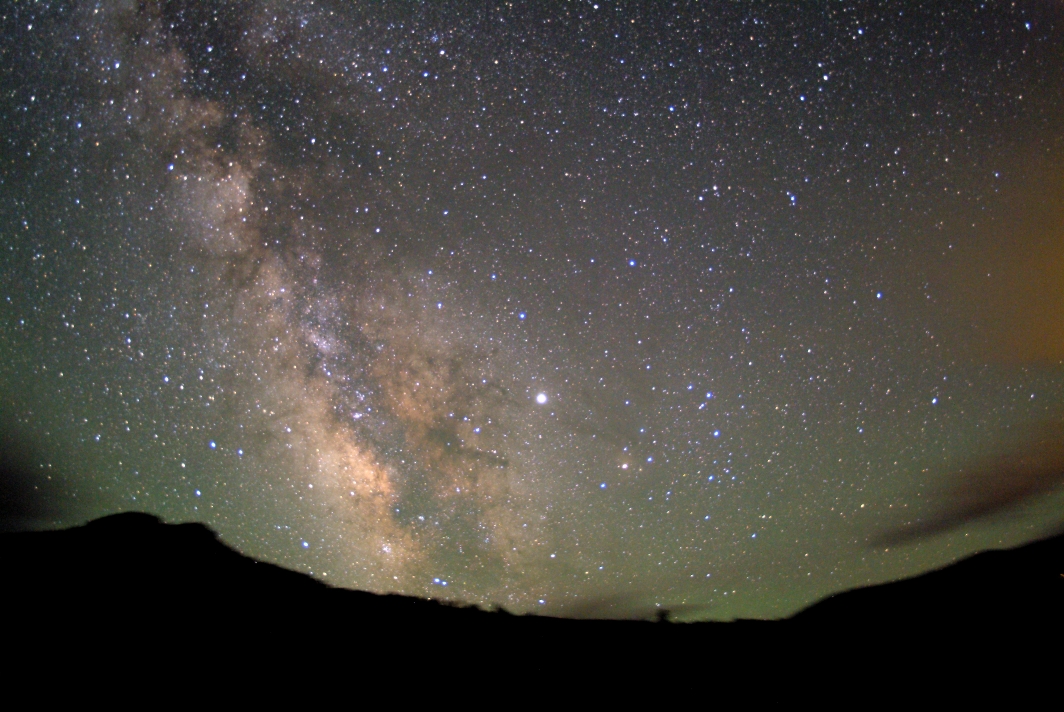
En este magnífico paisaje celeste, el gigante gaseoso Júpiter, junto con las estrellas y las nubes de polvo cósmico de la Vía Láctea, se extienden sobre el horizonte sur en las primeras horas de la mañana, tal como se observa desde Stagecoach, Colorado, EE.UU. Capturado el jueves, Júpiter es el objeto más brillante cerca del centro de la imagen. Junto con la espectacular Vía Láctea, Júpiter es difícil de pasar por alto, pero una inspección cuidadosa de la vista también revela al asteroide del cinturón principal Vesta. De todos los asteroides, Vesta es el más brillante y ahora es lo suficientemente brillante como para ser visible a simple vista desde ubicaciones con cielos oscuros y despejados. Vesta (así como Júpiter) aparece relativamente brillante ahora porque se encuentra cerca de la oposición, literalmente opuesto al Sol en el cielo del planeta Tierra y más cercano a la Tierra en su órbita. Para Vesta, esta oposición ofrece la mejor observación en muchos años. El año 2007 coincide también con el 200 aniversario del descubrimiento del asteroide. A finales del próximo mes, la NASA planea lanzar la misión Dawn, destinada a explorar Vesta (y Ceres) y el cinturón de asteroides principal.