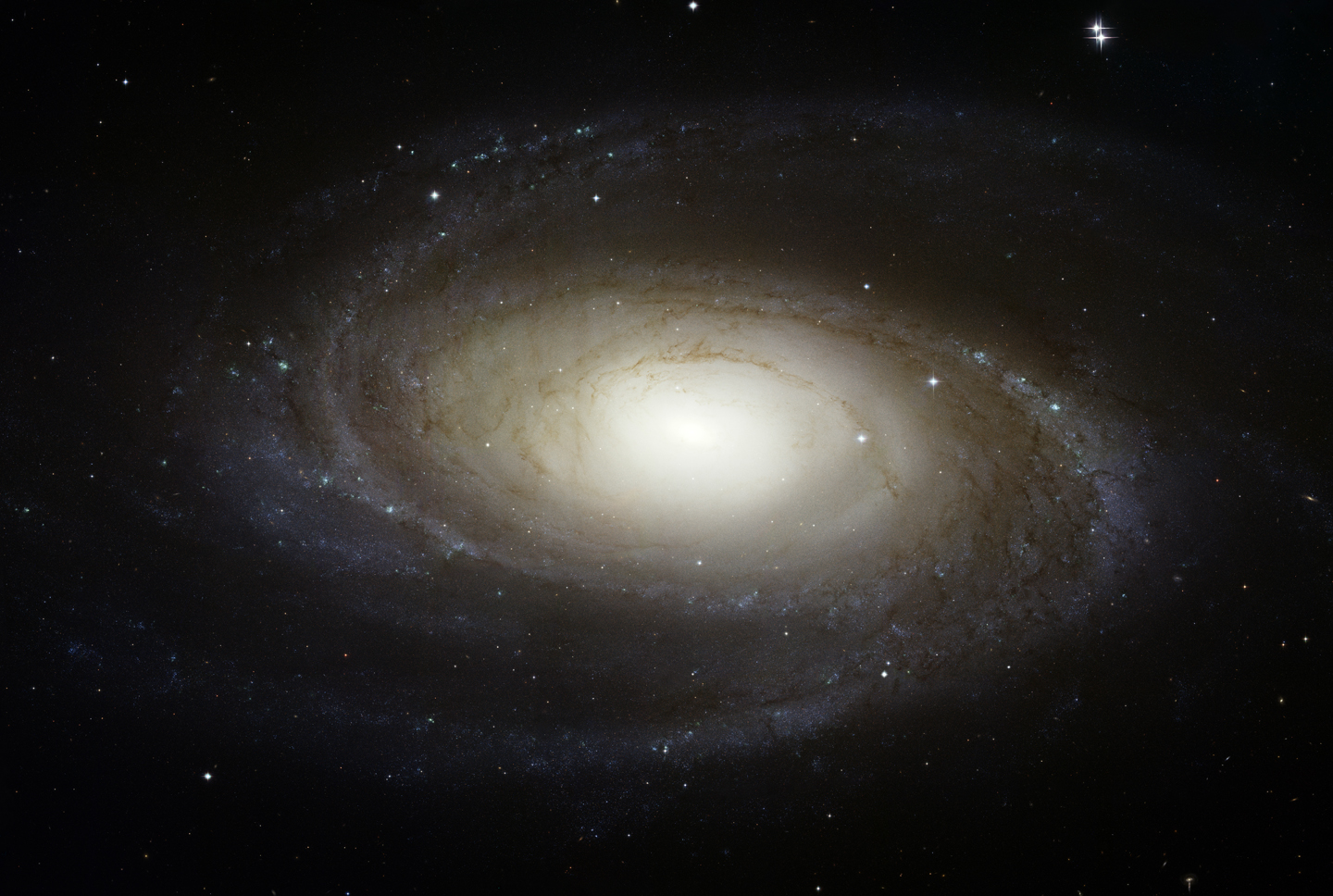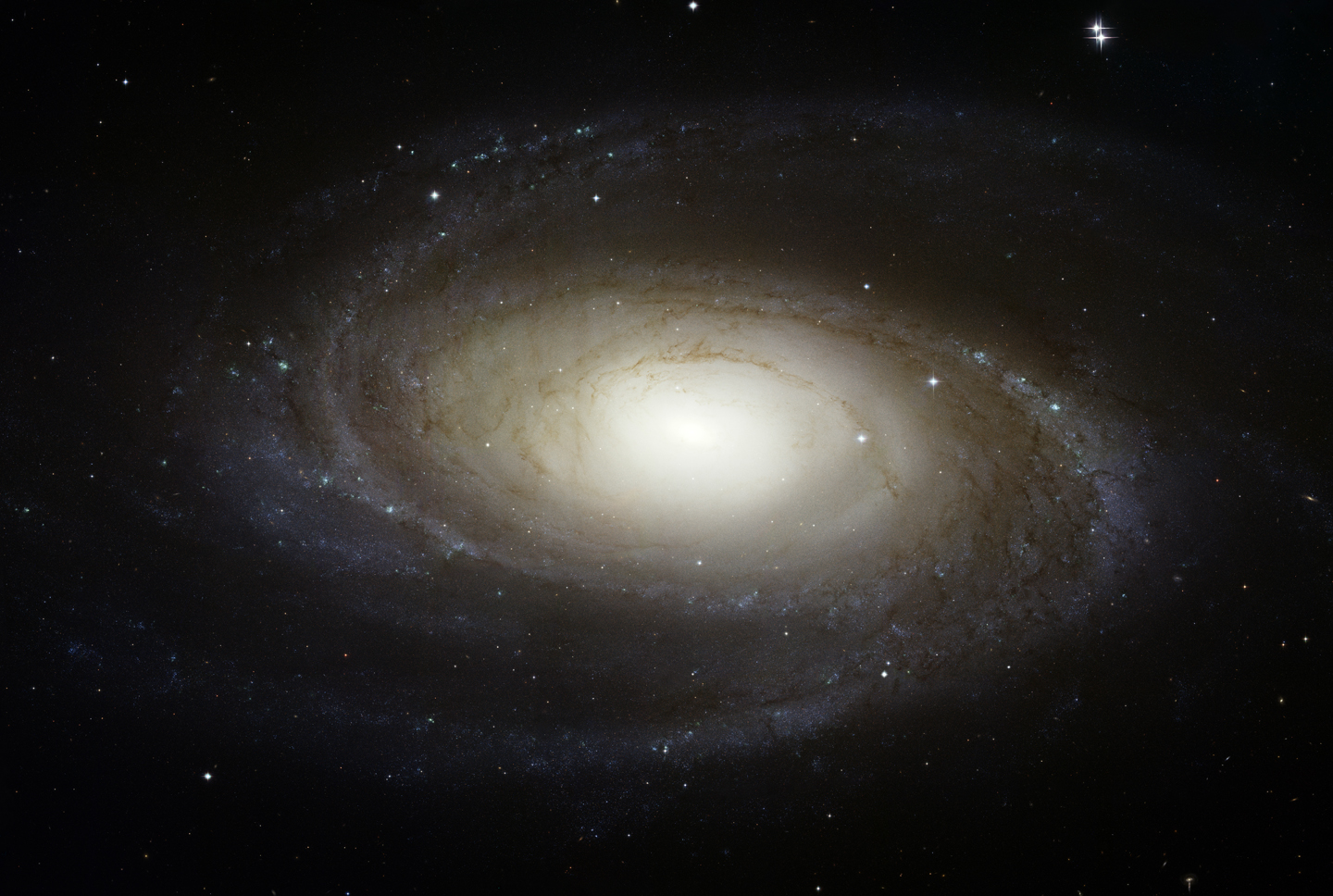
The Hubble Space Telescope has resolved individual stars in a spectacular new image of nearby spiral galaxy M81. The feat is similar to Edwin Hubble's historic images with the Mt. Wilson 100-inch Hooker Telescope in the 1920s that resolved stars in neighboring galaxy M31. Edwin Hubble was able to use individual Cepheid variable stars to show that M31 was not nearby swirling gas but rather an entire galaxy like our Milky Way Galaxy. This above image in visible light taken by the Hubble Space Telescope is being used in conjunction with images being taken in ultraviolet by Galex, infrared by Spitzer, and X-rays with Chandra to study how stars have formed and died over the history M81. Light takes about 12 million years to reach us from M81. M81 is visible with binoculars toward the constellation of the Great Bear (Ursa Major).
El Telescopio Espacial Hubble ha resuelto estrellas individuales en una espectacular nueva imagen de la galaxia espiral cercana M81. Este logro es similar al de las imágenes históricas de Edwin Hubble obtenidas con el telescopio Hooker de 100 pulgadas del Monte Wilson en los años veinte, que resolvieron estrellas en la galaxia vecina M31. Edwin Hubble fue capaz de utilizar estrellas variables Cefeidas individuales para demostrar que M31 no era gas en movimiento cercano, sino una galaxia completa como nuestra Vía Láctea. La imagen anterior en luz visible, tomada por el Telescopio Espacial Hubble, se está utilizando en conjunto con imágenes captadas en ultravioleta por Galex, infrarrojo por Spitzer y rayos X con Chandra para estudiar cómo se han formado y desaparecido estrellas a lo largo de la historia de M81. La luz tarda aproximadamente 12 millones de años en llegar a nosotros desde M81. M81 es visible con binoculares hacia la constelación de la Osa Mayor (Ursa Major).