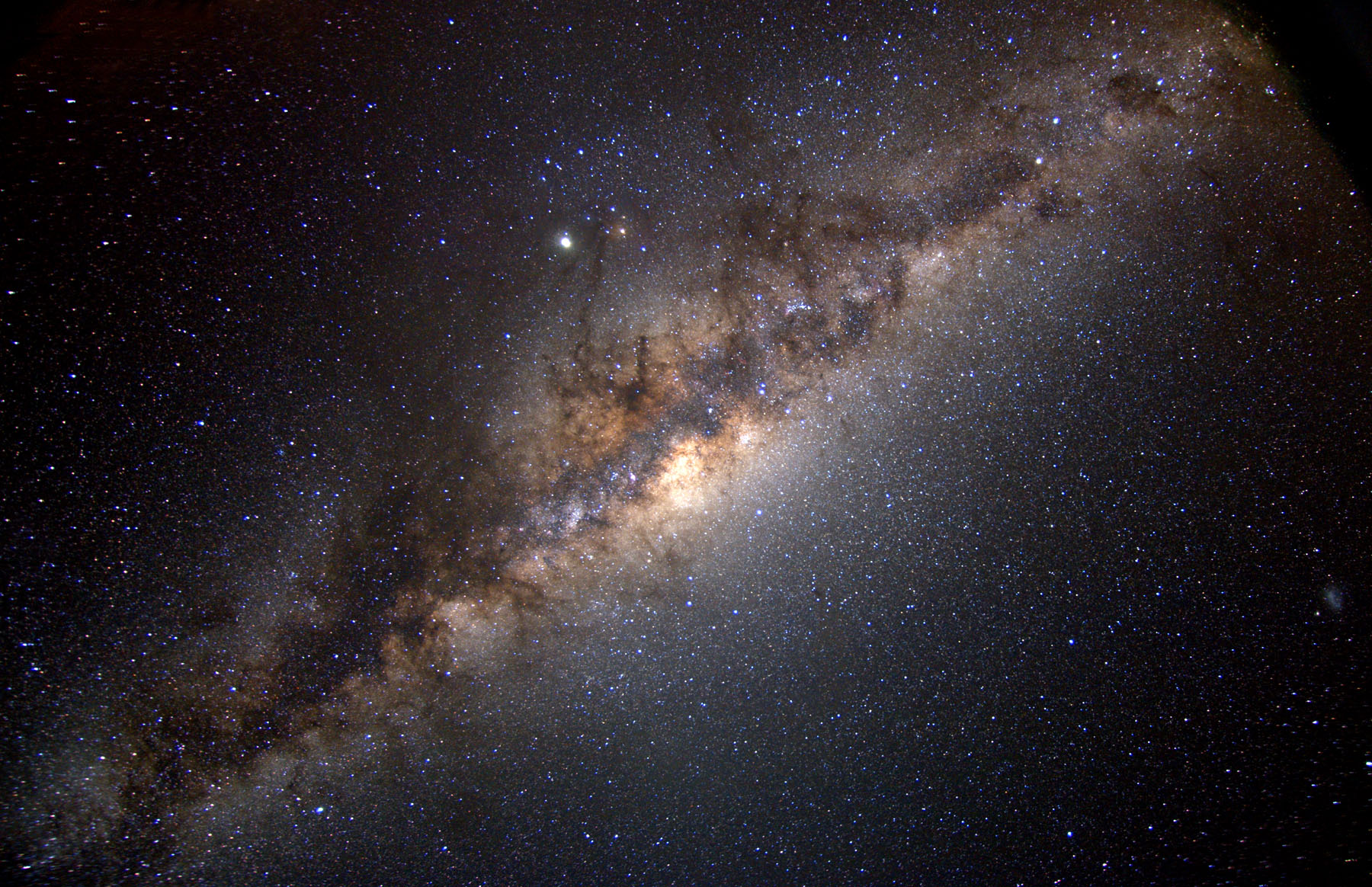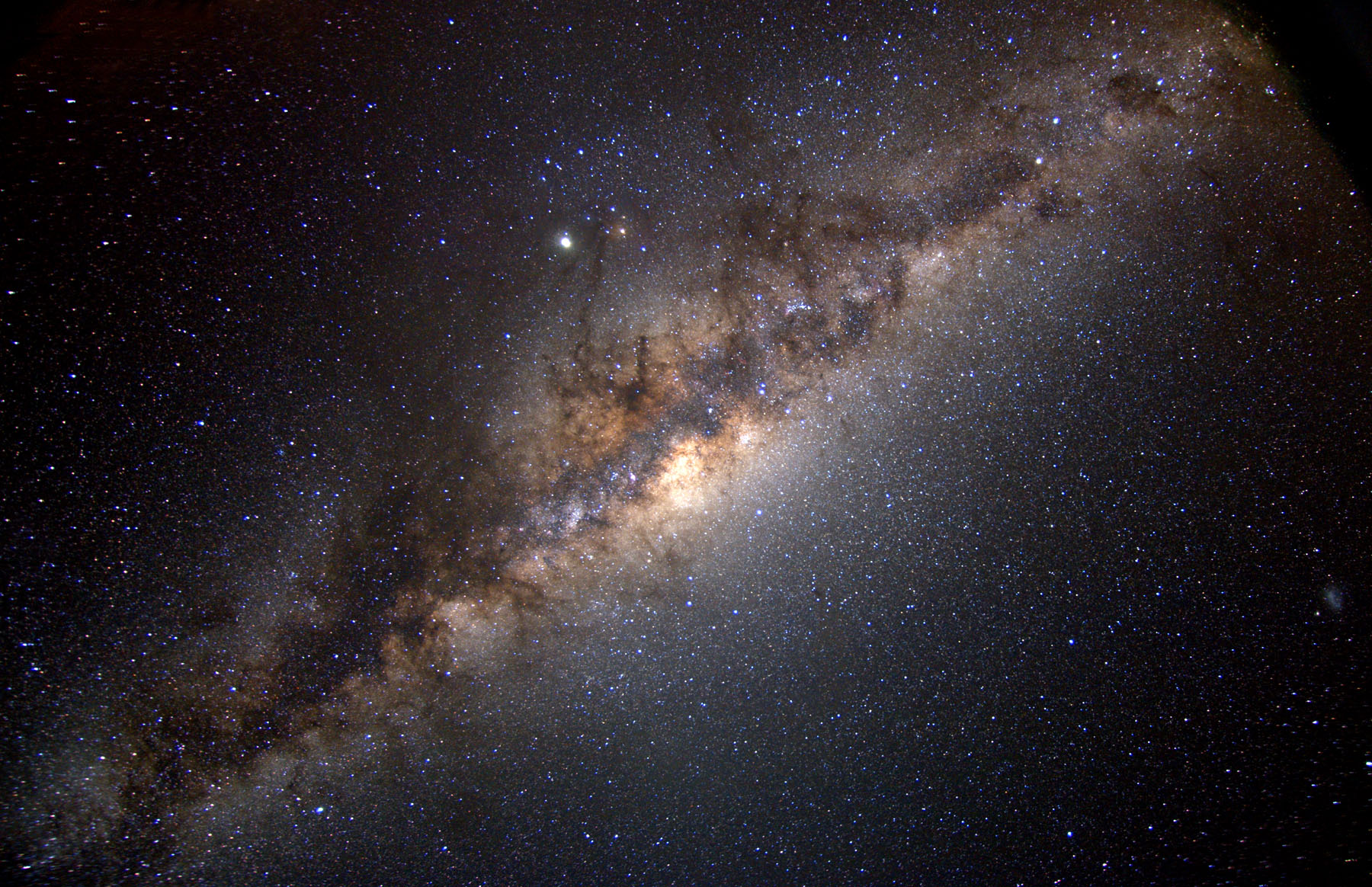
Climb up to 5000 meters (16,500 feet) above sea level, near Cerro Chajnantor in the northern Chilean Andes, and your night sky could encompass this cosmic vista. Recorded from that high and dry locale, the spectacular fish-eye image features the myriad stars and sprawling dust clouds of our Milky Way Galaxy. The direction toward the center of the Galaxy is near the zenith and center of the picture, but the Galactic Center itself is hidden from view, located far behind the obscuring dust. Brilliant Jupiter rules this scene just above the Milky Way's central bulge with the noticeably fainter, yellowish, giant star Antares to its right. Small and faint, near the right edge of the picture is one of the Milky Way's many satellite galaxies, the Small Magellanic Cloud. The Amateur Astronomers Association of New York Presents: APOD Editor's Lecture: Tonight - American Museum of Natural History
Si subes hasta 5000 metros (16 500 pies) sobre el nivel del mar, cerca del Cerro Chajnantor en los Andes del norte de Chile, tu cielo nocturno podría abarcar esta vista cósmica. Registrada desde esa localidad alta y árida, la espectacular imagen de ojo de pez presenta la miríada de estrellas y las extendidas nubes de polvo de nuestra galaxia de la Vía Láctea. La dirección hacia el centro de la galaxia está cerca del cenit y el centro de la imagen, pero el centro galáctico en sí está oculto de la vista, situado muy detrás del polvo que lo obscurece. Júpiter brillante domina esta escena justo encima del bulto central de la Vía Láctea, con la notoriamente más débil y amarillenta estrella gigante Antares a su derecha. Pequeña y débil, cerca del borde derecho de la imagen, está una de las muchas galaxias satélite de la Vía Láctea, la Pequeña Nube de Magallanes.