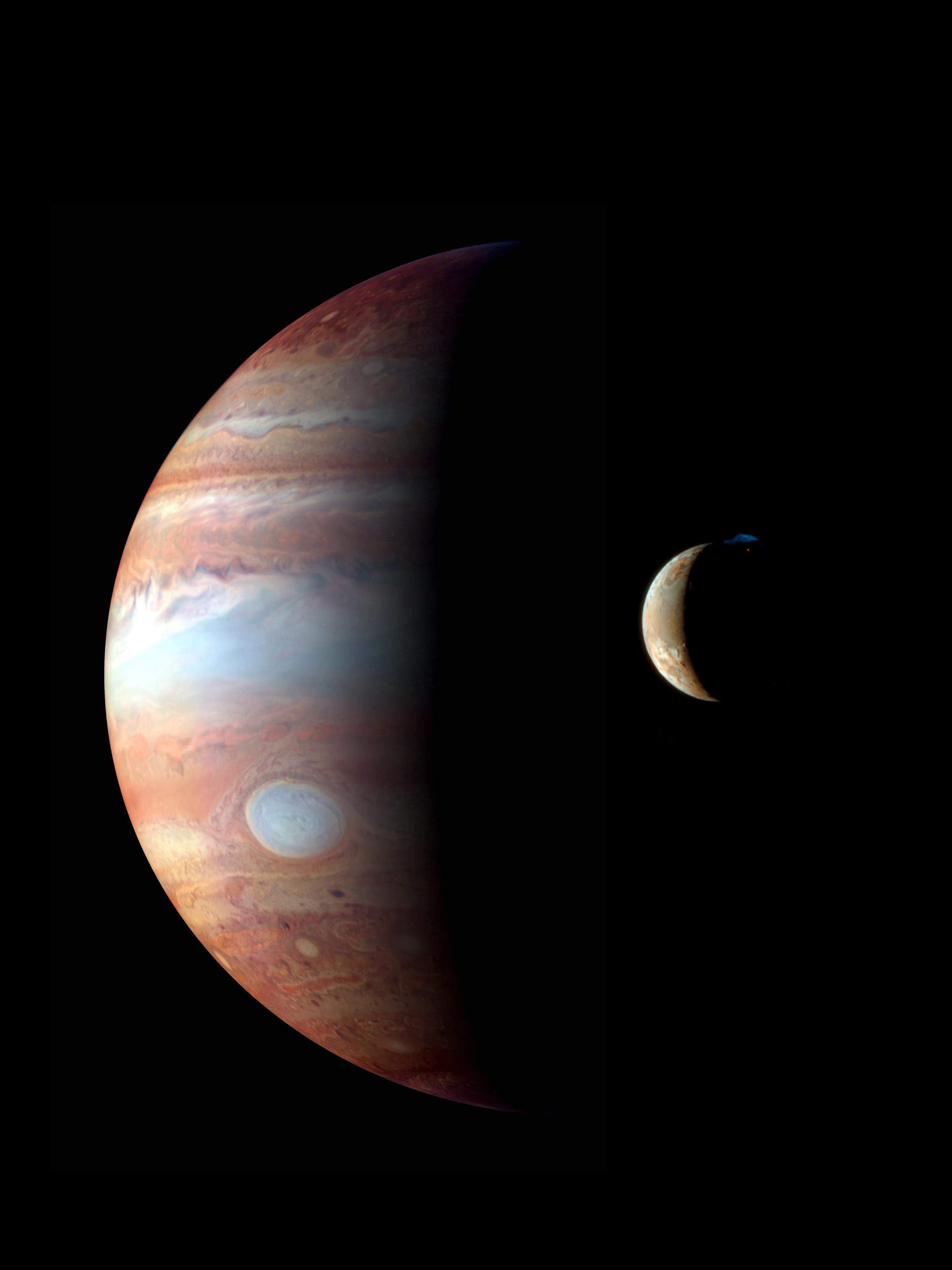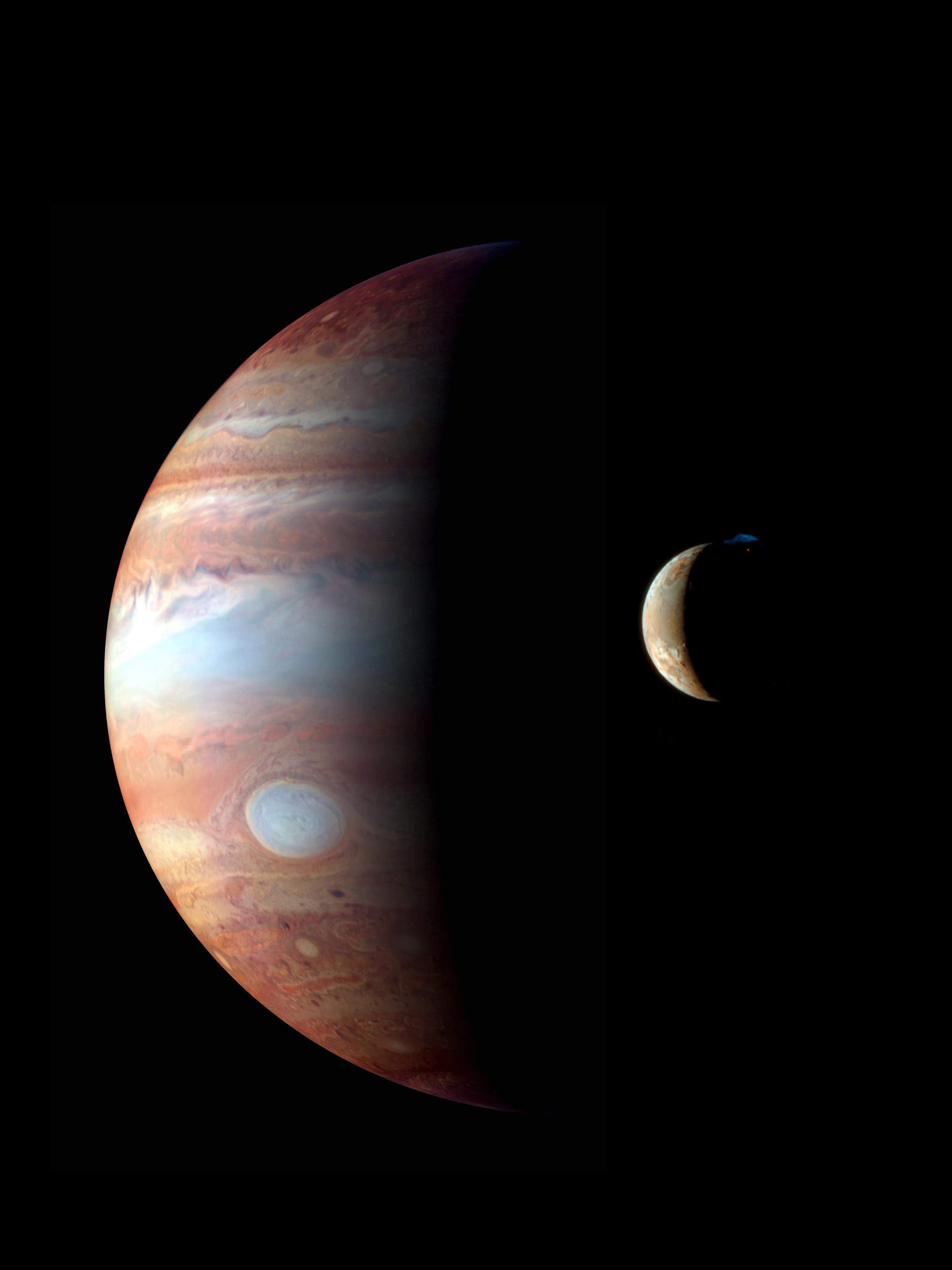
As the New Horizons spacecraft sweeps through the Solar System, it is taking breathtaking images of the planets. In February of last year, New Horizons passed Jupiter and the ever-active Jovian moon Io. In this montage, Jupiter was captured in three bands of infrared light making the Great Red Spot look white. Complex hurricane-like ovals, swirls, and planet-ringing bands are visible in Jupiter's complex atmosphere. Io is digitally superposed in natural color. Fortuitously, a plume was emanating from Io's volcano Tvashtar. Frost and sulfuric lava cover the volcanic moon, while red-glowing lava is visible beneath the blue sunlight-scattering plume. The robotic New Horizons spacecraft is on track to arrive at Pluto in 2015. Note: Meet sky enthusiasts, astro bloggers, and APOD editor RN in Austin tonight.
Mientras la nave espacial New Horizons atraviesa el Sistema Solar, está capturando imágenes impresionantes de los planetas. En febrero del año pasado, New Horizons pasó cerca de Júpiter y de la siempre activa luna joviana Ío. En este montaje, Júpiter fue capturado en tres bandas de luz infrarroja, haciendo que la Gran Mancha Roja se vea blanca. Óvalos de aspecto similar a huracanes, remolinos complejos y bandas que rodean el planeta son visibles en la compleja atmósfera de Júpiter. Ío se superpone digitalmente en color natural. Afortunadamente, una columna de gas emanaba del volcán Tvashtar de Ío. Hielo y lava sulfúrica cubren la luna volcánica, mientras que lava de color rojo incandescente es visible bajo la columna de dispersión de luz solar azul. La nave robótica New Horizons está en camino de llegar a Plutón en 2015.