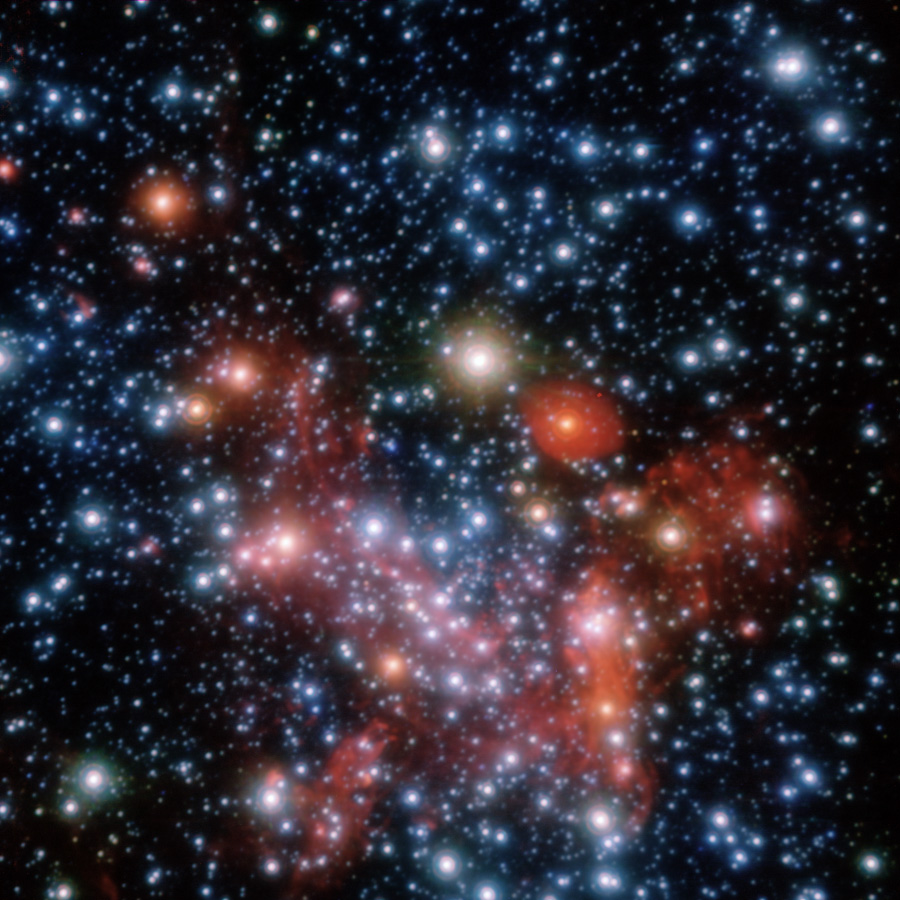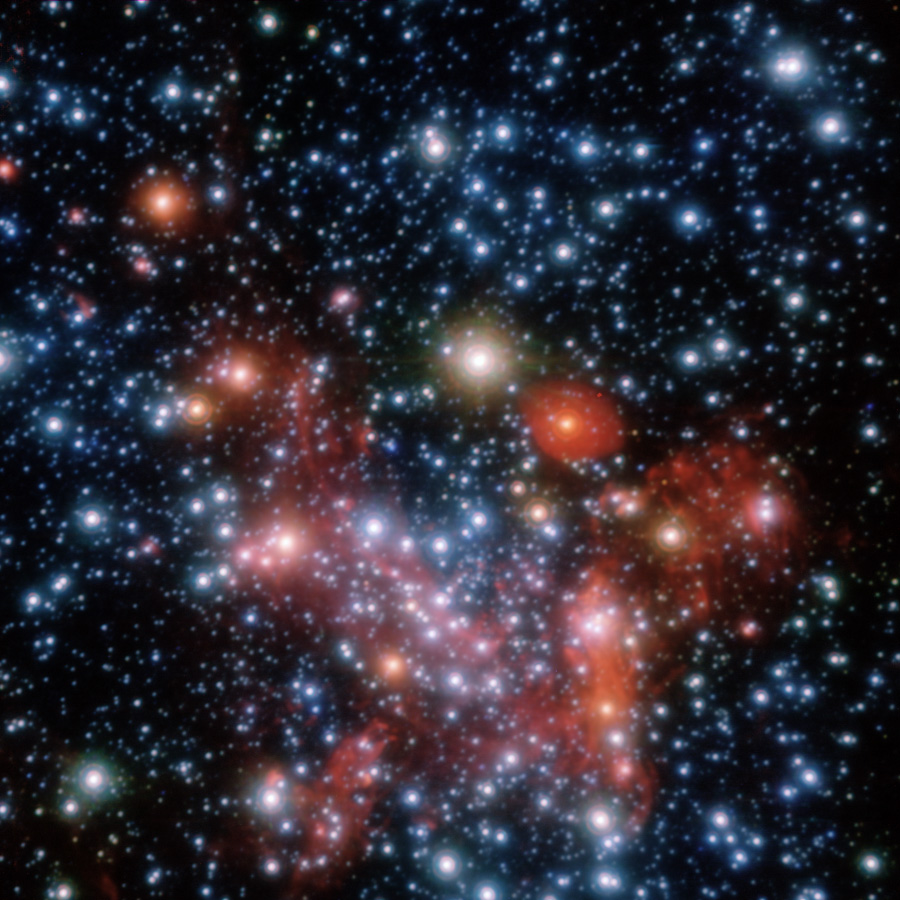
At the center of our Milky Way Galaxy lies a supermassive black hole. Once a controversial claim, this conclusion is now solidly based on 16 years of observations that map the orbits of 28 stars very near the galactic center. Using European Southern Observatory telescopes and sophisticated near infrared cameras, astronomers patiently measured the positions of the stars over time, following one star, designated S2, through a complete orbit as it came within about 1 light-day of the center of the Milky Way. Their results convincingly show that S2 is moving under the influence of the enormous gravity of a compact, unseen object -- a black hole with 4 million times the mass of the Sun. Their ability to track stars so close to the galactic center accurately measures the black hole's mass and also determines the distance to the center to be 27,000 light-years. This deep, near-infrared image shows the crowded inner 3 light-years of the central Milky Way. Spectacular time-lapse animations of the stars orbiting within light-days of the galactic center can be found here.
En el centro de nuestra Galaxia de la Vía Láctea se encuentra un agujero negro supermasivo. Alguna vez una afirmación controvertida, esta conclusión ahora se basa sólidamente en 16 años de observaciones que trazan las órbitas de 28 estrellas muy cerca del centro galáctico. Utilizando telescopios del Observatorio Europeo Austral y sofisticadas cámaras de infrarrojo cercano, los astrónomos midieron pacientemente las posiciones de las estrellas a lo largo del tiempo, siguiendo una estrella, designada S2, a través de una órbita completa mientras se acercaba aproximadamente un día luz del centro de la Vía Láctea. Sus resultados demuestran de manera convincente que S2 se mueve bajo la influencia de la enorme gravedad de un objeto compacto invisible: un agujero negro con 4 millones de veces la masa del Sol. Su capacidad para rastrear estrellas tan cerca del centro galáctico mide con precisión la masa del agujero negro y también determina que la distancia al centro es de 27.000 años luz. Esta imagen profunda de infrarrojo cercano muestra los 3 años luz más internos y abarrotados de la Vía Láctea central.