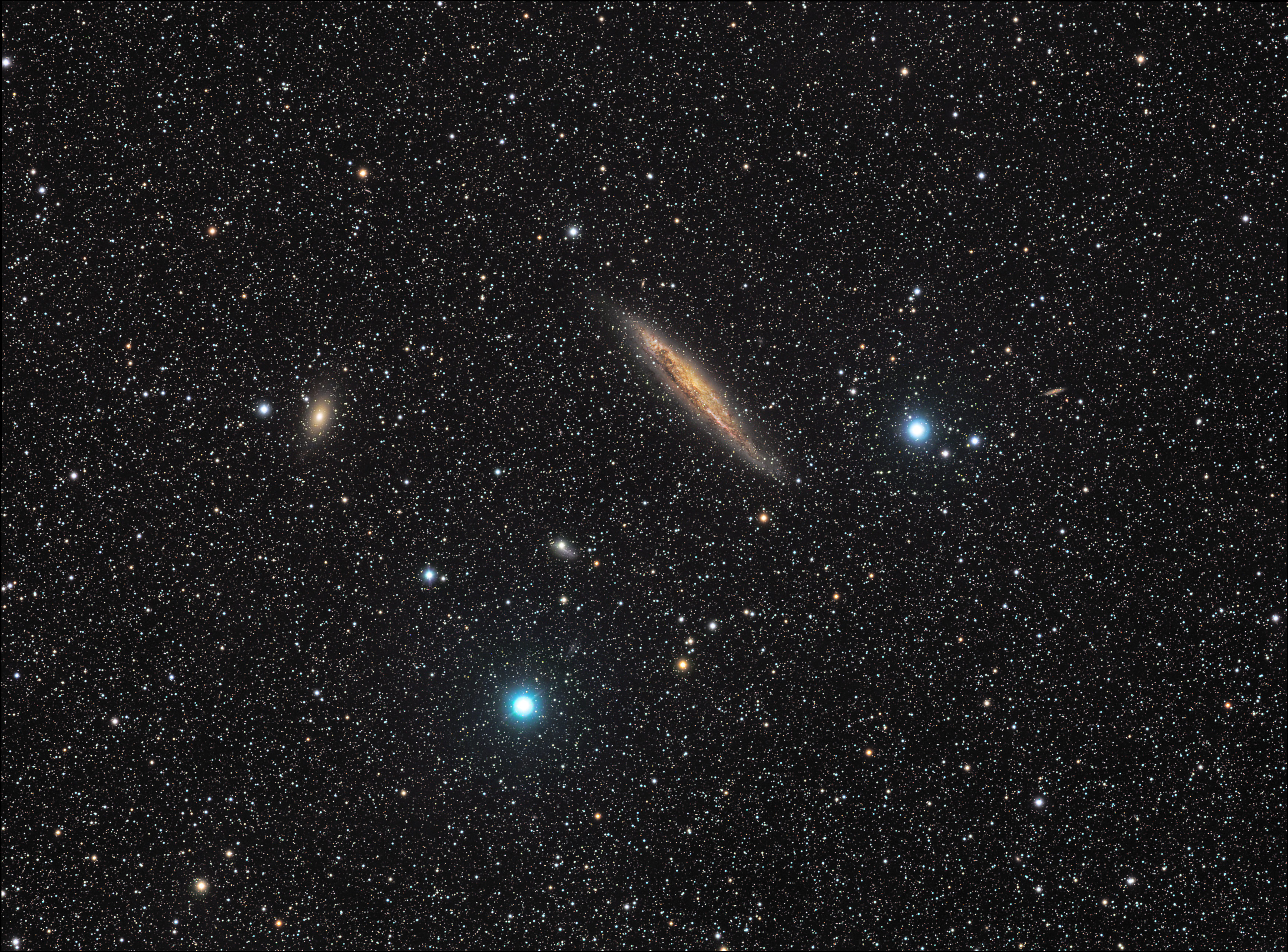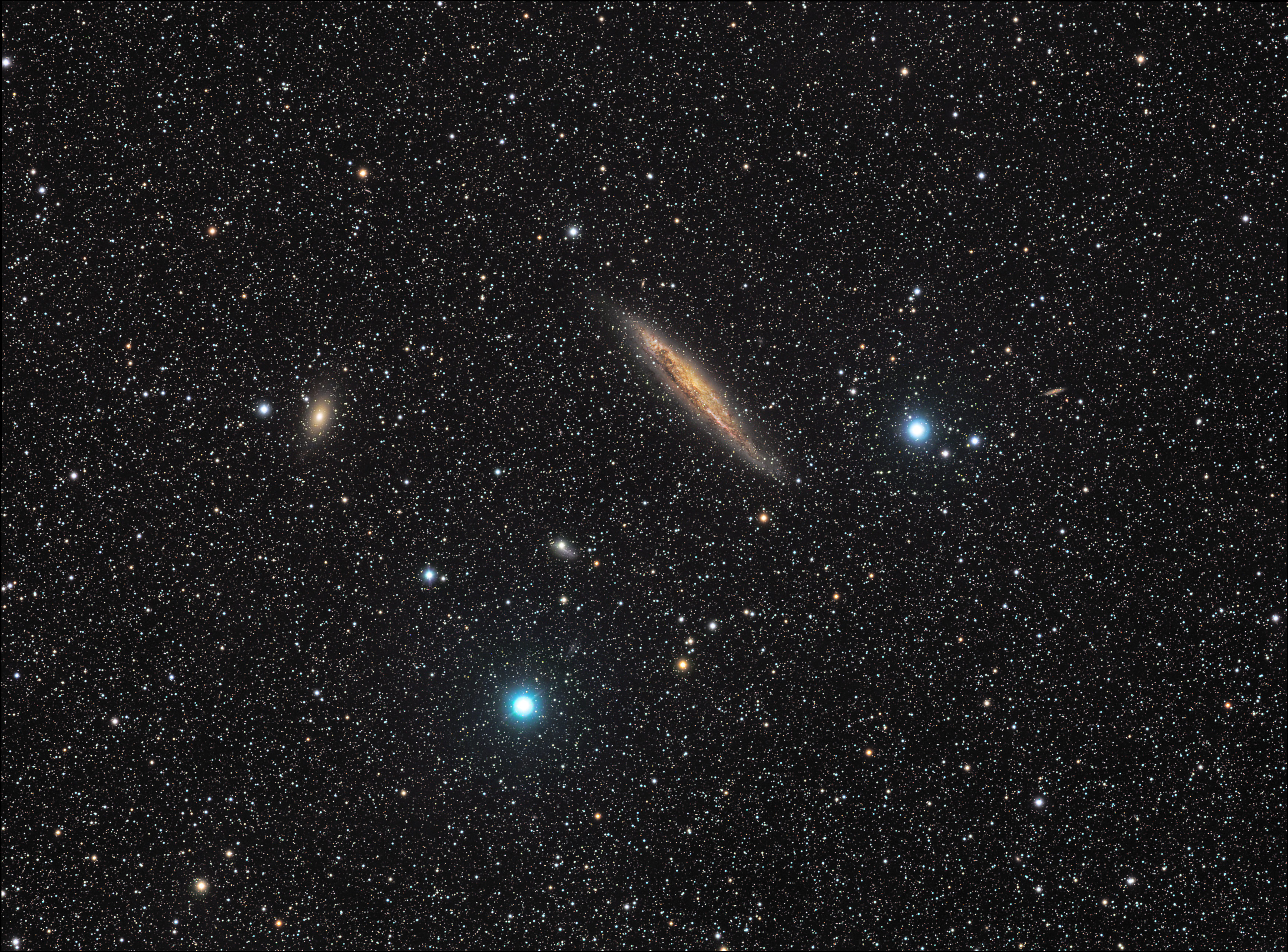
Large, dusty, spiral galaxy NGC 4945 is seen edge-on near the center of this rich telescopic image. The field of view spans nearly 2 degrees, or about 4 times the width of the Full Moon, toward the expansive southern constellation Centaurus. About 13 million light-years distant, NGC 4945 is almost the size of our own Milky Way Galaxy. But X-ray and infrared observations reveal even more high energy emission and star formation in the core of NGC 4945. The other prominent galaxy in the field, NGC 4976, is an elliptical galaxy. Left of center, NGC 4976 is much farther away, at a distance of about 35 million light-years, and not physically associated with NGC 4945. Editor's Note: A version of the image with labels generated by Astrometry.net is available here.
Crédito: NASA, CGRO SSC La gran galaxia espiral polvorienta NGC 4945 se observa de perfil cerca del centro de esta rica imagen obtenida con telescopio. El campo de visión abarca casi 2 grados, o aproximadamente 4 veces el ancho de la Luna Llena, hacia la extensa constelación austral Centauro. A una distancia de unos 13 millones de años luz, NGC 4945 tiene casi el mismo tamaño que nuestra propia Galaxia Vía Láctea. Sin embargo, observaciones en rayos X e infrarrojos revelan aún más emisión de alta energía y formación estelar en el núcleo de NGC 4945. La otra galaxia destacada en el campo, NGC 4976, es una galaxia elíptica. A la izquierda del centro, NGC 4976 está mucho más lejos, a una distancia de aproximadamente 35 millones de años luz, y no está físicamente asociada con NGC 4945.