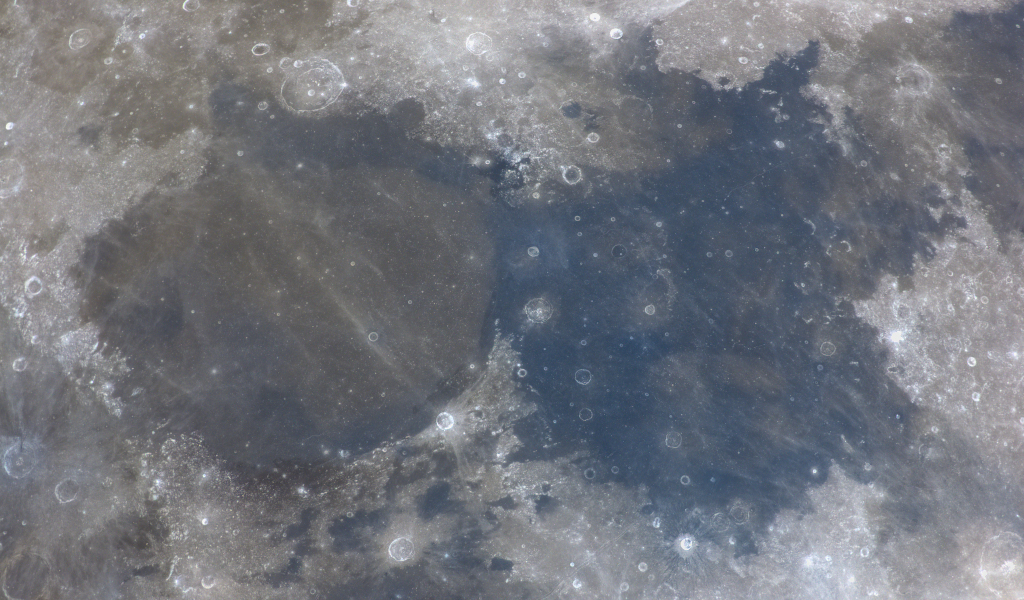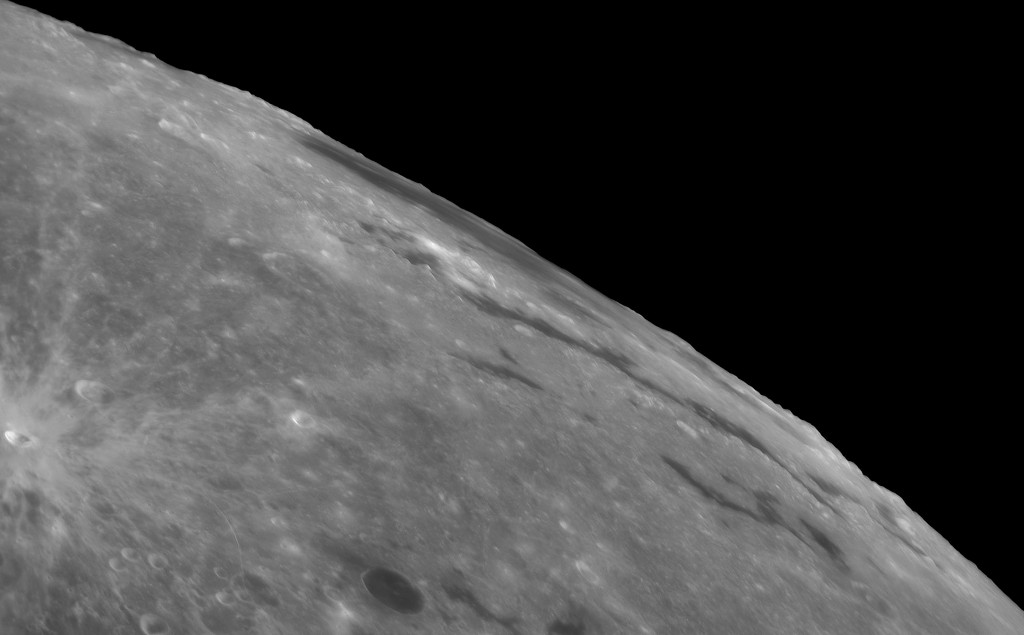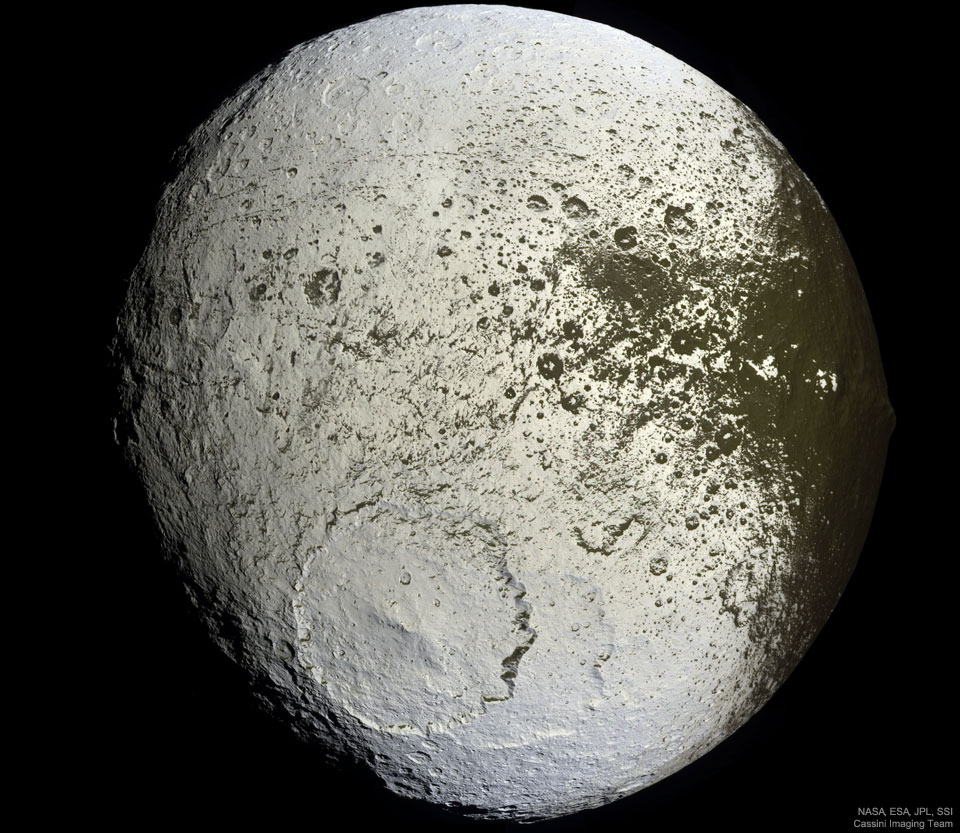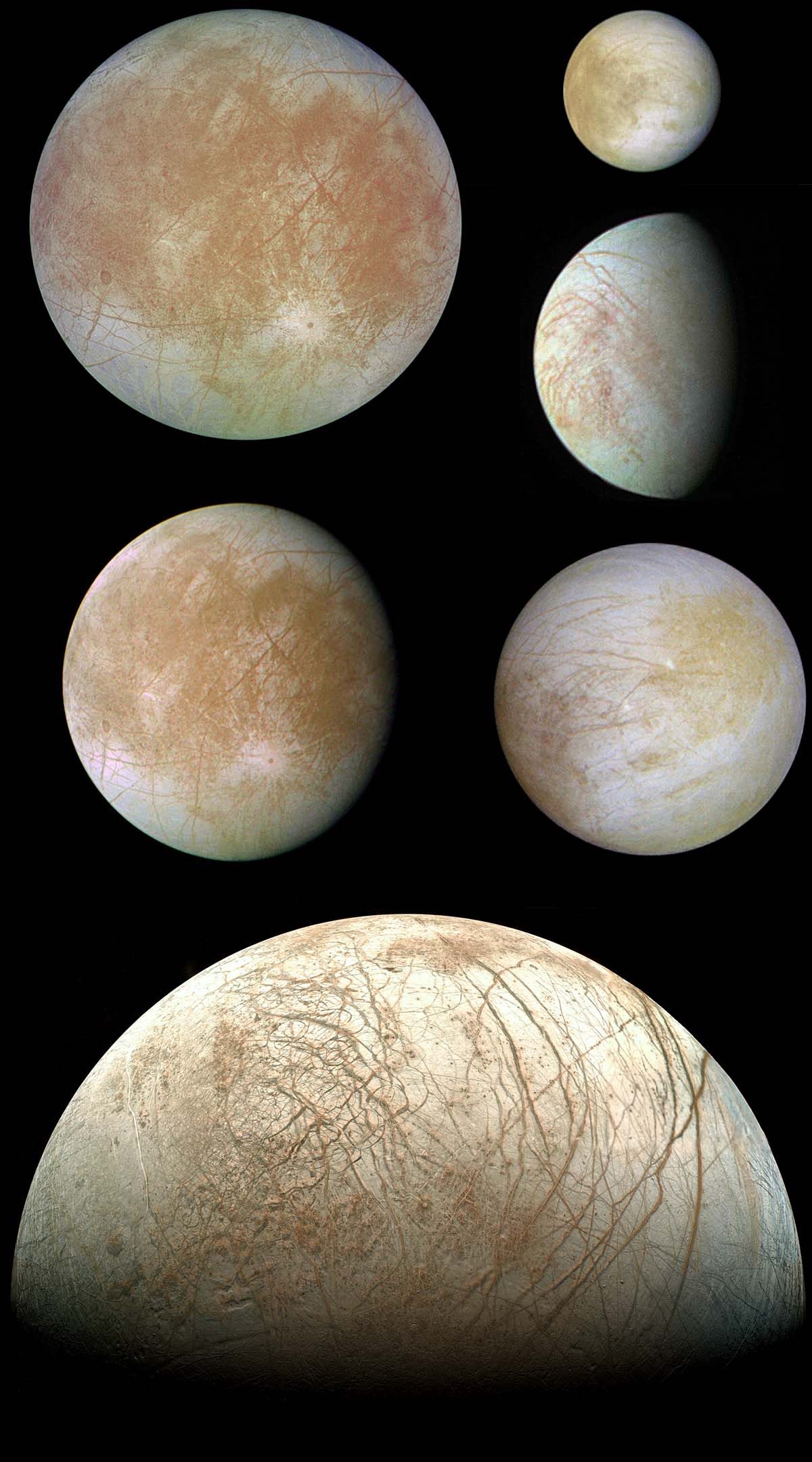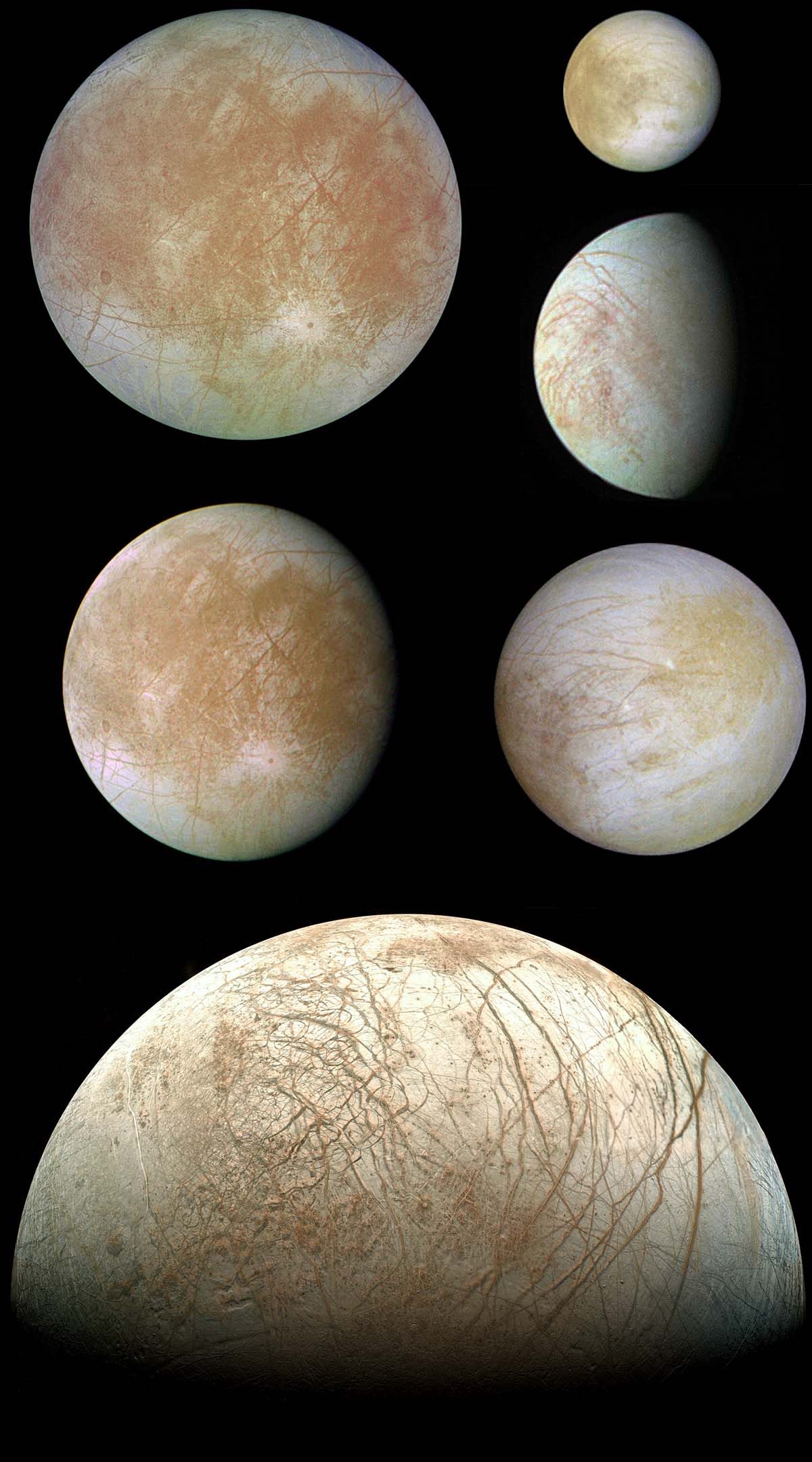
Although the phase of this moon might appear familiar, the moon itself might not. In fact, this gibbous phase shows part of Jupiter's moon Europa. The robot spacecraft Galileo captured this image mosaic during its mission orbiting Jupiter from 1995 - 2003. Visible are plains of bright ice, cracks that run to the horizon, and dark patches that likely contain both ice and dirt. Raised terrain is particularly apparent near the terminator, where it casts shadows. Europa is nearly the same size as Earth's Moon, but much smoother, showing few highlands or large impact craters. Evidence and images from the Galileo spacecraft, indicated that liquid oceans might exist below the icy surface. To test speculation that these seas hold life, ESA and NASA have together started preliminary development of the Europa Jupiter System Mission , a spacecraft proposed to better study Europa. If the surface ice is thin enough, a future mission might drop hydrobots to burrow into the oceans and search for life.
Aunque la fase de esta luna podría parecer familiar, la luna en sí podría no serlo. De hecho, esta fase gibosa muestra parte de la luna Europa de Júpiter. La sonda robótica Galileo capturó este mosaico de imágenes durante su misión orbitando Júpiter de 1995 a 2003. Son visibles llanuras de hielo brillante, grietas que se extienden hasta el horizonte y parches oscuros que probablemente contienen hielo y polvo. El terreno elevado es particularmente evidente cerca del terminador, donde proyecta sombras. Europa tiene un tamaño casi idéntico al de la Luna terrestre, pero es mucho más lisa, mostrando pocas tierras altas o grandes cráteres de impacto. Las evidencias e imágenes de la sonda espacial Galileo indicaron que podrían existir océanos líquidos bajo la superficie helada. Para probar la especulación de que estos mares albergan vida, la ESA y la NASA han comenzado conjuntamente el desarrollo preliminar de la Misión del Sistema Júpiter-Europa, una sonda espacial propuesta para estudiar mejor Europa. Si el hielo superficial es lo suficientemente delgado, una futura misión podría lanzar hidrobots para perforar los océanos y buscar vida.