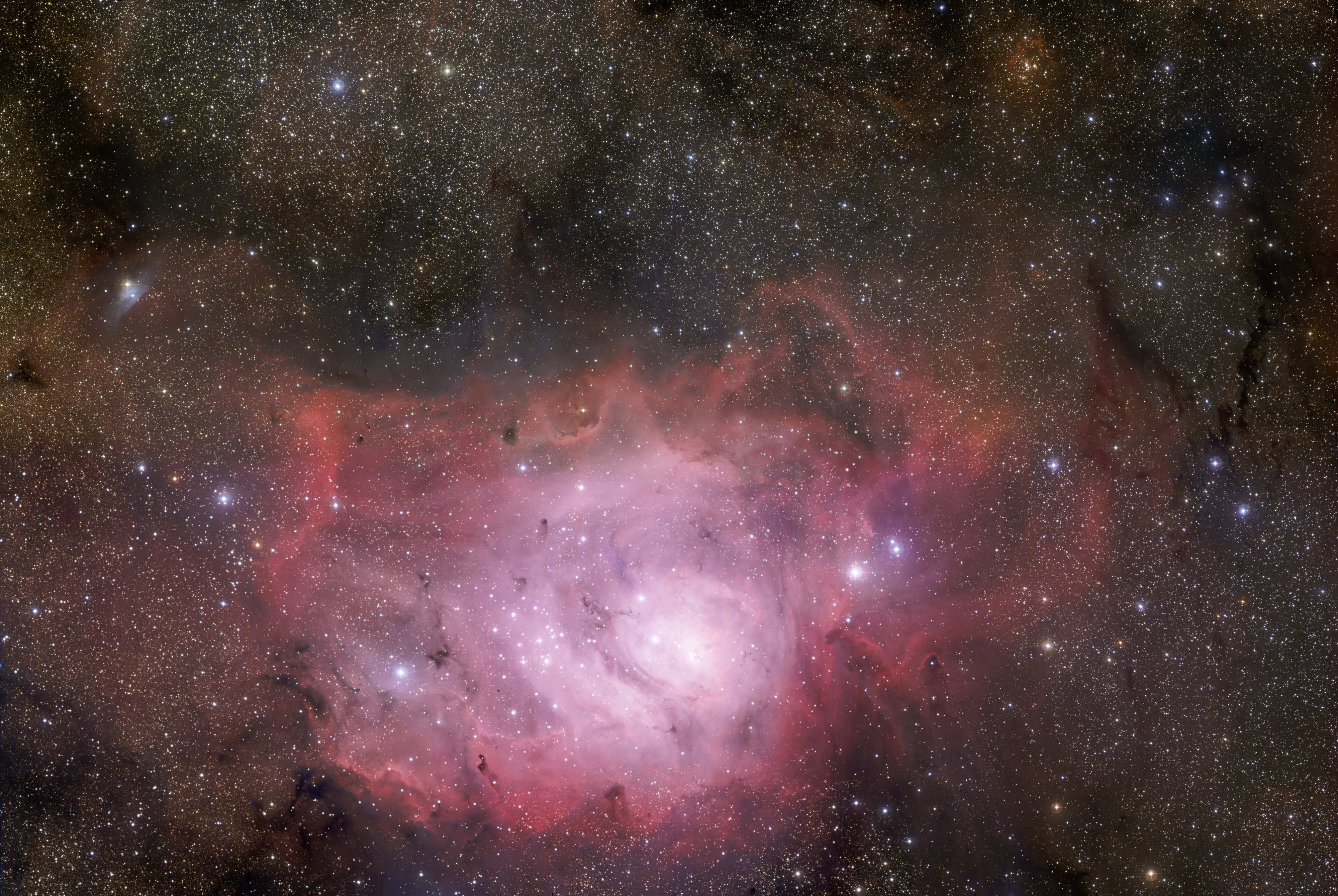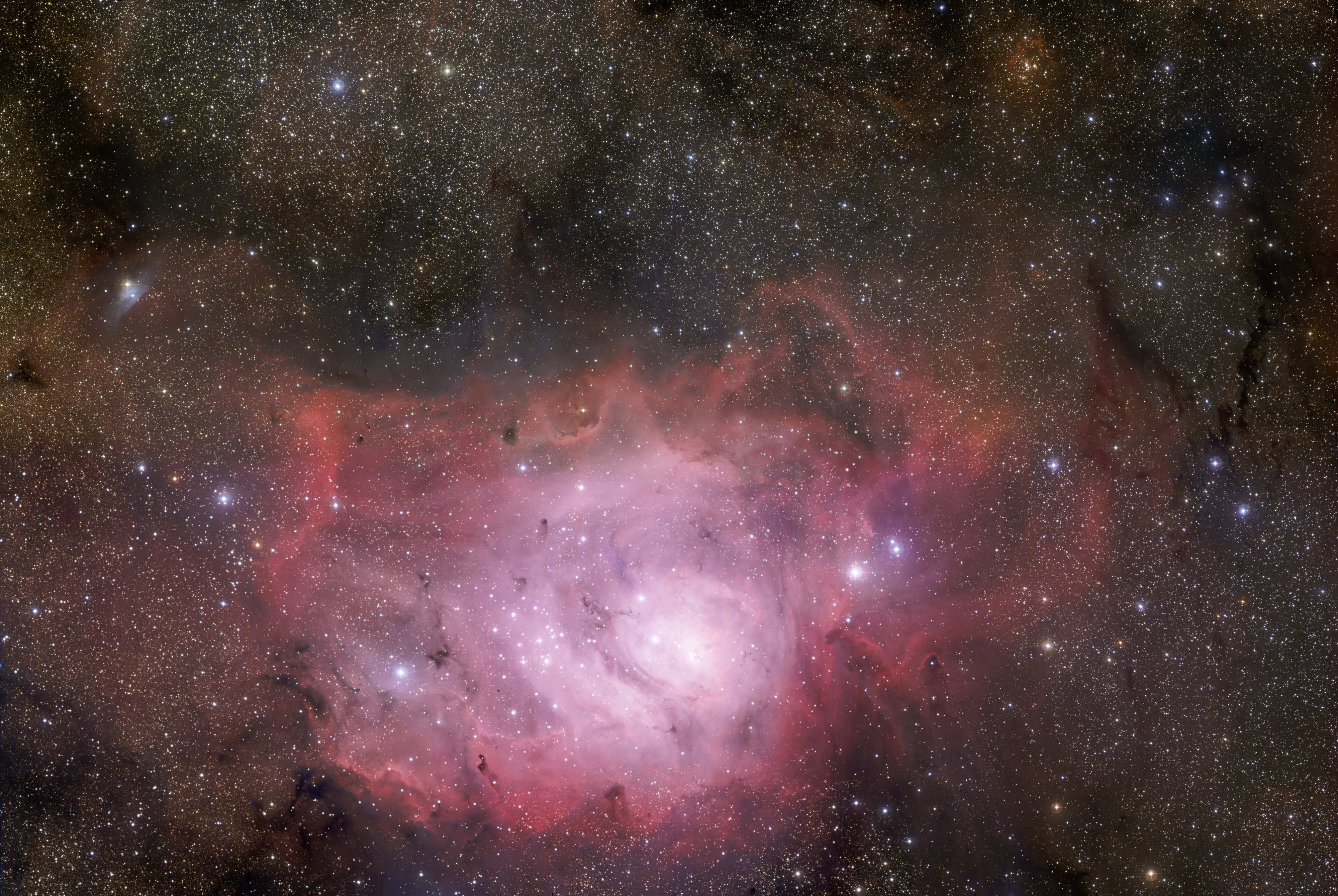
The large majestic Lagoon Nebula is home for many young stars and hot gas. Spanning 100 light years across while lying only about 5000 light years distant, the Lagoon Nebulae is so big and bright that it can be seen without a telescope toward the constellation of Sagittarius. Many bright stars are visible from NGC 6530, an open cluster that formed in the nebula only several million years ago. The greater nebula, also known as M8 and NGC 6523, is named "Lagoon" for the band of dust seen to the left of the open cluster's center. A bright knot of gas and dust in the nebula's center is known as the Hourglass Nebula. The above picture is a newly released, digitally stitched panorama of M8 taken as part of the GigaGalaxy Zoom project by the Wide Field Imager attached to the MPG/ESO 2.2-meter Telescope at the La Silla Observatory in Chile. The vista spans three times the diameter of the Moon, while the highest resolution image version occupies over 350 million pixels. Star formation continues in the Lagoon Nebula as witnessed by the many globules that exist there.
La majestuosa Nebulosa del Lago alberga muchas estrellas jóvenes y gas caliente. Con un tamaño de 100 años luz y situada a unos 5000 años luz de distancia, la Nebulosa del Lago es tan grande y brillante que puede verse a simple vista en la dirección de la constelación de Sagitario. Muchas estrellas brillantes son visibles desde NGC 6530, un cúmulo abierto que se formó en la nebulosa hace solo varios millones de años. La nebulosa más grande, también conocida como M8 y NGC 6523, se llama 'Lago' por la banda de polvo que se ve a la izquierda del centro del cúmulo abierto. Un nudo brillante de gas y polvo en el centro de la nebulosa se conoce como la Nebulosa del Reloj de Arena. La imagen mostrada es una panorámica digital recientemente publicada y cosida de M8, tomada como parte del proyecto GigaGalaxy Zoom por el Wide Field Imager montado en el telescopio MPG/ESO de 2,2 metros en la Observatorio de La Silla en Chile. La vista abarca tres veces el diámetro de la Luna, mientras que la versión de mayor resolución ocupa más de 350 millones de píxeles. La formación estelar continúa en la Nebulosa del Lago, como lo demuestran los muchos globulos que existen allí.