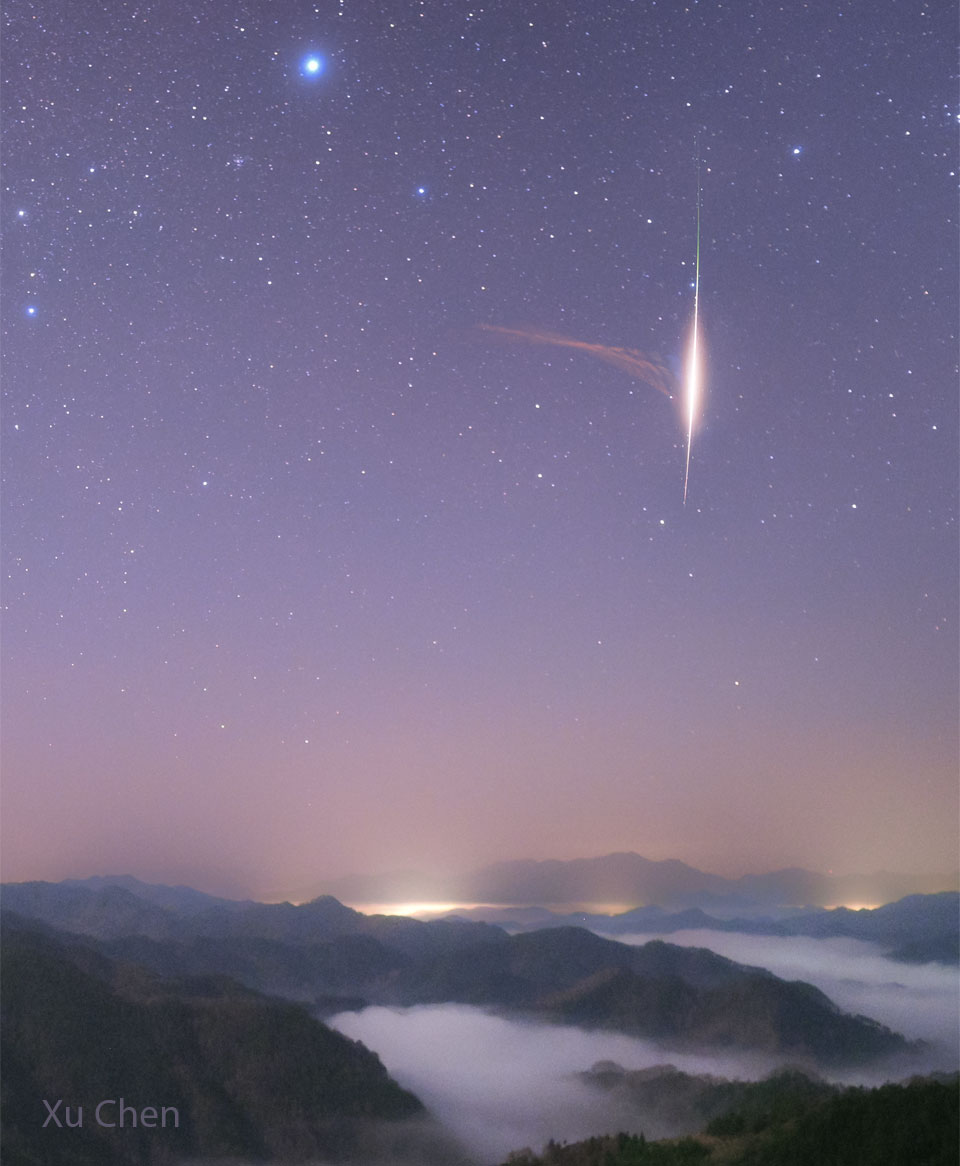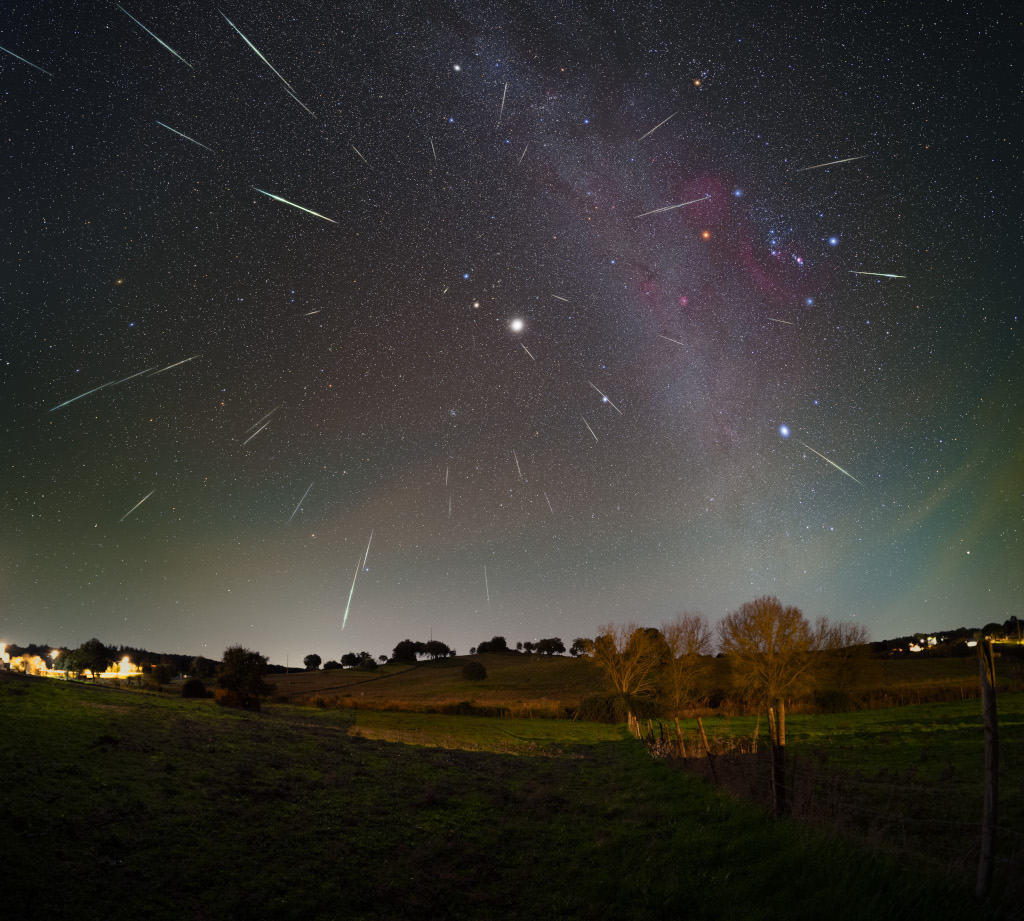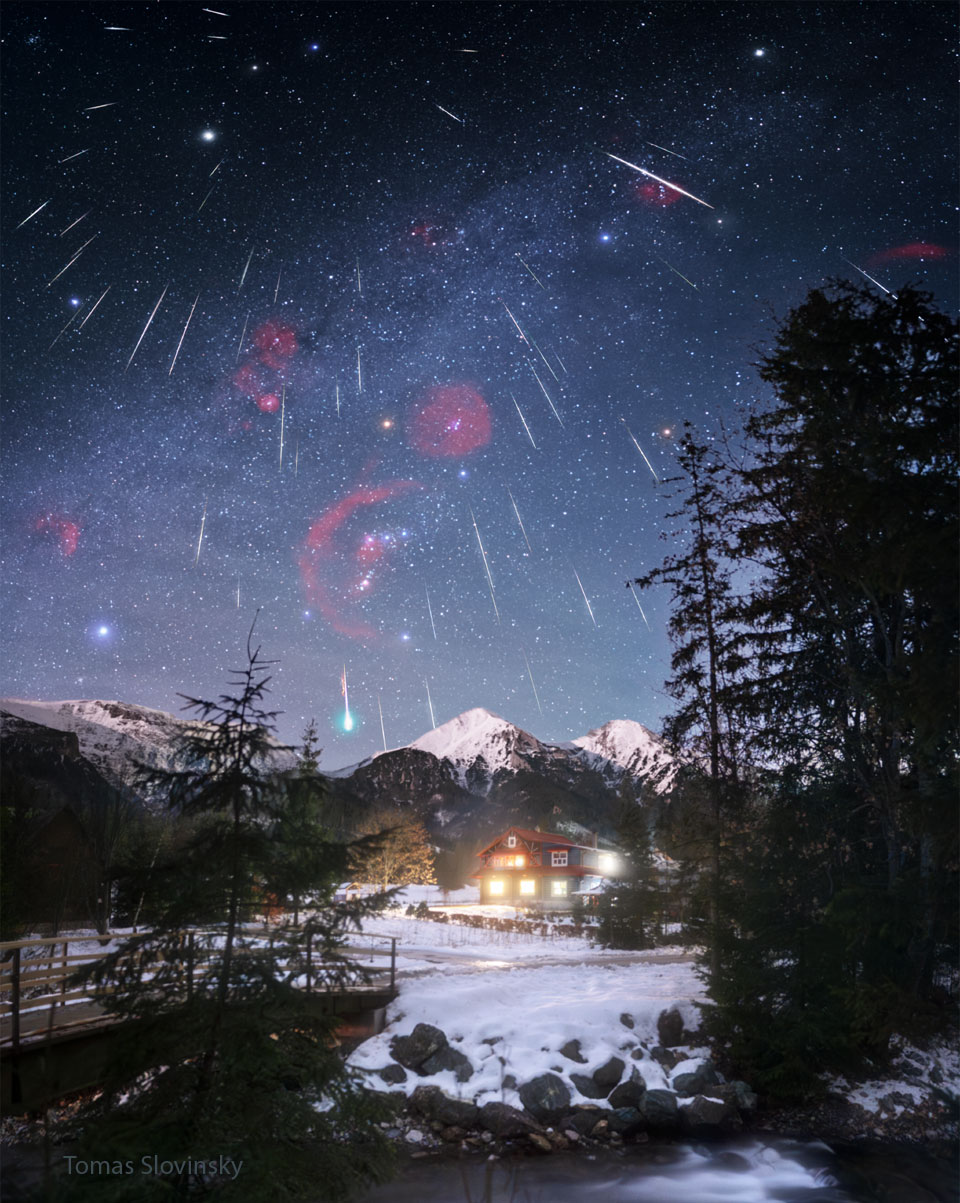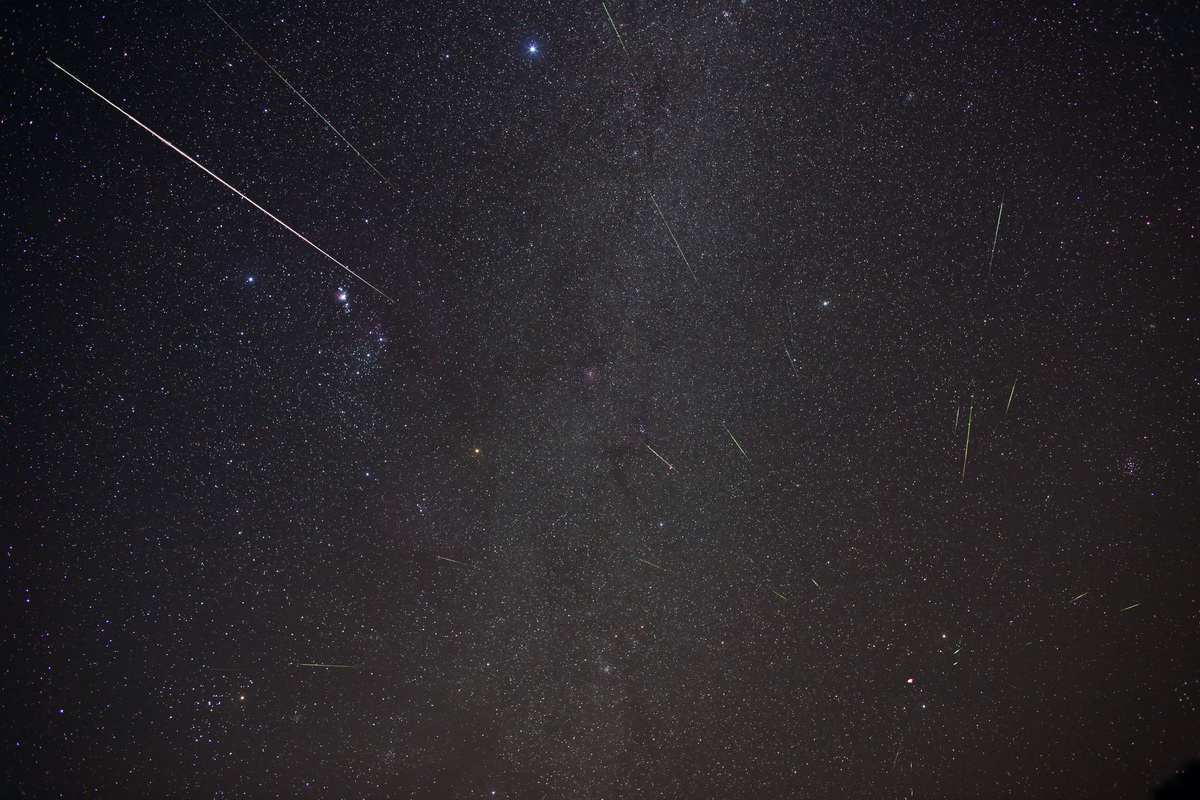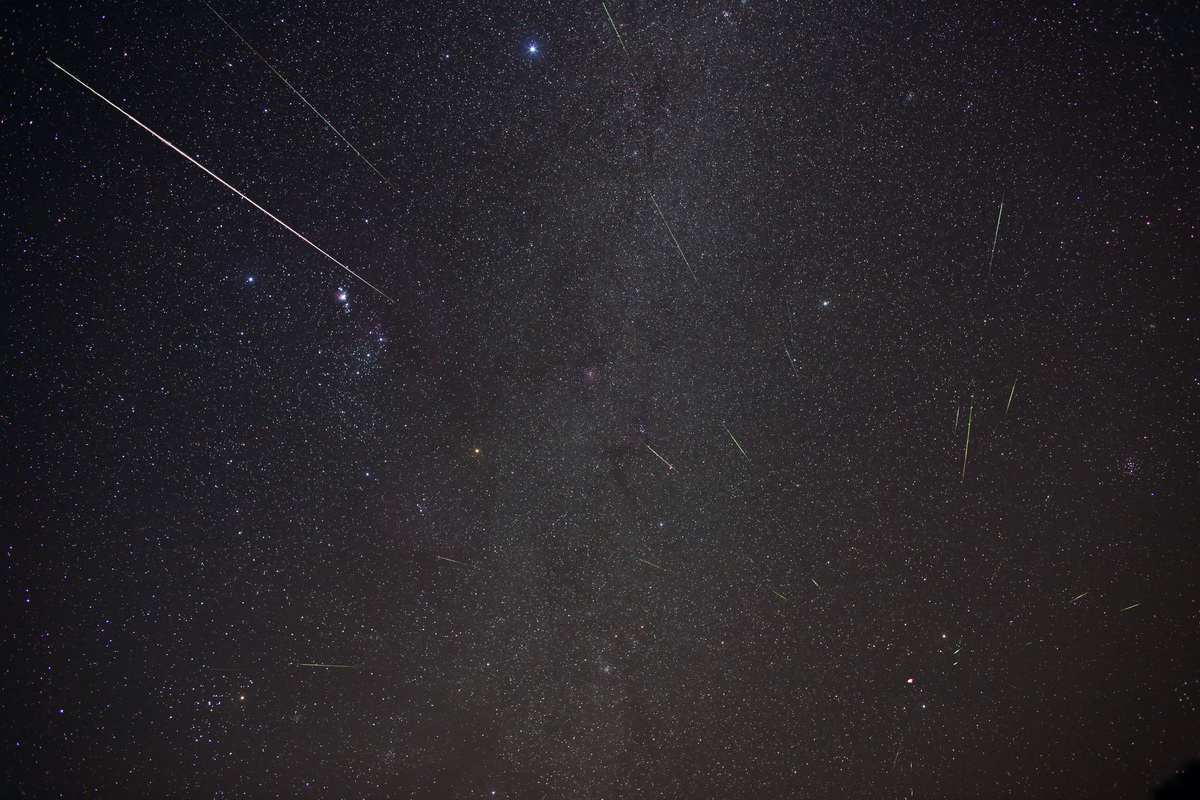
At least 34 meteors are included in this composite image as they rain through Australian skies during the annual Geminid Meteor shower. Dust particles strung out along the orbit of extinct comet Phaethon vaporize when they plow through planet Earth's atmosphere causing the impressive display. Although the particles are traveling parallel to each other, the resulting streaks clearly seem to radiate from a single point on the sky near Gemini's twin stars Castor and Pollux at the lower right. The radiant effect is due to perspective, as the parallel tracks appear to converge at a distance. Taken over a period of 2 hours on the morning of December 14, short exposures recording individual meteor streaks were combined with a single long exposure to show the background stars, with Sirius at the top, and the constellation Orion at left. Faint stars and nebulae of the Milky Way track through the center of the frame. Near the radiant point, an extra star in Gemini is actually the flash of a meteor seen almost head-on.
Al menos 34 meteoros aparecen en esta imagen compuesta mientras llueven sobre los cielos australianos durante la lluvia anual de meteoros Geminidas. Partículas de polvo distribuidas a lo largo de la órbita del cometa extinto Fáeton se vaporizan cuando se estrellan contra la atmósfera de la Tierra, causando este impresionante espectáculo. Aunque las partículas viajan paralelas entre sí, las estelas resultantes claramente parecen radiar desde un solo punto en el cielo cerca de las estrellas gemelas de Géminis, Cástor y Pólux, en la parte inferior derecha. El efecto de radiante se debe a la perspectiva, ya que las trayectorias paralelas parecen converger a lo lejos. La imagen fue tomada durante un período de 2 horas la mañana del 14 de diciembre, en la que exposiciones cortas que registraron estelas individuales de meteoros se combinaron con una única exposición larga para mostrar las estrellas de fondo, con Sirio en la parte superior y la constelación de Orión a la izquierda. Estrellas y nebulosas tenues de la Vía Láctea atraviesan el centro del marco. Cerca del punto radiante, una estrella adicional en Géminis es en realidad el destello de un meteoro visto casi de frente.