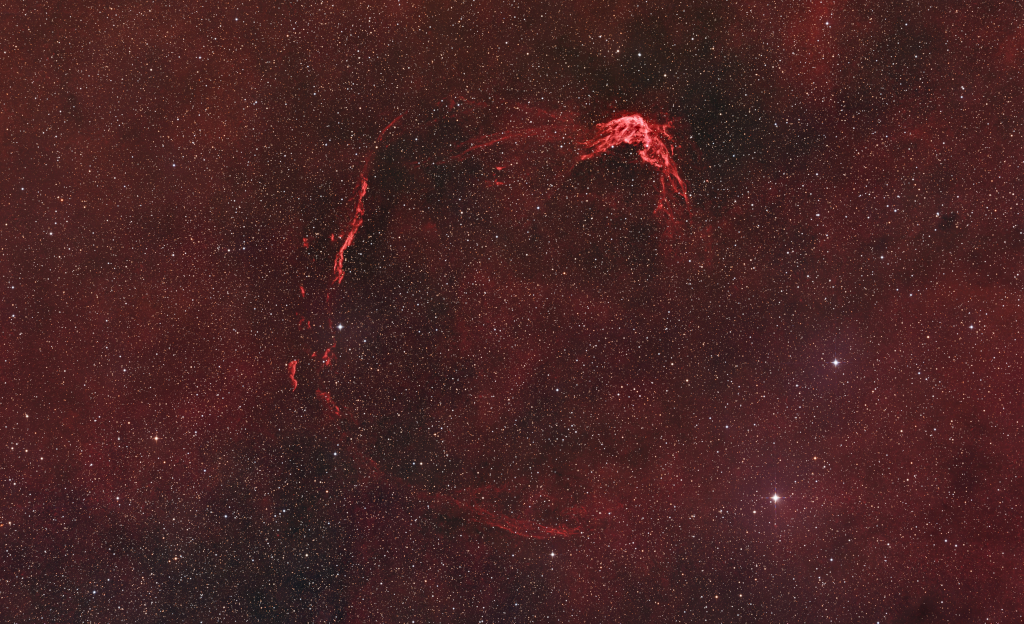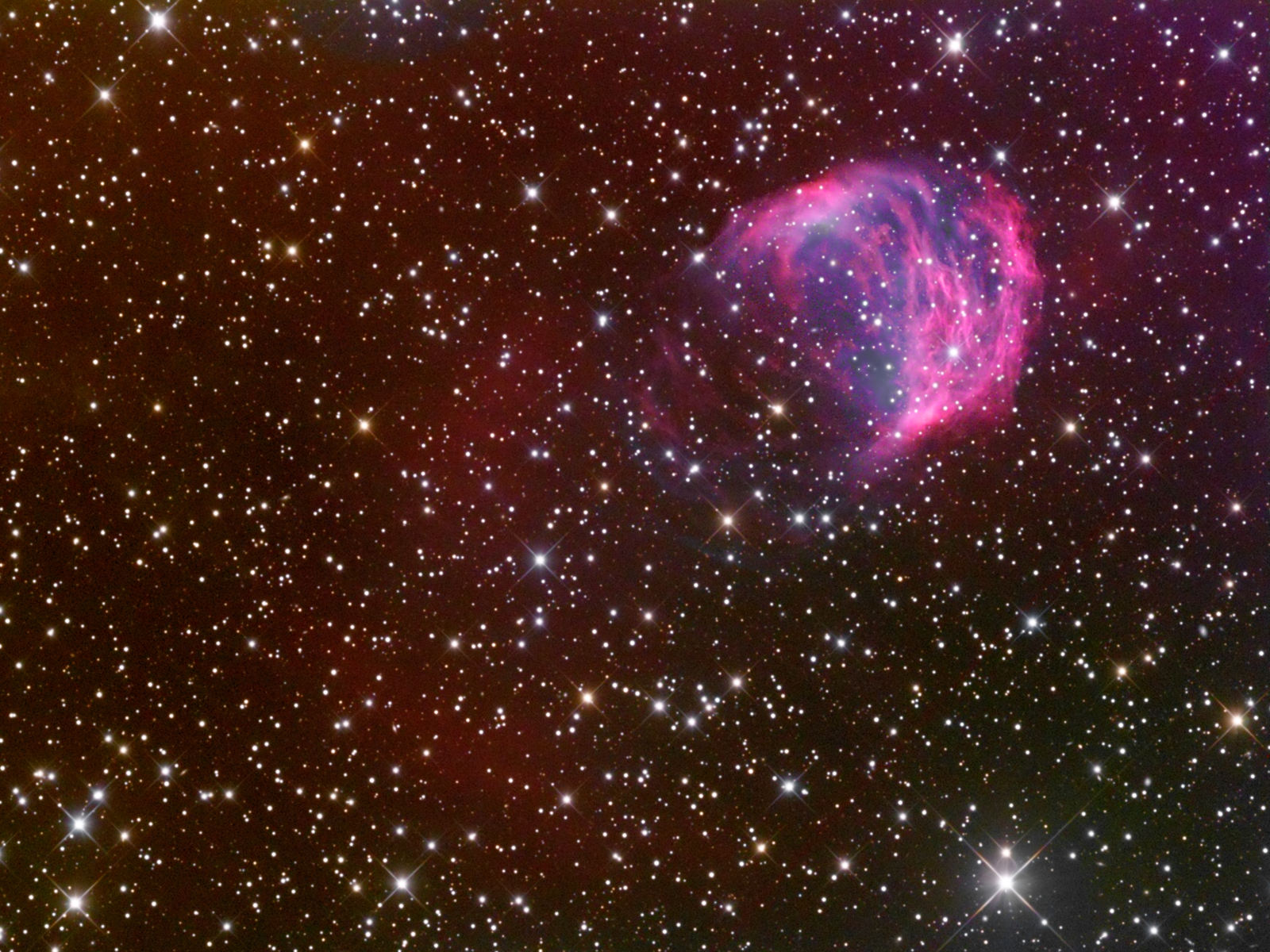
Braided, serpentine filaments of glowing gas suggest this nebula's popular name, The Medusa Nebula. Also known as Abell 21, this Medusa is an old planetary nebula some 1,500 light-years away in the constellation Gemini. Like its mythological namesake, the nebula is associated with a dramatic transformation. The planetary nebula phase represents a final stage in the evolution of low mass stars like the sun, as they transform themselves from red giants to hot white dwarf stars and in the process shrug off their outer layers. Ultraviolet radiation from the hot star powers the nebular glow. The Medusa's transforming star is near the center of the overall bright crescent shape. In this deep, wide telescopic view, fainter filaments clearly extend below and to the left of the bright crescent region. The Medusa Nebula is estimated to be over 4 light-years across.
Filamentos enredados y serpenteantes de gas luminoso sugieren el nombre popular de esta nebulosa, La Nebulosa Medusa. También conocida como Abell 21, esta Medusa es una nebulosa planetaria antigua situada a unos 1500 años luz de distancia en la constelación de Géminis. Al igual que su nombre mitológico, la nebulosa está asociada con una transformación dramática. La fase de nebulosa planetaria representa un estado final en la evolución de estrellas de baja masa como el Sol, cuando se transforman de gigantes rojas a estrellas enanas blancas calientes y, en el proceso, se desprenden de sus capas externas. La radiación ultravioleta de la estrella caliente alimenta el brillo de la nebulosa. La estrella en transformación de la Medusa se encuentra cerca del centro de la forma brillante en cuarto creciente. En esta imagen telescópica profunda y de amplio campo, claramente se extienden filamentos más tenues debajo y a la izquierda de la región brillante en forma de cuarto creciente. Se estima que la Nebulosa Medusa tiene más de 4 años luz de diámetro.